Objective
This blog explains where rigid-flex PCB design is heading and why those changes matter now. The goal is to help readers understand how future-ready PCB design will rely more on 3D layouts, smarter validation, stronger material choices, and closer coordination with PCB manufacturing teams. It also shows why better decisions around circuit board materials and rigid-flex PCB constructions will shape reliability, size, and long-term product success.
Key Takeaways
Rigid-flex is growing because modern products are getting smaller, lighter, and more shape-driven.
Future PCB design will depend more on bend-aware layout rules, zone-based stackups, and 3D validation before fabrication.
Simulation is becoming more important because rigid-flex boards must survive mechanical loading, not just electrical testing.
Circuit board materials and inspection practices will matter more as designs become thinner and more complex.
The best results will come from treating design, materials, manufacturing, and assembly as one connected system.

What Is A Rigid-Flex PCB?
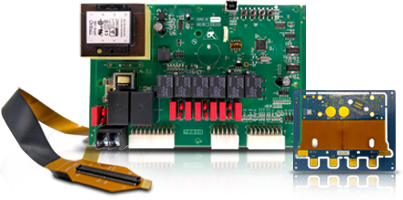
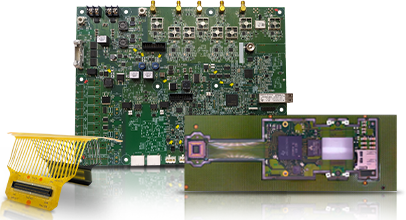
A rigid-flex PCB is a board that combines rigid sections and flexible sections in one connected structure. The rigid areas support components and provide stability. The flexible areas allow the board to bend, fold, or fit around tight spaces.
This design helps reduce the need for separate connectors and cables. It also helps product teams use space more efficiently inside the final enclosure.
That is why rigid-flex boards are used in products where size, shape, reliability, and packaging all matter at the same time. They are not just a variation of a standard board. They are a different design approach built for more complex product shapes and tighter mechanical demands.
Why The Future Of Rigid-Flex Looks Different
The future of rigid-flex is not just about making boards smaller. It is about changing how electronics fit into products.
A standard board sits flat and stays flat. A rigid-flex circuit board can fold, bend, wrap, and fit around tight mechanical spaces. That changes what engineers can build.
This matters because future devices are not getting simpler. They are getting denser, lighter, and more shape-driven. That is why rigid-flex is moving from a niche option to a more important design strategy in products where space, reliability, and packaging all matter at once.
PCB Runner fits naturally into this discussion because future board design will depend less on speed alone and more on how well engineering and fabrication work together.
Rigid Vs Flex Vs Rigid-Flex PCBs
| Type | Structure | Main Strength | Main Limitation | Best Use Case |
| Rigid PCB | Solid board that stays flat | Strong support for components and simpler manufacturing | Cannot bend or fit tight 3D shapes | Standard electronics and flat assemblies |
| Flex PCB | Flexible circuit that can bend and move | Excellent for compact spaces and dynamic movement | Less structural support for heavier components | Lightweight products and moving applications |
| Rigid-Flex PCB | Combination of rigid and flexible sections | Supports 3D packaging, fewer connectors, and better use of space | More complex design, validation, and manufacturing | Products needing both structure and flexibility |
This comparison makes the difference clear. Rigid-flex is not simply a mix of two board types. It is a design solution used when a product needs both stable component areas and controlled bending in the same electrical system.
Trend 1: Rigid-Flex PCB Constructions Are Becoming More Three-Dimensional
One of the clearest trends is the move from flat thinking to spatial thinking.
Modern rigid-flex PCB constructions are being used because they let engineers design around the enclosure, not after it. In many products, the board is no longer just a platform for components. It becomes part of the mechanical architecture.
This matters in areas like:
- wearables
- medical devices
- robotics
- aerospace electronics
- compact industrial systems
In these products, space is limited and shape matters. That means future rigid-flex work will reward teams that think about the full product shape much earlier in the design cycle.
Trend 2: PCB Design Is Becoming Bend-Aware And Zone-Based
Future PCB design for rigid-flex will rely less on general layout habits and more on bend-aware rules.
That means the layout will be built around different zones:
- rigid zones for structure and parts
- flex zones for bending and folding
- transition zones where stress risk is often highest
This is a major shift. In older workflows, some teams finished the layout first and worried about flex behavior later. That approach is becoming riskier as boards become thinner and more integrated.
In future-ready design, engineers need to define where bending happens, how often it happens, what copper can safely cross the bend, where vias and pads must stay away, and which layers behave differently in each zone. That is not extra work anymore. It is now part of the real design process.
What Are The Challenges In Rigid-Flex PCB Design?
Rigid-flex PCB design offers clear advantages, but it also creates challenges that do not appear in simple rigid boards.
One challenge is bend management. Designers need to know where the board will bend, how often it will move, and how much stress the copper and materials can safely handle.
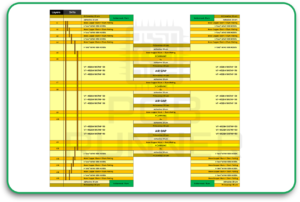
Another challenge is stackup planning. Rigid zones, flex zones, and transition areas do not behave the same way, so the layer structure must be planned with care.
Material choice is also more important in rigid-flex work. The wrong material system can reduce bend life, create stress, or cause problems during fabrication and assembly.
Component placement, via location, and copper routing all need more attention as well. A layout may look acceptable in software but still create trouble once the board is built and folded into the product.
That is why rigid-flex design is not only an electrical layout task. It is also a mechanical, material, and manufacturing challenge.
Trend 3: Circuit Board Materials Are Becoming A Bigger Design Decision
The future of rigid-flex will also depend more on circuit board materials.
That is important because rigid-flex performance is not controlled by geometry alone. It is also shaped by dielectric choice, copper type, coverlay, adhesive systems, stiffeners, and stack symmetry.
So the future is not simply about using flexible materials. It is about choosing the right materials for the exact bend, thermal, and assembly profile of the product.
This makes circuit board materials a front-end design decision, not a detail to leave until later. Teams that treat materials as an early design choice will have a better chance of building reliable rigid-flex boards.
Trend 4: Simulation Is Moving Closer To Everyday PCB Design
Another major trend is the rise of simulation in rigid-flex work.
A rigid board can often be reviewed with electrical checks and normal DFM rules. A rigid-flex circuit board often needs more. It must survive bending, vibration, assembly stress, and real-world motion.
That is why simulation is becoming more valuable. Designers increasingly need to ask practical questions early:
- will this flex zone survive repeated motion
- will this stackup create stress at the transition
- will this copper pattern crack under bend load
- will this shape behave the same after assembly reflow
Simulation will not replace engineering judgment, but it will become a much larger part of early rigid-flex validation.
Trend 5: Rigid-Flex PCB Constructions Are Pushing More HDI And Density
As products shrink, rigid-flex PCB constructions are also moving toward higher density.
Future rigid-flex boards are not only bending. They are also carrying:
- faster signals
- denser routing
- smaller parts
- tighter clearances
- more advanced via structures
That combination makes PCB manufacturing more demanding. It also means future rigid-flex designs cannot treat electrical density and mechanical flexibility as separate problems. They affect each other directly.
A dense board with weak mechanical planning will still create risk. A flexible board with poor electrical planning will do the same. Future rigid-flex success depends on controlling both at the same time.
Trend 6: PCB Manufacturing Will Depend More On Reliability Control
This trend may be the most important one. As rigid-flex boards become more complex, the margin for process error gets smaller.
That means future PCB manufacturing will depend more on:
- tighter process windows
- better traceability
- more inspection at critical points
- better moisture and handling control
- closer agreement between design intent and fabrication reality
This is why rigid-flex success will depend on suppliers who can explain quality control clearly, not just run the job fast.
When boards become thinner, denser, and more mechanically demanding, reliability control stops being a background topic. It becomes part of the core value of the manufacturing process.
Trend 7: Design And Manufacturing Will Keep Getting Closer
The final trend is workflow change.
Rigid-flex used to be treated as something a strong fabricator would figure out after design handoff. That model is getting weaker. Future rigid-flex work will need earlier coordination between design and fabrication.
This includes:
- stackup review early in layout
- material approval before routing is finalized
- bend-zone checks before release
- assembly planning before prototype build
- DFM feedback before the quote is locked
This is where many projects improve or fail. The teams that close the gap between design files and manufacturing reality will usually get better results.
PCB Runner belongs naturally in this part of the discussion because future-ready rigid-flex work depends on practical coordination, not isolated decisions.
Conclusion
The future of rigid-flex is not one big change. Several changes are happening at the same time. Boards are becoming more three-dimensional. PCB design is becoming more bend-aware. Circuit board materials are becoming more strategic. Simulation is becoming more useful. Rigid-flex PCB constructions are carrying more density. And PCB manufacturing is becoming more dependent on disciplined reliability control.
That is the real direction of the field. Future rigid-flex design will reward teams that think early, validate carefully, and treat mechanics, electronics, and manufacturing as one problem.
The future of rigid-flex belongs to teams that design for shape, stress, materials, and manufacturability from the very beginning.
FAQs
What Makes Rigid-Flex Different From A Standard PCB?
A rigid-flex board combines rigid and flexible sections in one structure, which lets the board bend or fold while keeping continuous electrical connections. That makes it different from a standard rigid board that stays flat.
Why Are Rigid-Flex PCB Constructions Becoming More Common?
They are becoming more common because modern electronics need compact 3D packaging, lower weight, and fewer separate connectors or cables. They help product teams use limited internal space more effectively.
Why Do Circuit Board Materials Matter So Much In Rigid-Flex?
Because the wrong materials can reduce bend life, increase stress, and weaken performance during fabrication or assembly. In rigid-flex work, material choice affects real-world reliability.
Is Simulation Really Necessary For A Rigid-Flex Circuit Board?
It is becoming more important, especially when the board sees motion, vibration, or tight packaging. Simulation helps teams catch stress and survivability issues earlier.
How Is PCB Design Changing For Future Rigid-Flex Projects?
Future PCB design is becoming more bend-aware, more 3D, and more zone-based. Teams need to think earlier about mechanical constraints, stackup zones, and manufacturability.
What Should Buyers Ask A PCB Manufacturer Partner About Rigid-Flex?
They should ask about stackup control, bend-zone rules, material options, inspection standards, HDI capability, and how the fabricator handles rigid-to-flex transitions. Those questions help reveal whether the supplier can support the real demands of the design.