Objective
This blog explains how to choose a Rigid Flex PCB Manufacturer with the right technical capabilities for reliable production. It is written for buyers, engineers, and project teams who need dependable Rigid flex PCB solutions for real products, not just a low quote. The goal is to show which capabilities truly affect reliability, manufacturability, and long-term performance.
Key Takeaways
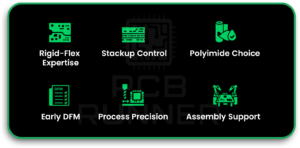
- A strong Rigid Flex PCB Manufacturer should understand both rigid and flex construction, not just standard board fabrication.
- Material choice, stackup planning, and bend-area design have a direct effect on reliability.
- Adhesiveless polyimide systems are often preferred for improved reliability in rigid-flex builds.
- Good manufacturers support design-for-manufacturing review early, before files go to release.
- Reliable rigid-flex work depends on precise layer registration, controlled drilling and plating, and strong process control.
- A capable rigid flex pcb supplier should also guide assembly, handling, and testing, not only fabrication.
Why Choosing The Right Rigid Flex PCB Manufacturer Matters
A rigid-flex board is not just a normal board with a bend in it. It combines rigid sections and flex sections in one structure. That sounds simple, but the build is much more demanding. The wrong process, wrong materials, or weak stackup choices can lead to cracks, poor hole reliability, alignment issues, or assembly trouble. IPC training for rigid-flex design specifically highlights that these boards need dedicated knowledge in materials, manufacturing techniques, documentation, and assembly impact.
That is why selecting a Rigid Flex PCB Manufacturer should never be based on price alone. Reliability comes from process capability.
Did You Know? One of the main reliability advantages of rigid flex circuit boards is that they can reduce connectors and interconnects, which lowers the number of possible failure points in a product.
What Makes Rigid-Flex Different From Standard PCB Work
Rigid-flex boards save space, reduce weight, and improve packaging efficiency. They also help remove connectors that often fail in harsh or tight environments. But they also bring extra design and manufacturing demands. Altium notes that rigid-flex can improve reliability, but the design and fabrication process bring special challenges that must be handled correctly.
These boards need attention in areas such as:
- Flex material system
- Bend radius and bend region layout.
- Transition zones between rigid and flex sections
- Hole and via reliability under stress
- Controlled lamination and registration
- Assembly support for non-flat structures
A standard supplier may be able to quote the board. That does not mean they can build it well.
Capability 1: Real Rigid-Flex Design And DFM Support
A good Rigid Flex PCB Manufacturer should do more than receive Gerbers and send a quote. They should review the design before release. IPC’s design-for-manufacturing guidance stresses the need to identify documentation and design issues before production begins.
For rigid-flex work, this matters even more. The manufacturer should check:
- Stackup suitability
- Bend-area routing
- Coverlay and stiffener details
- Via placement near flex transitions
- Copper balance
- Manufacturing tolerances
NCAB also stresses that design decisions affect PCB cost and reliability more than anything else at the start.
This is why early review matters. A capable manufacturer should be comfortable discussing printed circuit board (PCB) design choices before fabrication starts.
Capability 2: Strong Stackup And Material Knowledge
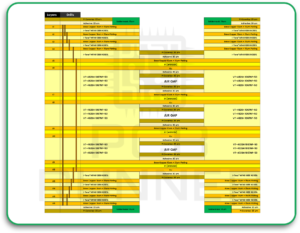
Stackup is one of the biggest reliability factors in rigid-flex production. Altium recently pointed out that early stackup review is where many rigid-flex designs become simpler, thinner, and more reliable.
A reliable manufacturer should understand how to choose and control:
- Polyimide flex materials
- Adhesiveless versus adhesive-based systems
- Copper weights
- Coverlay choices
- Rigid-flex transition structure
- Total thickness and bend performance
NCAB specifically recommends adhesiveless polyimide systems because they offer increased reliability and lower z-axis CTE expansion compared with adhesive systems. NCAB also notes that for dynamic flex use, the flex layer count should stay as low as possible.
That is a strong sign of expertise. If a rigid flex pcb supplier cannot explain why a certain stackup is safer, that is a problem.
Did You Know?
An adhesive in the wrong place can affect through-hole reliability in rigid-flex boards. NCAB explains that moving to adhesiveless copper clad systems improved through-hole structure reliability.
Capability 3: Reliable Via And Hole Performance
Via reliability is a major issue in rigid-flex construction because these boards can face both thermal and mechanical stress. Research on thermally stressed rigid-flex boards found that the fatigue life of vias increased with higher plating thickness, larger drilled hole size, and lower PCB thickness.
That means the manufacturer should have real control over:
- Drill quality
- Hole wall preparation
- Copper plating thickness
- Registration accuracy
- Hole design rules for stressed areas
This is not a small detail. When vias fail, the board may pass first tests and still fail later in the field. That is why a serious, best rigid flex PCB manufacturer should be able to discuss plating capability, aspect ratio limits, and how stress is managed near transition zones.
Capability 4: Precision In Layer Registration And Lamination
Rigid-flex boards must align multiple material systems and copper layers with high accuracy. If registration is off, the board may not meet mechanical or electrical requirements. If lamination is weak, long-term reliability suffers.
A quality-focused manufacturer should have stable process control for:
- Layer alignment
- Press the cycle control
- Adhesive and resin flow management
- Transition area build quality
- Consistent final thickness
Industry sources aimed at rigid-flex fabrication highlight precise layer alignment and strict material control as core needs for dependable builds.
This matters even more in products with tight housing limits or repeated movement. Good boards are not just electrically correct. They are physically stable, too.
Capability 5: Good Bend Area Engineering
The bend area is where many rigid-flex problems begin. Copper routing, trace direction, layer count, and local thickness all affect whether the flex section survives use. NCAB advises keeping the flex layer count as low as possible in dynamic applications because more layers raise stress.
A capable Rigid Flex PCB Manufacturer should understand bend-area rules, such as:
- Avoiding sharp copper corners
- Managing copper distribution
- Keeping vias out of stressed bend zones when possible
- Supporting proper bend radius
- Using the right coverlay approach
- Designing a safe, rigid-to-flex transition
This is especially important when the product includes a flexible circuit board section that will move more than once during its life.
Capability 6: Assembly-Aware Manufacturing
Rigid-flex boards do not stop being complex after fabrication. They must still go through handling, placement, soldering, and inspection. IPC training on rigid-flex design notes the impact of these designs on assembly techniques and documentation.
That means your manufacturer should also understand:
- Panel design for assembly
- Support tooling or carriers
- Handling of thin flex areas
- Reflow and thermal stress concerns
- Stiffener placement where needed
- How the board will be folded or installed later
This is where pcb manufacturing and assembly should be treated as one connected process. If the fabrication team ignores assembly needs, reliability can still suffer after the board leaves the factory.
For buyers comparing pcb circuit board manufacturers, this is a useful test question: how do you support assembly and handling for rigid-flex products?
Capability 7: Clear Testing And Quality Control
A quality rigid-flex build needs more than a pass/fail statement. The supplier should have clear inspection and test controls for both fabrication and final product support. NCAB’s technical resources include recommendations for flex and rigid-flex handling and baking, while IPC training places quality control at the centre of dependable board production.
Useful quality signs include:
- Electrical test of finished circuits
- Visual inspection of flex areas and transitions
- Dimensional checks
- Hole wall and plating process control
- Material traceability
- Clear acceptance criteria
A supplier does not need to impress you with buzzwords. They need to show how they prevent defects.
Did You Know?
IPC classes are often the common language for reliability expectations in PCB and PCBA work, helping define how strict the finished board requirements should be.
Capability 8: Documentation, Traceability, And Communication
Rigid-flex reliability is not only about machines. It is also about clear documentation and good technical communication. IPC design-for-manufacturing training emphasises that documentation issues can stop a design from being manufactured at all.
A dependable rigid flex pcb supplier should provide:
- Clear stackup documentation
- Manufacturing notes review
- Material and finish confirmation
- Questions before building, not after problems appear
- Traceability for production lots
- Honest feedback on risky design features
Warning Signs To Watch For
Not every supplier that offers Rigid flex PCB work is truly set up for reliable production. Be careful if you see these signs:
- They treat rigid-flex like a normal FR-4 board
- They cannot explain material choices
- They do not review bend zones or stack-up
- They avoid discussing plating and via reliability
- They offer no advice on assembly handling
- They have no structured DFM review
- They focus only on quote speed
A weak answer in any one area may lead to a costly redesign later.
Conclusion
Choosing a Rigid Flex PCB Manufacturer is really about choosing a reliability partner. The best supplier is not just the one that can build a sample. It is the one that understands stackup, materials, bend zones, lamination, via reliability, assembly handling, and process control from the start. That is what protects product performance in the field.
For PCB Runner, the smart approach is simple: ask technical questions early, review the stackup carefully, and work with a manufacturer that treats rigid-flex as a specialist process, not a standard board with extra complexity added at the end.
Need a safer path for your next rigid-flex project? Start with a full design and manufacturing review before release, especially around stackup, bend areas, vias, and assembly handling.
FAQs
What Does A Rigid Flex PCB Manufacturer Actually Do?
A Rigid Flex PCB Manufacturer fabricates boards that combine rigid and flexible sections in one structure. A strong manufacturer also supports stackup review, DFM checks, material selection, and assembly planning.
Why Are Rigid Flex Circuit Boards Considered More Reliable?
They can improve reliability because they reduce connectors and separate interconnects, which are common failure points. But that benefit only holds if design and manufacturing are handled correctly.
What Materials Are Best For Reliable Rigid-Flex Builds?
Adhesiveless polyimide systems are often preferred because they offer better reliability and lower z-axis expansion than adhesive systems.
Why Is Stackup So Important In Rigid Flex PCB Work?
Stackup affects thickness, flexibility, stress, routing, and long-term durability. Early stackup review can make a rigid-flex design thinner, simpler, and more reliable.
How Can I Judge A Good Rigid Flex PCB Supplier?
Look for real rigid-flex experience, strong DFM support, material knowledge, plating and via control, assembly awareness, and clear communication.
Do PCB Circuit Board Manufacturers Need To Handle Assembly Too?
Not always, but rigid-flex projects benefit when PCB manufacturing and assembly are considered together. That helps reduce handling risk, fit issues, and reliability problems during build.