Objective
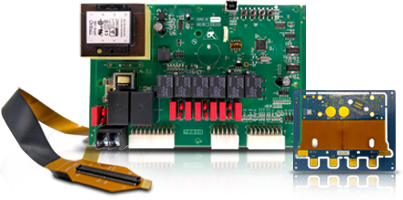
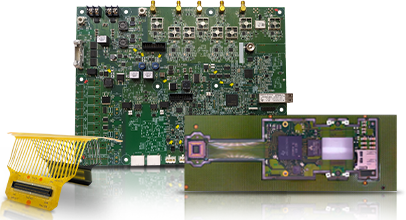
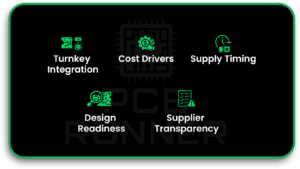
This guide explains what really affects cost and lead time when choosing a PCBA Turnkey Manufacturing partner. It is written for buyers, engineers, and sourcing teams who want clearer expectations before placing an order. The goal is simple: help you understand why two quotes can look similar at first but lead to very different timelines, risks, and total costs. At PCB runner, that usually starts with one basic truth: the cheapest quote is not always the fastest or the safest path.
Key Takeaways
- PCBA Turnkey Manufacturing combines PCB fabrication, component sourcing, assembly, and often testing under one supplier, which can reduce handoff delays when managed well. This is consistent with industry descriptions of turnkey and kitting workflows.
- Cost is heavily affected by design complexity, tooling, stencil needs, order size, and setup costs, not just by the price of the bare board.
- Lead time often depends on component availability more than board fabrication time.
- Strong DFM, DFA, and DFT practices help reduce delays, lower production risk, and avoid expensive revisions.
- A capable turnkey partner should be clear about sourcing risk, process limits, testing, and schedule trade-offs before production begins.
What PCBA Turnkey Manufacturing Really Means
A PCBA Turnkey Manufacturing model means one supplier handles most or all of the work needed to deliver assembled boards. That usually includes PCB fabrication, parts sourcing, assembly, and sometimes testing, inspection, and logistics. In simple terms, you are buying a finished assembly process instead of managing each step yourself.
This matters because every handoff between separate vendors creates more room for delay. If one company makes the bare board, another buys the parts, and another handles assembly, problems can move slowly. A turnkey model can shorten that chain. Arrow describes materials and kitting services as a way to reduce cost and simplify supply management, which supports the same basic idea.
That does not mean every turnkey supplier is equal. Some are fast with repeat work but weak with sourcing. Some are strong in sourcing but slow in engineering review. That is why choosing the right partner matters.
Why Cost And Lead Time Change So Much
Many buyers expect PCB quotes to work like simple product pricing. They do not. PCB assembly has fixed costs, variable costs, and supply chain risks all mixed together.
Altium notes that manufacturing runs include fixed costs such as tooling, design review, and stencil creation, while other costs change with board count and process requirements. That is why a low-volume prototype can look expensive per board, while a higher-volume order may bring the unit price down.
Lead time works the same way. A board might be easy to fabricate, but if one critical part has a long lead time, the whole build waits. IPC materials on supply and manufacturing readiness also show that schedule planning often needs an added margin because availability and compliance can affect delivery.
So when you compare suppliers, do not ask only, “What is the price?” Ask, “What is driving the price, and what could delay the build?”
Did You Know Fact
Price and lead time usually move in opposite directions. Altium points out that shorter turnaround often costs more, while longer lead time can reduce some fabrication and assembly costs.
1. Design Complexity Changes Everything
Design complexity is one of the biggest cost drivers in PCBA Turnkey Manufacturing. A simple two-layer board with common parts is easier to source, build, inspect, and test. A dense board with fine-pitch parts, unusual footprints, or tight tolerances takes more time and more control.
IPC’s DFM training material and related technical papers make this clear: layout features, pad-to-hole relationships, solder mask limits, and technology choices all affect cost, quality, and delivery time.
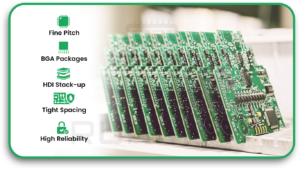
Complexity usually increases cost when a board has:
- very fine-pitch components
- BGAs or other harder-to-inspect packages
- HDI or special stack-ups
- tight spacing and tighter process limits
- unusual materials or finishes
- special reliability requirements
This is why a good pcb design review matters early. Problems found before production are cheaper than problems found after assembly starts.
2. Component Sourcing Often Decides The Real Schedule
A lot of buyers still focus first on fabrication speed. In real projects, sourcing can matter more.
If all parts are standard and in stock, the build may move quickly. If even one key part is allocated, obsolete, or available only through long factory lead time, the board waits. Arrow’s manufacturing materials describe supply management and kitting as a major part of production efficiency, and IPC traceability guidance also shows how supply chain control affects manufacturing flow.
This is where a strong PCBA turnkey manufacturing solution becomes valuable. A good supplier should tell you:
- Which parts are at risk
- Which parts have alternates
- Which parts may delay the order
- whether authorised sourcing is being used
- whether customer-supplied parts would speed things up
If a supplier gives you a fast quote without discussing sourcing risk, that is not a good sign.
3. DFM, DFA, And DFT Save Time Before Production Starts
Many delays begin before the first board is built. They start with the data.
IPC states that DFM, DFA, and DFT help create PCBs that are easier to manufacture, test, and assemble, while lowering cost and improving production results. In plain language, that means your files should match real factory capability.
Good DFM review checks things like:
- pad and hole relationships
- solder mask clearances
- panel suitability
- assembly access
- test access
- process compatibility
This matters whether you are working with large printed circuit board manufacturers or smaller specialist teams. The design still has to fit the process.
Did You Know Fact
IPC’s design-for-manufacturing resources focus not only on quality but also on delivery time, because small design choices can trigger rework, clarification loops, or production holds.
4. Testing Strategy Also Affects Cost
Testing is often treated like a final step, but it changes quoting much earlier than many buyers expect.
If the project needs only basic inspection, the cost may stay lower. If it needs a functional test, flying probe, ICT, traceability, or added documentation, both price and time can rise. IPC’s digital manufacturing and traceability materials show that the traceability level depends on risk and agreed requirements, which means higher control often adds process burden.
This does not mean testing is optional. It means testing should match the product.
For example:
- Prototypes may need flexible test planning
- Commercial products may rely on inspection plus basic function checks
- Higher-risk products may need stronger traceability and formal test coverage
A good turnkey partner should ask about this early, not after assembly begins.
5. Panelization, Stencils, And Setup Costs Matter More Than People Think
Some costs are easy to miss because they are not obvious in the first conversation. Stencils, tooling, setup, engineering review, and panel planning all take time and money.
Altium’s cost discussion notes that stencil creation, tooling, and NRE are part of the real manufacturing cost. That is why one-off prototype jobs often look expensive compared with repeat builds. The factory still has to prepare the job, even if the board count is low.
This is also why experienced pcb circuit board manufacturers ask for full data early:
- Gerbers or manufacturing files
- BOM
- centroid or pick-and-place files
- assembly drawings
- test notes
- revision clarity
Missing or messy data adds a delay before the job even reaches the line.
6. The Best Supplier Is Not Always The One With The Lowest Quote
This is where many teams make the wrong call.
A lower quote may still lead to a higher real cost if it brings:
- slow engineering questions
- weak sourcing support
- poor communication
- low visibility on risk
- higher scrap or rework
- longer delays from part shortages
This applies whether you are comparing overseas suppliers, local printed circuit board manufacturers in the UK, or global assembly partners. The right question is not only, “Who is cheaper?” The better question is, “Who is more likely to deliver the right board on the promised date?”
At PCB runner, this is where a solid PCBA Turnkey Manufacturing process should prove itself: not in a low headline number, but in fewer surprises from quote to shipment.
What To Ask Before You Choose A Turnkey Partner
Before placing an order, ask these questions:
- Do you review DFM, DFA, and DFT before release?
- How do you handle at-risk or obsolete components?
- Are parts sourced through authorised channels?
- What testing is included in the quote?
- What files do you need to avoid delays?
- What parts of the schedule are fixed, and what parts depend on sourcing?
- How do you handle traceability and revision control?
A supplier that answers these clearly is usually easier to work with than one that answers only with a price.
FAQs
What Is PCBA Turnkey Manufacturing?
It is a manufacturing model where one supplier handles PCB fabrication, parts sourcing, assembly, and often inspection or testing as part of one service.
Why Does A PCBA turnkey manufacturing solution Affect Lead Time?
Because it reduces vendor handoffs, the final schedule still depends on design readiness, sourcing risk, and process needs.
What Impacts PCB Assembly Cost The Most?
Major cost drivers include board complexity, tooling, stencil setup, component sourcing, test requirements, and order size.
Do PCB circuit board manufacturers And Assemblers Need Different Files?
Yes. An assembly usually needs more than bare-board manufacturing files. BOM, centroid data, assembly drawings, and revision clarity all help avoid delay. This is supported by IPC’s emphasis on manufacturing-ready data and DFM review.
Is A Local Partner Better Than Overseas Printed circuit board manufacturers in the UK or other global suppliers?
Not always. The better choice depends on schedule, sourcing strength, communication, engineering support, and process fit. This is an informed conclusion based on the factors above rather than a single source claim.
Conclusion
Choosing a PCBA Turnkey Manufacturing partner is really about reducing uncertainty. Cost and lead time are shaped by design quality, sourcing risk, setup needs, test requirements, and how well the supplier manages the full process. A strong partner should explain those tradeoffs clearly before production starts. PCB Runner is a reminder that the best manufacturing choice is usually the one that gives you fewer delays, fewer surprises, and a cleaner path from files to finished boards.