PCB Design

How to Accelerate the PCB Design Process Without Compromising Quality

If you’ve ever tried to design a printed circuit board, you know it can take a lot of time. There’s the planning, the drawing, the checking, and then the waiting for your board to be made. But what if you could speed up this whole process, without making mistakes or ending up with a poor-quality board? Good news: you can. Let’s walk through how you can accelerate your PCB design process while still getting a board you’re proud of.

Why Speed Matters in PCB Design

Getting your PCB done quickly means you can test your ideas sooner. If you’re working on a new gadget, every day counts. You want to be the first to launch, not the last. But if you rush and skip steps, you might end up with a board that doesn’t work. That’s why you need a plan that’s both fast and careful.

Start with a Clear Plan

Before you even open your design software, take a moment to think about what you need. What is your board supposed to do? How big should it be? What parts will you use? Write these things down. It helps you stay focused and avoid mistakes later.

  • Make a list of all the parts you need.
  • Decide how big your board should be.
  • Think about how your board will fit in your device.
  • Talk to your team so everyone knows the plan.
Clear Plan

Use the Right Tools

The software you use for PCB circuit design matters. Good tools let you work faster and spot problems before they become big headaches. Some design programs let you move easily from drawing your circuit to laying out your board. This saves time and reduces errors.

  • Use design tools that let you check your work as you go.
  • Look for software with built-in rules to catch mistakes.
  • Try to use the same tool for both the schematic and the PCB layout design.

Work with Experienced Printed Circuit Board Manufacturers

Not all printed circuit board manufacturers are the same. Some can make boards in just a day or two. Others take weeks. If you want to move fast, pick a company known for quick service and good quality. Ask them about their process and how they check for mistakes.

  • Choose a manufacturer with a solid track record.
  • Ask about their quality checks and delivery times.
  • Make sure they can handle your custom PCB design needs.

Don’t Skip Prototyping

You might think skipping the prototype step will save time. But if you do, you could end up with a board that doesn’t work, and that costs more time in the end. Quick-turn prototyping lets you test your design fast. If something’s wrong, you’ll catch it early.

  • Order a prototype before making lots of boards.
  • Use quick-turn services for faster results.
  • Test your prototype carefully.

Design for Manufacturing and Assembly

When you’re working on custom PCB assembly, think about how your board will actually be made. If your design is too tricky, it can slow down manufacturing or cause errors. Keep things simple and follow the rules your manufacturer gives you.

  • Use common part sizes and shapes.
  • Keep enough space between parts.
  • Avoid strange or hard-to-find components.
  • Follow your manufacturer’s guidelines for PCB board layout design.

Communicate with Your Assembly Team

If you’re using a PCB assembly UK service or any custom PCB assembly provider, talk to them early. Ask what files they need and what problems they see most often. This helps you avoid delays and makes sure your board is easy to assemble.

  • Share your plans and ask for feedback.
  • Double-check your files before sending them.
  • Be open to suggestions, they know what works best.

Use Templates and Standard Blocks

If you design a lot of boards, you probably use some of the same circuits over and over. Save time by making templates or reusable blocks. This way, you don’t have to start from scratch each time.

  • Save your favourite layouts for future use.
  • Build a library of standard circuits.
  • Use these blocks to speed up new projects.

Check Your Work, But Don’t Overthink It

It’s essential to check your design, but don’t get stuck in endless reviews. Use your software’s design rule checks to catch mistakes. Then, do a quick review with your team. If everything looks good, move forward.

  • Run the design rule check in your software.
  • Have a teammate look over your design.
  • Trust your process and keep moving.

Choose the Right Assembly Partner

Once your board is designed, you need someone to put it together. Look for a company that offers custom PCB assembly and has experience with boards like yours. If you’re in the UK, working with a PCB assembly UK company can save shipping time and make communication easier.

  • Pick a partner with a good reputation.
  • Ask about their assembly process.
  • Make sure they can handle your board’s size and complexity.

Keep Your Files Organized

Messy files slow everything down. Keep your design files, part lists, and instructions neat and easy to find. This helps your team and your manufacturer work faster.

  • Name your files clearly.
  • Keep everything in one place.
  • Double-check that your files match your design.

Learn from Each Project

After your board is done, take a few minutes to think about what worked and what didn’t. Did you hit your deadline? Were there any surprises? Use what you learn to do even better next time.

  • Write down what you’d change for next time.
  • Share tips with your team.
  • Keep improving your process.

Tips for Even Faster PCB Design

Here are some extra tips to help you speed things up:

  • Stay organized: Keep your workspace and files tidy.
  • Ask for help: If you get stuck, ask your team or your manufacturer.
  • Practice: The more boards you design, the faster you’ll get.
  • Use checklists: Make a list of steps and check them off as you go.

Final Thoughts

Speeding up your PCB design process doesn’t mean you have to cut corners. With a clear plan, the right tools, and good partners, you can move fast and still get a high-quality board. Remember to work with experienced printed circuit board manufacturers, use quick-turn prototyping, and communicate with your custom PCB assembly team. Keep your files organized, use templates, and always learn from each project.

You have what it takes to design great PCBs quickly. With these tips, you’ll be ready to tackle your next project, and get it done faster than ever.

Frequently Asked Questions

Q: How do I pick the right printed circuit board manufacturers?
A: Look for companies with good reviews, fast service, and strong quality checks. Ask about their experience with custom PCB design and PCB board layout design.
Q: What’s the best way to avoid mistakes in PCB circuit design?
A: Plan ahead, use good design tools, and check your work often. Don’t skip the prototype step.
Q: Can I speed up assembly with a PCB assembly UK company?
A: Yes. Local companies can often deliver faster and make it easier to fix problems if they come up.
Q: Should I use templates for custom PCB assembly?
A: Yes. Templates and reusable blocks save time and help you avoid repeating the same work.
Q: How can I make sure my custom PCB design is easy to assemble?
A: Use standard parts, keep enough space between components, and follow your assembly partner’s advice.
PCB Fabrication

Smart Innovations in the PCB Fabrication Process

Printed circuit boards (PCBs) are at the heart of every electronic device, from smartphones to satellites. As technology races ahead, the way we design and build PCBs is changing fast. The future is all about smart innovations, new materials, advanced machines, and clever software. In this blog, we’ll explore how the PCB fabrication process is evolving, especially in the UK, and what it means for businesses and engineers everywhere.

The Evolution of PCB Fabrication

PCB fabrication has come a long way, from simple single-layer boards to today’s complex, multi-layered designs. Modern PCB fabrication UK combines precision, speed, and creativity like never before.

What Is PCB Fabrication?

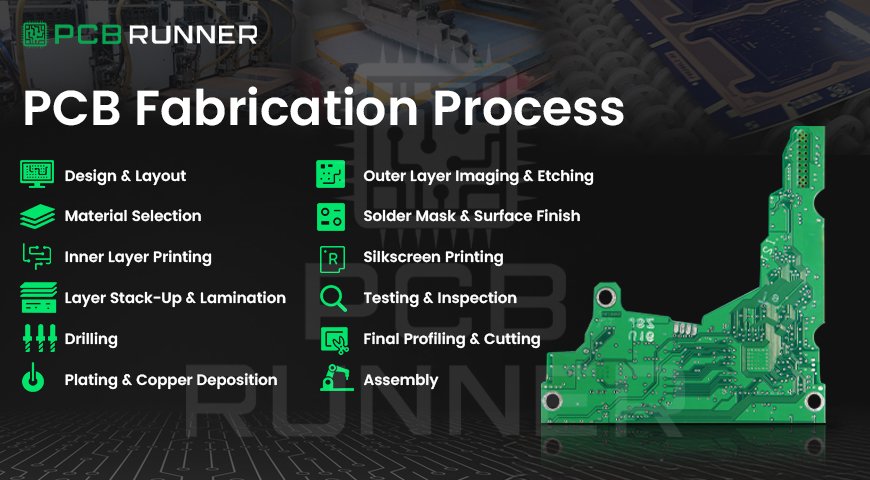
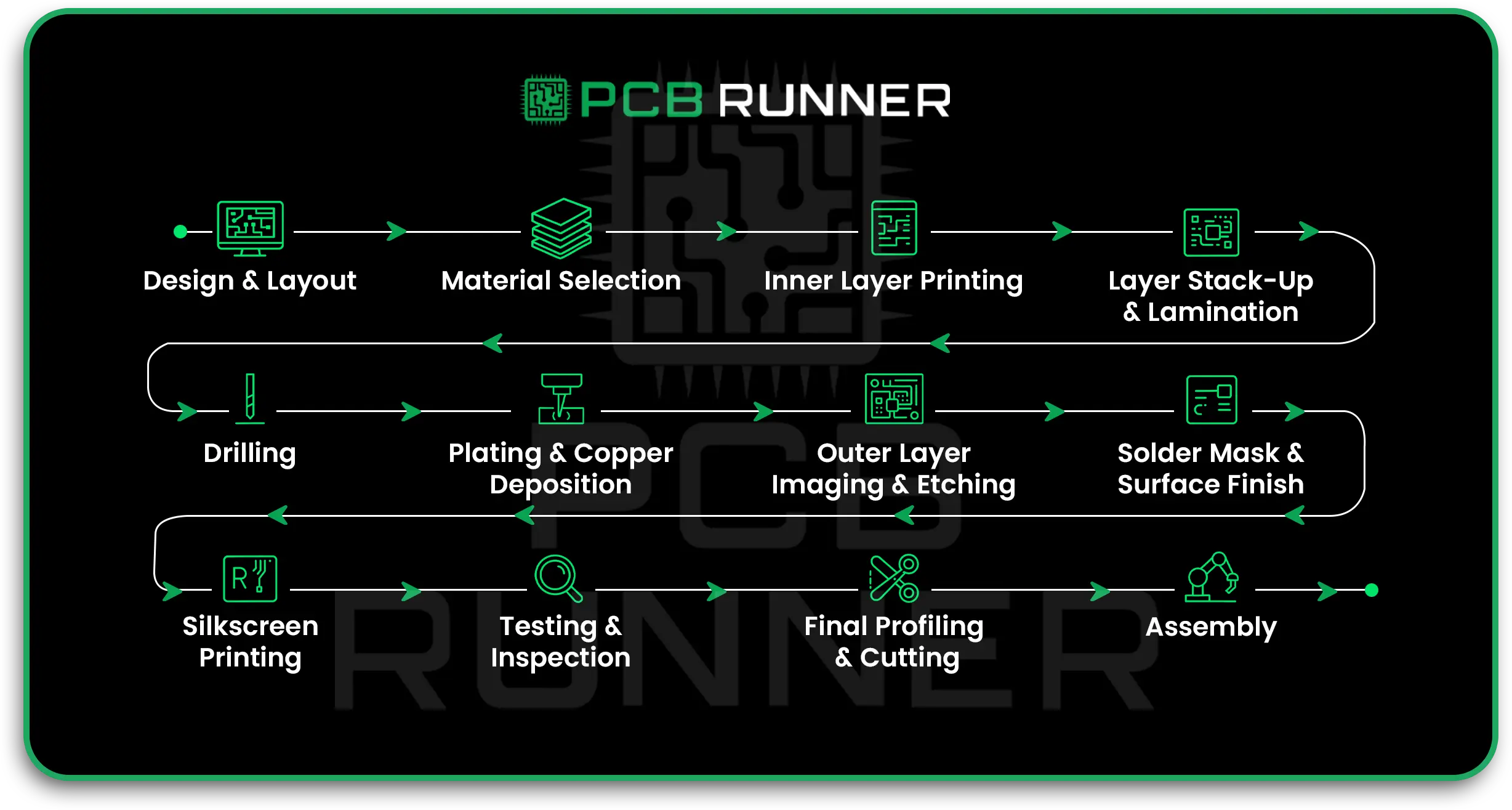
PCB fabrication is the process of making the physical board that holds and connects all the electronic parts. This includes choosing the right PCB circuit board material, layering, etching, drilling, and finishing the board so it’s ready for assembly.

PCB Fabrication Process

Advanced Materials, The New Building Blocks

The material of PCB is more important than ever. Today’s devices need boards that are strong, light, and can handle high speeds and heat. That’s why the choice of PCB board material is a big deal in modern PCB board fabrication.

Key Innovations in PCB Board Material

  • High-Performance Substrates: New substrates offer better heat resistance and electrical performance, perfect for 5G and high-speed devices1.
  • Conductive Inks: Used in additive manufacturing and 3D printing, these inks allow for more flexible and custom designs.
  • Biodegradable and Eco-Friendly Materials: These help reduce electronic waste and meet strict environmental rules.

Automation and AI, Smarter, Faster, Better

One of the most significant changes in PCB fabrication and assembly is the rise of automation and artificial intelligence (AI).

How Automation Is Changing PCB Fabrication UK

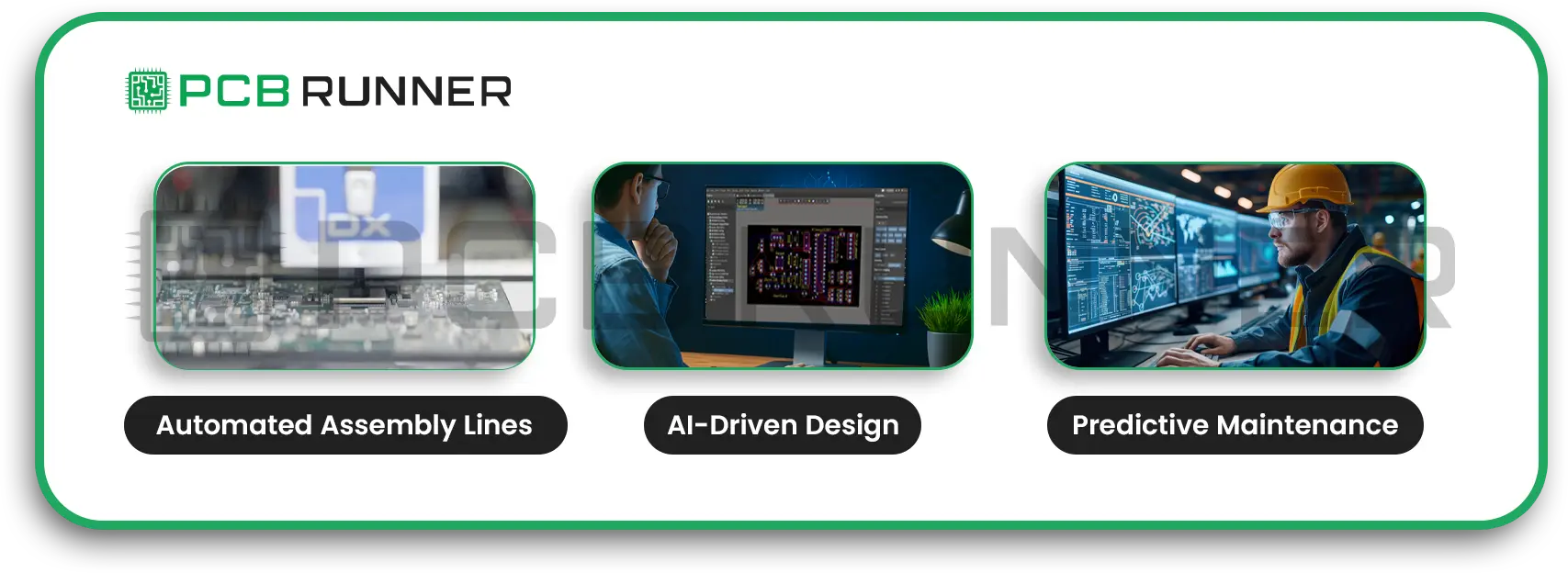
  • Automated Assembly Lines: Robots now handle soldering, component placement, and even inspection, making the process faster and more accurate.
  • AI-Driven Design: AI software helps design PCBs, optimizing layouts, checking for errors, and predicting failures before they happen.
  • Predictive Maintenance: AI keeps machines running smoothly by spotting problems before they cause downtime.

These smart-systems mean fewer mistakes, lower costs, and higher quality boards.

Automation Is Changing PCB Fabrication UK

3D Printing, A Game Changer for PCB Board Fabrication

3D printing isn’t just for plastic toys, it’s transforming how we make PCBs. With 3D printing, manufacturers can create complex shapes and custom boards quickly and with less waste.

Benefits of 3D Printed PCBs

  • Faster Prototyping: Engineers can test ideas in days, not weeks.
  • Customization: Each board can be made to fit special needs, great for aerospace or medical devices.
  • Cost Savings: Less material is wasted, and there’s no need for expensive moulds or tools.

Miniaturization and HDI, Packing More Into Less

As devices get smaller, PCBs must do more in less space. This is where High-Density Interconnect (HDI) technology comes in. HDI boards use tiny holes (microvias) and thin layers to fit more connections and parts into a smaller area.

Why HDI Matters

  • Supports Smaller Devices: Perfect for wearables, smartphones, and IoT gadgets.
  • Improved Performance: Better signal quality and less interference.
  • Greater Reliability: Fewer problems with heat and stress.

Eco-Friendly PCB Fabrication, Greener Boards for a Better Future

Sustainability is a big trend in PCB fabrication UK. Companies are looking for ways to make boards that are safer for people and the planet.

Green Innovations in PCB Board Material

  • Lead-Free and Halogen-Free Boards: Safer for workers and the environment.
  • Recyclable and Biodegradable Materials: Boards that break down or can be reused.
  • Energy-Efficient Production: Using less power and water and recycling waste.

Smart Testing and Quality Control

Making sure every board works perfectly is critical, especially for things like medical devices or aeroplanes. New testing methods use AI, robots, and real-time sensors to catch problems early and keep quality high.

Advanced Quality Control Methods

  • Automated Optical Inspection (AOI): Cameras and AI check every board for defects.
  • X-Ray Inspection: Finds hidden problems inside the board5.
  • IoT-Enabled Sensors: Monitor the process and alert teams if something goes wrong.

Embedded Components, The Next Step in PCB Assembly UK

Instead of placing all parts on the surface, new boards embed components inside the layers. This saves space, improves performance, and protects sensitive parts from damage.

Advantages of Embedded Components

  • Smaller, Lighter Boards: Perfect for drones, satellites, and medical implants.
  • Better Electrical Performance: Shorter paths mean faster signals and less noise.
  • More Durable: Components are shielded from shocks and moisture.

The Role of PCB Printed Circuit Board Assembly

After fabrication, the next step is pcb printed circuit board assembly. This is where all the chips, resistors, and other parts are added to the board. Smart machines and AI make this step faster and more reliable than ever.

Key Trends in PCB Assembly UK

  • Robotic Soldering: Ensures perfect joints every time.
  • Automated Placement: Tiny parts are placed with pinpoint accuracy.
  • Real-Time Quality Checks: Problems are caught and fixed on the spot.

Key Takeaways, Why Smart Innovations Matter

  • Automation and AI are making PCB fabrication and assembly faster, cheaper, and more reliable.
  • Advanced PCB board material choices mean better performance and greener electronics.
  • 3D printing and embedded components are opening new doors for design and miniaturization.
  • Quality control is more intelligent than ever, thanks to AI and real-time sensors.
  • The UK is at the forefront of these innovations, leading the way in innovative, sustainable PCB manufacturing.
Conclusion: The Future Is Now

The world of PCB fabrication in the UK is changing fast. Smart innovations, from new materials to AI-powered machines, are making boards smaller, faster, and greener. Whether you’re an engineer, a business owner, or just a tech fan, these changes mean better, more reliable electronics for everyone.

Ready to see what innovative PCB fabrication can do for your next project? The future is here, and it’s built on smarter boards.

FAQs, Your Questions About PCB Fabrication and Assembly

Q1: What is the most common PCB board material?
FR4, a type of fibreglass epoxy, is still the most common, but new materials like ceramics and biodegradable substrates are gaining ground.
Q2: How does AI help in PCB fabrication?
AI speeds up design, catches mistakes, and predicts failures before they happen, making the whole process smarter and more reliable.
Q3: Is 3D printing used for mass production of PCBs?
Right now, it’s mainly used for prototypes and small batches, but as the technology improves, it could become common for larger runs, too.
Q4: Why are eco-friendly materials necessary in PCB fabrication?
They help reduce toxic waste, protect workers, and meet strict environmental laws, making electronics safer for everyone.
Q5: What are the benefits of embedded components in PCBs?
They save space, improve performance, and protect sensitive parts from damage.

PCB Technologies

Driving Smart Infrastructure Market Growth with Adaptive PCB Technologies

Imagine a world where cities are smarter, safer, and more efficient. Roads talk to cars, buildings manage their energy, and trains run on time with no delays. This isn’t the future, it’s happening now across the UK and Europe. At the heart of these changes are intelligent infrastructure systems powered by the latest technology in PCB design. If you’re curious about how adaptive PCB technologies are helping shape this new world, you’re in the right place.

What is Smart Infrastructure?

Smart infrastructure means using technology to make things work better. It’s about connecting roads, bridges, buildings, and even parks to the internet so they can collect and share information. This helps cities run smoothly, saves energy, and keeps people safe. But none of this is possible without reliable electronics. That’s where PCB circuit board manufacturers come in.

What is Smart Infrastructure

The Role of PCB Technologies

Printed circuit boards, or PCBs, are the backbone of all modern electronics. They connect all the tiny parts that make devices work. For smart infrastructure, you need PCBs that are tough, flexible, and packed with features. The latest technology in PCB design is making this possible.

Why Adaptive PCB Technologies Matter

Adaptive PCB technologies can change and improve as needs grow. For example, a high-density interconnect PCB lets engineers fit more connections in a smaller space. This is perfect for smart traffic lights or sensors that need to be small but powerful. Rigid-flex PCB manufacturers offer boards that bend and twist, which is excellent for devices that go in tight spaces or need to move.

How PCB Runner Supports the UK & Europe

If you’re looking for a reliable partner in the world of PCBs, PCB Runner stands out in the UK and Europe. With over 10 years of experience, they’ve built a reputation as a trusted PCB circuit board manufacturer1. They handle everything in-house, from design to assembly, so you get quality boards, fast turnaround, and excellent support.

Key Benefits of Choosing PCB Runner

  • All services are under one roof, no need to juggle different suppliers1.
  • Certified to ISO9001 and IPC Class 2, 3, and 3A standards, ensuring top quality1.
  • 24-hour tech support, so you always have help when you need it.
  • Free engineering file review before custom PCB fabrication, so you get precisely what you want.

Types of PCBs Making a Difference

Let’s look at some of the PCB technologies driving smart infrastructure:

High-Density Interconnect PCB (HDI PCB)

HDI PCBs are a game-changer. They let you pack more power into smaller devices. Think about sensors that monitor air quality or traffic flow in real-time. These sensors need to be tiny but must handle lots of data. HDI PCBs make this possible by using thinner lines and more layers.

Rigid Flex PCB Manufacturer Solutions

Some devices need to bend or fit into odd shapes, like smart wearables or curved displays on buses. Rigid-flex PCBs combine the strength of a rigid board with the flexibility of a thin, bendy one. This means your devices can go where traditional boards can’t.

Embedded PCB Technology

Embedded PCB technology puts chips and other parts right inside the board itself. This saves space and makes the board stronger. It’s perfect for devices that need to last a long time or work in tough places, such as underground sensors or railway controls.

Real-World Examples

Let’s see how these technologies are used in real life:

  • Smart Traffic Lights: These use HDI PCBs to process data from cameras and sensors. They can change signals based on real-time traffic, reducing jams and pollution.
  • Energy Management in Buildings: Embedded PCB technology helps control heating, lighting, and security from a single system. This saves energy and keeps people comfortable.
  • Railway Safety: Rigid-flex PCBs are used in train control systems. They’re tough enough to handle vibrations and flexible enough to fit into tight spaces.

Why Quality Matters

In smart infrastructure, failure isn’t an option. A single faulty board can cause delays, safety risks, or even accidents. That’s why it’s essential to work with a PCB circuit board manufacturer that puts quality first. PCB Runner reviews every engineering file before production and offers after-sales support to solve problems quickly.

How to Choose the Right PCB Partner

If you’re planning an innovative infrastructure project, here’s what to look for in a PCB partner:

  • Experience in the UK and Europe, with a proven track record1.
  • Ability to handle both small and large orders so that you can scale up as needed1.
  • Certified quality standards for peace of mind1.
  • Fast, friendly customer service, including 24-hour tech support1.

PCB Runner ticks all these boxes, making them a top choice for engineers and project managers.

The Future of Intelligent Infrastructure Systems

As cities get smarter, the demand for advanced PCB technologies will only grow. Here’s what you can expect in the coming years:

  • Even smaller and more powerful HDI PCBs for next-generation sensors.
  • More use of embedded PCB technology for rugged, long-lasting devices.
  • Flexible and rigid flex PCBs in everything from smart streetlights to wearable tech for workers.

Actionable Tips for Your Next Project

If you’re starting a new smart infrastructure project, keep these tips in mind:

  • Plan for the Future: Choose PCB technologies that can adapt as your needs change.
  • Work with Experts: Partner with a manufacturer like PCB Runner who understands the challenges of intelligent infrastructure systems.
  • Focus on Quality: Don’t cut corners, invest in boards that are built to last.
  • Ask for Support: Make sure your supplier offers technical help when you need it.

Final Thoughts

Smart infrastructure is changing the way we live, work, and travel. The latest technology in PCB design is making it all possible. Whether you need a high-density to interconnect PCB for a tiny sensor, a rigid-flex PCB manufacturer for a flexible device, or embedded PCB technology for a tough job, the right partner makes all the difference.

PCB Runner has earned the trust of customers across the UK and Europe by delivering quality, reliability, and support1. If you want your smart infrastructure project to succeed, start with the best in PCB technologies.

Ready to take the next step? Reach out to PCB Runner for a free quote and see how they can help you build the future, one board at a time.

Laminate Materials

The Future of PCB Design: Advancements in Laminate Materials

Printed circuit boards (PCBs) are the unsung heroes of modern electronics. From smartphones to satellites, they connect and power the devices we rely on every day. But as our technology advances, so must the materials and methods used in PCB manufacture and design. One of the most exciting areas of innovation is in PCB laminate materials. In this blog, we’ll explore how new laminate materials are shaping the future of PCB fabrication, especially in the UK, and what this means for industries everywhere.

PCB Laminate Materials: The Foundation of Modern Electronics

Before we dive into the future, let’s start with the basics. PCB laminate materials are the backbone of every circuit board. They provide the structure, strength, and electrical insulation needed for reliable performance. Think of them as the canvas on which your electronic masterpiece is built.

What Are Laminate Materials for PCB Fabrication?

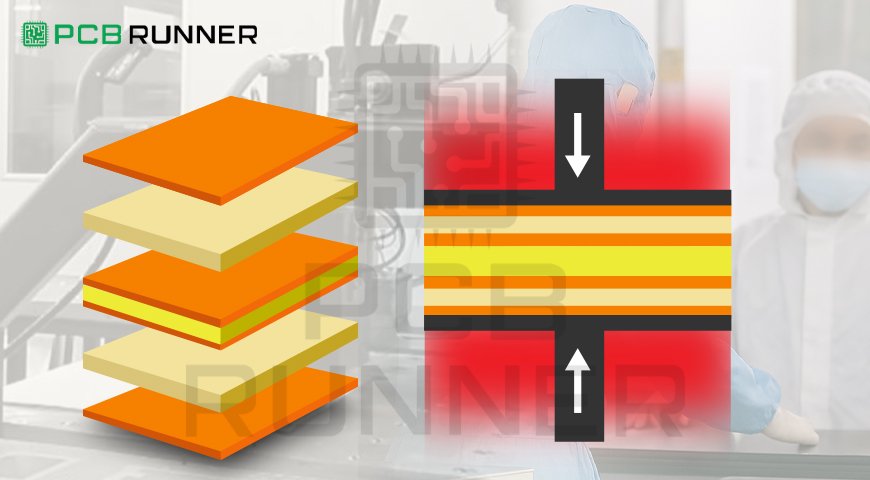
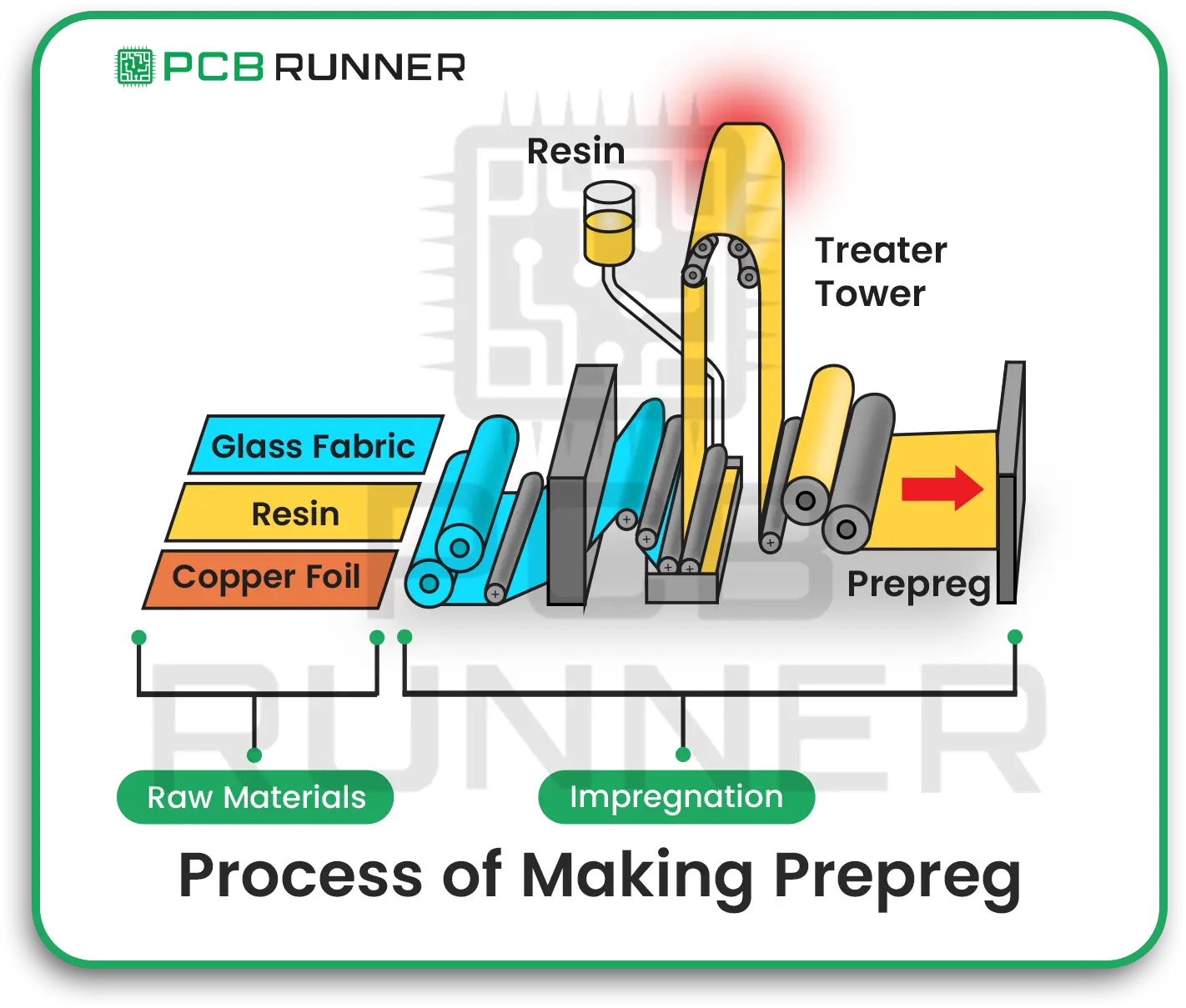
A PCB laminate is typically made from layers of fiberglass and resin pressed together to form a solid, durable sheet. The most common type is FR4, a glass-reinforced epoxy laminate. It’s strong, lightweight, and affordable—making it the go-to choice for many applications.

But as devices get faster and smaller, traditional laminates can’t always keep up. That’s where new materials come in.

Process of Making Prepreg lamination

Why Laminate Materials Matter in PCB Manufacture

The choice of PCB laminate materials affects everything from signal speed to heat resistance. In high-speed or high-frequency circuits, even tiny losses can cause big problems. That’s why industries like telecom, aerospace, and automotive are demanding better, more innovative materials.

Key Properties of Advanced PCB Laminates

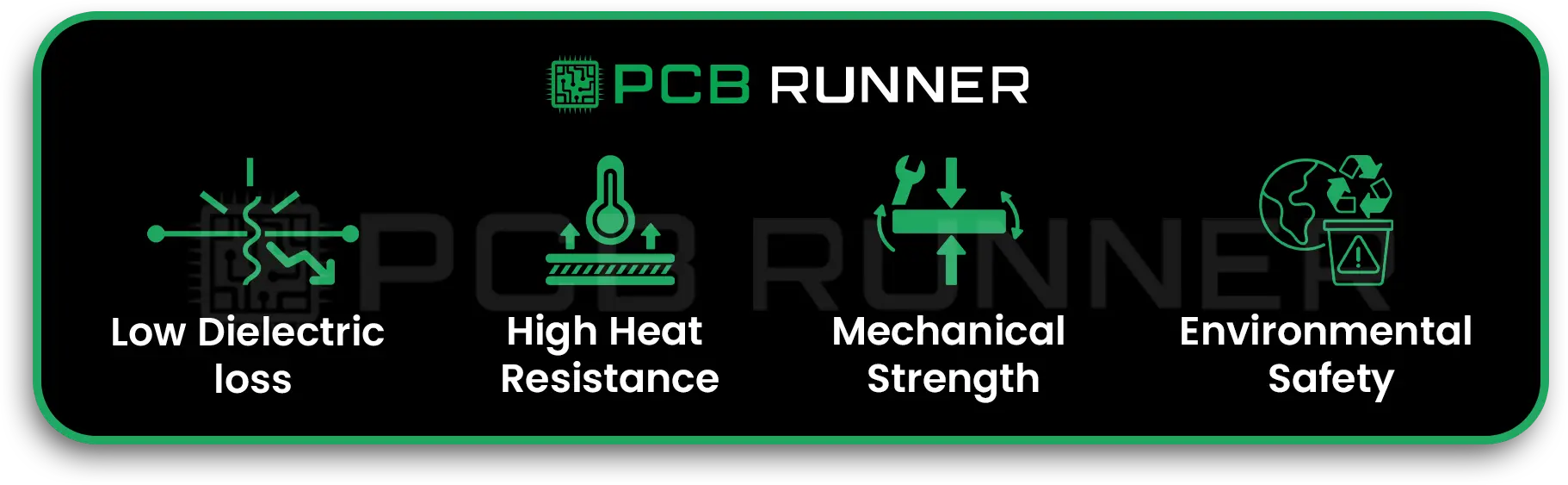
  • Low dielectric loss: Keeps signals strong and clear.
  • High heat resistance: Prevents warping and failure under stress.
  • Mechanical strength: Withstands bending and vibration.
  • Environmental safety: Reduces toxic waste and supports recycling.

Key Properties of Advanced PCB Laminates

Latest Trends in PCB Laminate Materials

The world of PCB fabrication UK is changing fast. Let’s look at some of the trends shaping the future.

1. High-Performance Substrates

New high-performance substrates, like advanced epoxies and polyimides, offer better thermal and electrical properties. These materials are perfect for demanding applications, such as 5G networks and automotive radar.

2. Low-Loss Dielectric Materials

For high-frequency designs, low-loss dielectrics are a game changer. Materials like PTFE (Teflon) and special ceramics allow signals to travel faster, with less distortion. This is crucial for hdi pcb board designs, where space is tight, and performance is critical.

3. Eco-Friendly and Recyclable Laminates

Sustainability is becoming a top priority. New bio-based and recyclable laminates, like JIVA’s Soluboard®, are being tested by major companies for their ability to reduce e-waste and support responsible manufacturing7. These materials dissolve in hot water, making it easier to recover valuable components and metals at end-of-life.

4. 3D Printing and Additive Manufacturing

3D printing is transforming the fabrication of printed circuit boards. With conductive inks and printable laminates, manufacturers can create complex, custom boards with less waste and faster turnaround times. This is especially useful for prototyping and small-batch production.

The Role of HDI PCB Board Technology

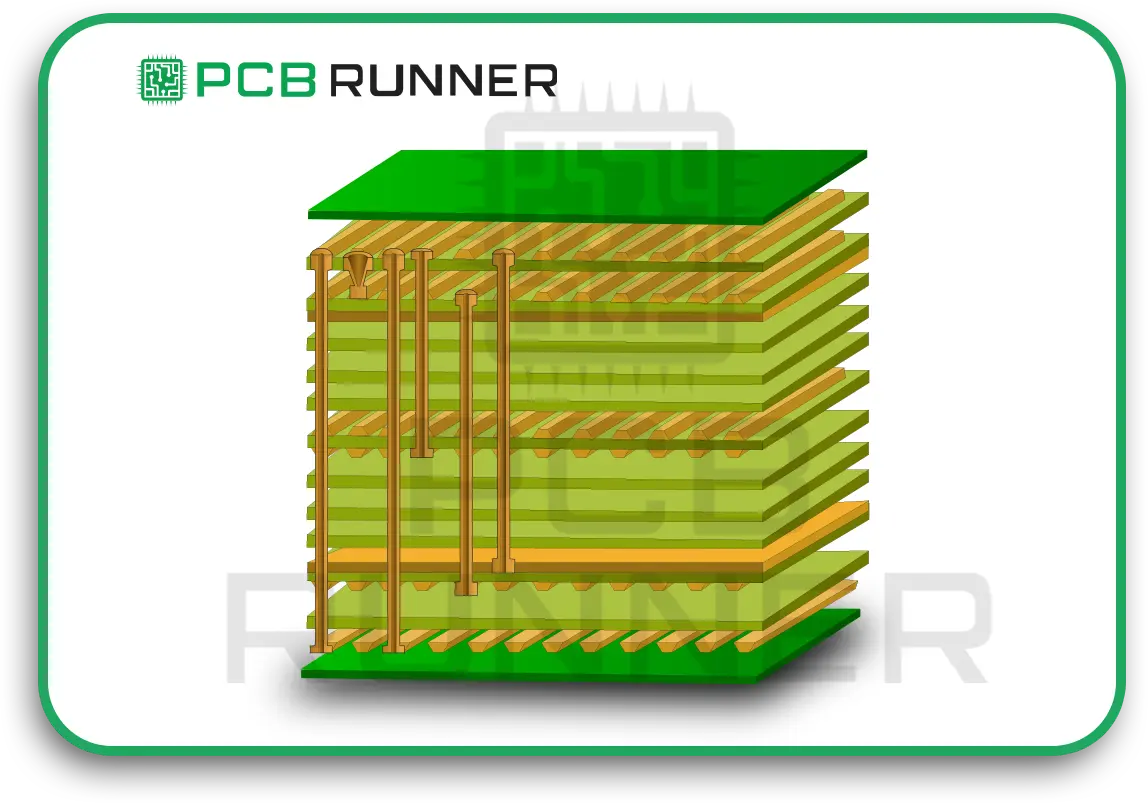
High-density interconnect (HDI) PCB boards are leading the miniaturization revolution. By using thinner laminates and microvias, HDI boards pack more power into less space. This technology relies on advanced laminate materials that can handle tight tolerances and high signal speeds.

HDI PCB Board Technology

Benefits of HDI PCB Boards

  • Smaller size: Perfect for wearables, smartphones, and IoT devices.
  • Better performance: Supports high-speed, high-frequency signals.
  • Greater reliability: Reduces risk of defects and failures.


Comparing Traditional vs. Advanced PCB Laminates

Feature Traditional FR4 Advanced Laminates (PTFE, Polyimide, Ceramic)
Dielectric Constant Moderate Low (better for high-speed)
Heat Resistance Good Excellent
Environmental Impact Non-recyclable Some are recyclable or biodegradable
Cost Low Higher, but dropping as tech matures
Use Cases General electronics 5G, aerospace, automotive, HDI

How PCB Laminate Innovations Impact PCB Printed Circuit Board Assembly

Advancements in PCB laminate materials don’t just improve the board—they also make PCB-printed circuit board assembly faster and more reliable. With better laminates, soldering is easier, components stay put, and the finished board is less likely to fail in the field.

Real-World Example

Imagine assembling a high-speed router for a 5G network. Using a low-loss, high-heat laminate means the board can handle fast data without overheating or dropping signals. That’s a win for both manufacturers and users.

Sustainability: The Next Frontier in PCB Fabrication UK

The push for greener electronics is driving change in the PCB fabrication UK sector. Manufacturers are adopting:

  • Lead-free and halogen-free laminates: Safer for workers and the environment.
  • Energy-efficient production: Using renewable energy and recycling water.
  • Biodegradable substrates: Reducing landfill waste and supporting circular economies.

These changes are not just good for the planet—they also help companies meet strict regulations and appeal to eco-conscious customers.

The Future: What’s Next for PCB Laminate Materials?

The future looks bright—and busy. Here’s what to watch for:

AI and Automation in PCB Design

AI-powered tools are making it easier to choose the right laminate for each project. These systems can predict how different materials will perform, optimize layouts, and even spot potential problems before production begins.

Embedded Components

New laminates allow for components to be embedded directly into the board, saving space and improving reliability. This trend is significant for medical devices, aerospace, and automotive electronics.

Custom and On-Demand Fabrication

With 3D printing and advanced laminates, it’s now possible to create custom boards on demand. This means faster prototyping, less waste, and more flexibility for designers and engineers.

Key Takeaways: Why Laminate Innovation Matters

  • PCB laminate materials are the foundation of every electronic device.
  • Advancements in laminates enable faster, smaller, and more reliable PCBs.
  • Eco-friendly and recyclable materials are shaping the future of PCB Fabrication UK.
  • AI, automation, and 3D printing are making custom, high-performance boards more accessible than ever.
  • Choosing the right laminate is key to success in modern PCB manufacture and assembly.

Conclusion: Building the Future, One Layer at a Time

The world of PCB laminate materials is evolving fast. As technology pushes boundaries, so do the materials and methods behind every circuit board. Whether you’re designing for speed, sustainability, or both, the right laminate can make all the difference.

At the heart of this change is a simple truth: better materials mean better electronics. For anyone involved in PCB manufacture, PCB fabrication UK, or PCB printed circuit board assembly, staying ahead of these trends is the key to building the next generation of smart, sustainable devices.

Ready to take your PCB designs to the next level? Explore the latest in laminate materials and see how innovation can power your next big idea.

FAQs: Your Questions About PCB Laminate Materials Answered

Q1: Why are laminate materials so necessary in PCB manufacture?
Laminate materials determine the strength, speed, and reliability of a PCB. The right choice ensures your board can handle high speeds, heat, and stress without failing.
Q2: What’s the difference between FR4 and advanced laminates?
FR4 is a standard, affordable option. Advanced laminates like PTFE or ceramics offer better performance for high-speed or high-frequency applications but may cost more.
Q3: Are eco-friendly laminates as reliable as traditional ones?
Yes, many new eco-friendly laminates match or even exceed the performance of traditional materials. Companies like Microsoft and Jaguar are already testing them in real-world products.
Q4: How do new laminates affect the fabrication of printed circuit boards?
They make boards easier to assemble, more reliable, and better suited for demanding applications like 5G, IoT, and automotive electronics.
Q5: What’s next for PCB laminate materials?
Expect more recyclable, biodegradable, and high-performance options, along with more brilliant AI-driven design and on-demand manufacturing.

Telecom Equipmen

Empowering the Telecom Equipment Market with Advanced PCB Innovations

Ever wondered what keeps your phone calls crisp, your internet fast, and your smart devices connected? The answer lies in a tiny yet mighty hero: the printed circuit board, or PCB. In today’s fast-paced telecom equipment market, advanced PCB innovations are driving change and powering the networks we rely on every day. Let’s dive into how PCB manufacturing is shaping the future of telecom and why companies like PCB Runner are leading the way in the UK and Europe.

PCB Manufacture – The Backbone of Telecom Equipment

Printed circuit boards are at the core of every telecom device. From mobile towers to home routers, they make sure signals travel smoothly, and data gets where it needs to go. But not all PCBs are created equal. In the telecom equipment market, quality and reliability are everything.
Why Quality Matters in PCB Production UK

Telecom networks can’t afford downtime. Every second counts. That’s why telecom PCB assembly must meet strict standards. At PCB Runner, we don’t just manufacture PCBs; we ensure every board is tested, certified, and ready for action. Our ISO9001 certification and IPC Class 2, 3, and 3A qualifications mean you get peace of mind with every order.

Why Quality Matters in PCB Production UK

Key Features of Reliable Telecom PCB Assembly

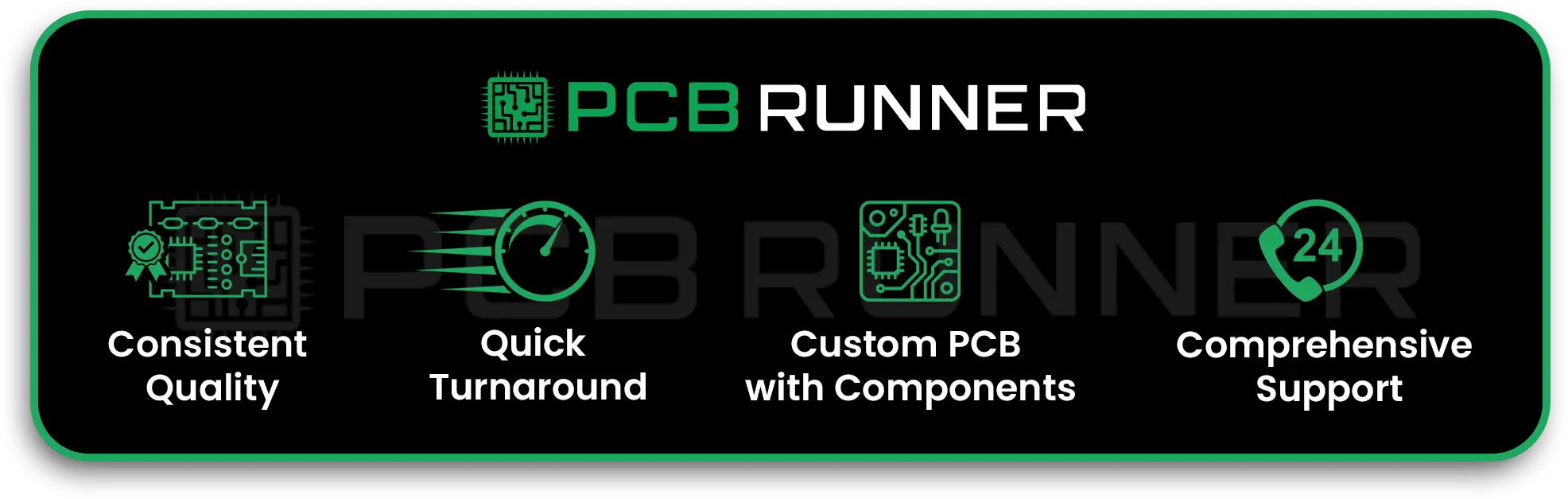
  • Consistent Quality: In-house manufacturing ensures every PCB meets our high standards.
  • Quick Turnaround: Fast production, whether you need a single prototype or a large batch.
  • Comprehensive Support: 24-hour tech support for all your questions and concerns.
  • Custom PCB with Components: Tailored solutions for unique telecom needs.

pcb runner

Advanced Materials – Powering Next-Gen Telecom

The telecom equipment market is changing fast, especially with the rollout of 5G and the rise of smart devices. This shift demands more from every PCB board component. Advanced materials are now essential for high-speed, high-frequency communication.

The Role of Exotic Materials in PCB Production UK

Modern telecom PCBs use materials like PTFE and high-frequency laminates. These help reduce signal loss, improve speed, and boost overall performance. As networks move to 5G and beyond, these innovations are no longer optional; they’re a must-have.
Benefits of Advanced PCB Board Components

  • Better Signal Integrity: Less loss, clearer connections.
  • Higher Speeds: Perfect for 5G, IoT, and AI-driven devices.
  • Improved Durability: Withstands heat and stress in demanding environments.

Custom PCB with Components – Tailored for Telecom

No two telecom projects are the same. That’s why custom PCB with components is a game-changer. Whether it’s a complex switching system or a compact router, custom solutions ensure every need is met.

PCB Runner’s Approach to Customization

We work closely with customers to design, review, and assemble PCBs that fit their exact requirements. Our team checks every engineering file before production, ensuring you get precisely what you expect, no surprises, just results.

Customization Advantages

  • Flexibility: From rigid to flex and rigid-flex designs.
  • Precision: Every detail is tailored to your application.
  • Cost-Effectiveness: Optimized for both performance and budget.

Trends Shaping the Telecom PCB Assembly Market

The telecom equipment market is booming, and so is the need for advanced PCB solutions. Here are some trends you should know:

High-Density Interconnect (HDI) PCBs

HDI PCBs pack more circuits into less space. This is crucial as telecom devices shrink but need more power and speed. HDI technology is at the forefront of modern telecom PCB assembly.

Eco-Friendly Manufacturing

Sustainability matters. Many telecom companies now demand eco-friendly PCB production UK, using recyclable materials and greener processes. PCB Runner is committed to these practices, helping customers meet both performance and environmental goals.

Eco-Friendly Manufacturing

Growing Demand for Telecom PCB

With 5G networks expanding and IoT devices multiplying, the need for reliable telecom PCB is skyrocketing. The global telecom PCB market is set to grow at over 6% annually, driven by new technologies and rising data demands.

Growing Demand for Telecom PCB

Why Choose PCB Runner for Your Telecom PCB Needs?

Choosing the right partner for PCB manufacture can make or break your telecom project. Here’s why PCB Runner stands out:

One-Stop Shop for PCB Production UK

  • All Services Under One Roof: From design to assembly, we handle it all.
  • Instant Quotes: Get pricing and place orders any time, day or night.
  • After-Sales Support: We’re here for you, even after delivery.

Trusted by Industry Leaders

Our customers include major players in telecom, defence, medical, and more. Many come to us through word-of-mouth, thanks to our reputation for reliability and quality.

The Future of Telecom Marketing and Equipment

  • Advanced PCB innovations are powering the telecom equipment market.
  • Quality, speed, and customization are critical for telecom PCB assembly.
  • Eco-friendly and high-density PCB solutions are shaping the future.
  • PCB Runner is your trusted partner for PCB Production UK, offering expertise, reliability, and support.

Conclusion: Building Tomorrow’s Networks Today

The telecom equipment market is evolving at lightning speed. At the heart of this change? Advanced PCBs that make everything possible. Whether you need a single prototype or a full production run, PCB Runner is here to help. We bring together the best in PCB manufacture, PCB printed circuit board assembly, and custom solutions, so you can focus on what matters: connecting the world.

Ready to power up your next telecom project? Get in touch with PCB Runner for a free quote and see how we can help you lead the way in telecom innovation.

FAQs – Your Telecom PCB Questions Answered

Q1: What makes a telecom PCB different from a regular PCB?
A telecom PCB is built to handle high-frequency signals and large amounts of data. It uses special materials and designs to ensure reliability and speed.
Q2: How fast can I get a custom PCB with components?
At PCB Runner, we offer quick turnarounds for both prototypes and production runs. Timelines depend on complexity, but we’re known for fast, reliable delivery.
Q3: Are eco-friendly PCBs available for telecom applications?
Yes, We use recyclable materials and sustainable processes to meet both performance and environmental needs.
Q4: Can you help with design and assembly?
Absolutely. Our team reviews your files, offers design advice, and assembles your PCBs, all under one roof.
Q5: What industries do you serve besides telecom?
We supply PCBs for military, aerospace, defence, medical, and more. Any industry needing high-quality, reliable PCBs can count on us.

Optical Layers in PCB

Inside the Innovation: Optical Layers in PCB Manufacturing

When you look at your phone, a computer, or even a modern car, you probably don’t think about the tiny highways inside that move information at lightning speed. But those highways, built into printed circuit boards (PCBs), are what make today’s fast, smart devices possible. And now, with optical layers joining the mix, those highways are getting faster and more reliable than ever.

If you’re curious about how optical layers work in PCB manufacture, or you want to know what it means for your next project, you’re in the right place. Let’s break down what makes optical integration so important, how fibre optic printed circuit boards are built, and why this matters for you and your business.

What Are Optical Layers in PCBs?

Traditional PCBs use copper traces to carry signals. These traces are like tiny roads for electricity. But as our need for speed grows, think faster internet, better streaming, and smarter machines, copper sometimes hits its limits. That’s where optical layers come in.

Optical layers use light instead of electricity to move information. Inside the board, you’ll find fibre optic interconnects or special optical channels. These can carry more data faster and with less interference. It’s a bit like swapping out a busy city street for a high-speed train, suddenly, everything moves quicker and smoother.

Why Use Optical Integration PCB Technology?

Let’s keep it simple. Here are the main reasons you might want optical layers in your PCB printed circuit board assembly:

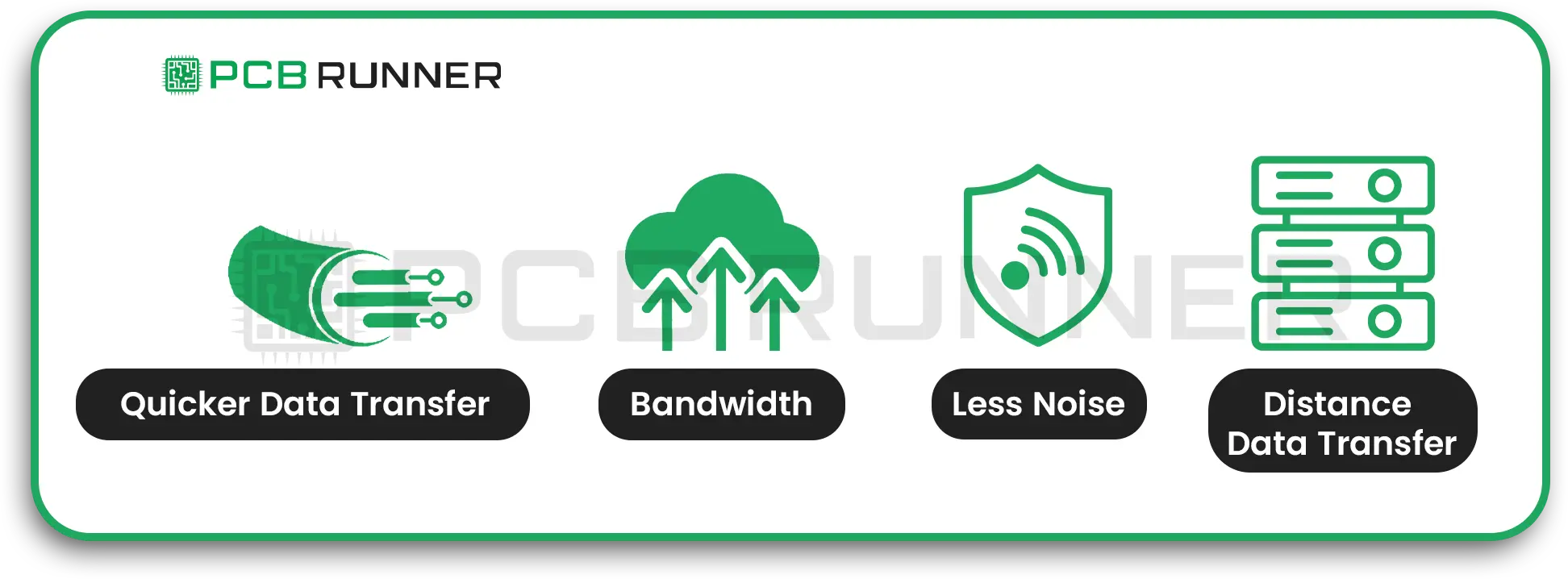
  • Speed: Light travels faster than electricity, so you get quicker data movement.
  • Bandwidth: Optical interconnects can handle more information at once.
  • Less Noise: Optical signals aren’t bothered by electrical interference.
  • Distance: Fiber optic interconnects can send signals further without losing quality.

If you’re building telecom equipment, servers, or anything that needs to move lots of data, these benefits are a big deal.

Why Use Optical Integration PCB Technology_

How Optical Layers Fit into PCB Manufacture

Adding optical layers to a PCB isn’t just about sticking in a few extra parts. It’s a careful process that starts at the design stage and goes all the way through custom PCB assembly. Here’s how it usually works:

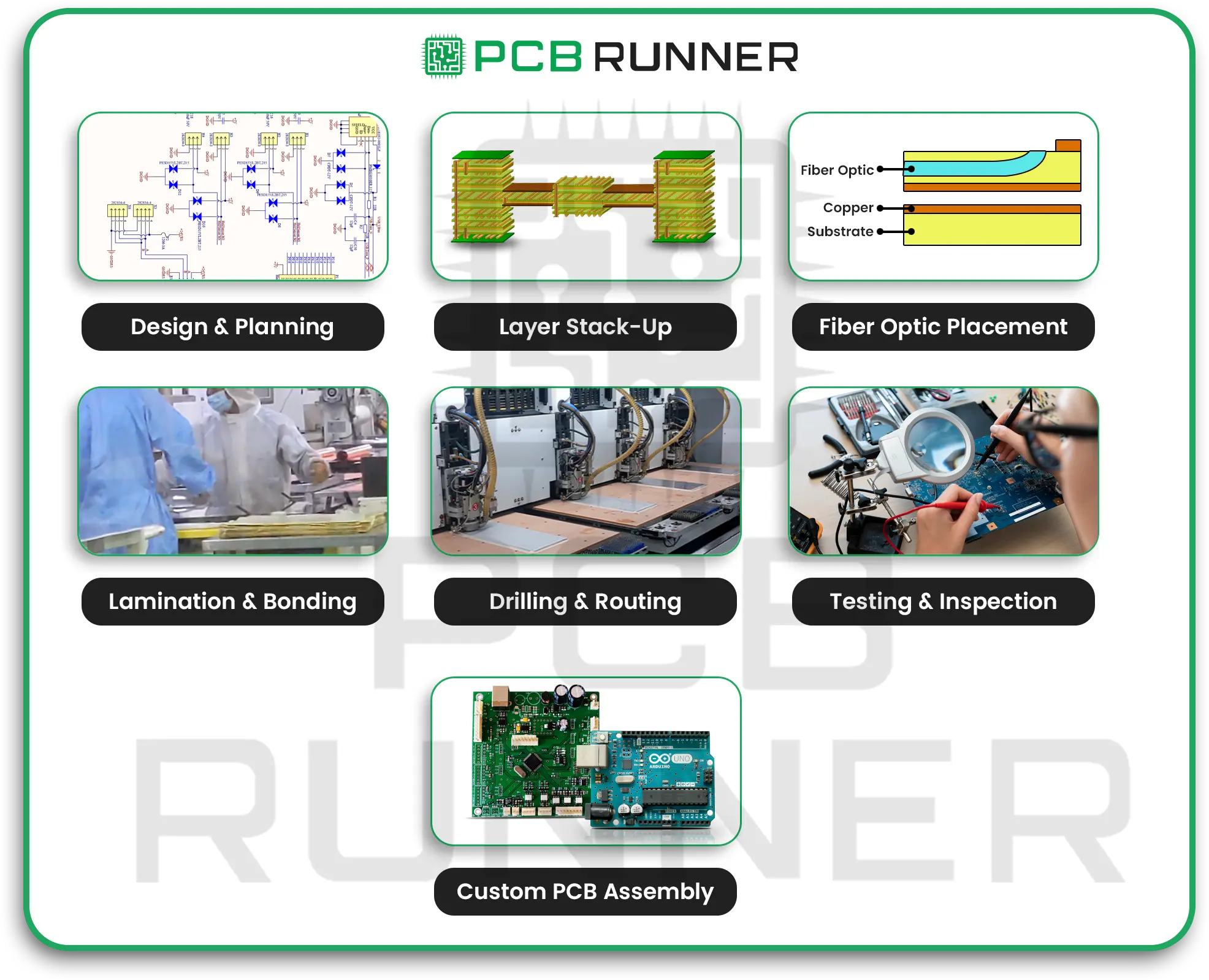
Design and Planning

First, you and your team decide where you need optical channels. Maybe you want to connect two chips that are far apart, or you need to link several boards together with fibre optic interconnects. You’ll work with your PCB manufacturing partner to plan the layout and choose the right materials.

Layer Stack-Up

A modern PCB can have many layers, some for power, some for signals, and now, some for light. The optical layers are often sandwiched between regular copper layers. This keeps everything compact and protected.

Fiber Optic Placement

During the build, technicians place tiny fibre optic cables or waveguides into the board. These need to be lined up perfectly so the light can travel without getting lost. It’s a bit like threading a needle but with much smaller threads.

Lamination and Bonding

Once everything is in place, the layers are pressed together using heat and pressure. This step locks the optical and electrical parts into a single, solid board.

Drilling and Routing

Special machines drill holes and create paths for both the copper and optical parts. Precision matters, if a hole is off by even a fraction of a millimetre, the light won’t travel correctly.

Testing and Inspection

Before the board is finished, it’s checked with automated tools. These tools look for problems in both the electrical and optical layers. If something’s wrong, it’s fixed before moving to the next step.

Custom PCB Assembly

Finally, your board moves to assembly. Here, chips and other components are added, and everything is soldered in place. If you’re working with a partner like PCB Runners, they’ll make sure your optical integration PCB is handled with care from start to finish.

How Optical Layers Fit into PCB Manufacture

Where Are Fiber Optic Printed Circuit Boards Used?

You might be surprised at how many places use optical layers today:

  • Telecom equipment: Fast, reliable data transfer is a must.
  • Data centres: Servers need to talk to each other quickly.
  • Medical devices: High-resolution images and fast data movement help doctors and patients.
  • Aerospace: Secure, interference-free signals are critical in planes and satellites.

If you’re in any of these fields, you know how important speed and reliability are. Optical layers help you meet those goals.

Tips for Working with Optical Interconnects in PCBs

If you’re thinking about adding optical layers to your next PCB prototype or product, here are some things to keep in mind:

  • Work with experienced partners: Not every PCB shop can handle optical layers. Choose a team that knows the process inside and out.
  • Plan your layout carefully: Optical channels need straight, clear paths. Avoid sharp bends or crowded areas.
  • Choose the right materials: Some PCB materials are better for light transmission than others.
  • Test early and often: Catching problems early saves time and money later.
  • Document everything: Good notes help your team and your PCB manufacturing partner avoid mistakes.

Real-World Example: Building a Fiber Optic PCB Prototype

Let’s say you’re designing a new telecom switch. You need to move massive amounts of data between different parts of the board. Using only copper would mean thick, heavy traces and lots of heat. By adding optical layers, you can keep your board slim, cool, and fast.

You start by working with your PCB manufacturing partner to design the stack-up. You add fibre optic interconnects between key chips. After building a PCB prototype, you test it thoroughly. The results? Faster speeds, better reliability, and a product that stands out in the telecom equipment market.

Conclusion: Why Optical Layers Matter for Your Next Project

Optical layers are changing the way we think about PCB manufacture and custom PCB assembly. By using light instead of just electricity, you can build boards that are faster, more reliable, and ready for the future. Whether you’re working on a PCB prototype or a full-scale product, fibre optic printed circuit board technology gives you a real edge.

At PCB Runners, we’re here to help you every step of the way, from design to PCB printed circuit board assembly. If you’re ready to take your next project to the next level, consider adding optical layers. Your devices will be faster, smarter, and ready for whatever comes next.

Frequently Asked Questions

1. What is an Optical Integration PCB?
It’s a printed circuit board that uses both copper and optical layers to move data. The optical parts use light, usually through fibre optic channels.
2. How do fibre optic interconnects work in a PCB?
They act like tiny light pipes, carrying signals from one part of the board to another with little loss or interference.
3. Can I get a PCB prototype with optical layers?
Yes. PCB Runners offers prototyping services so you can test your design before full production.
4. Are optical layers only for big companies?
No. As costs come down, more businesses, big and small, are using optical integration in their products.
5. What are the main challenges with optical layers?
Precision is key. Misalignment or poor material choices can cause problems, so it’s important to work with experts.
6. Do I need special equipment to test optical layers?
Yes. Automated optical inspection tools are used to check alignment and quality.
7. How do optical interconnects help with custom PCB assembly?
They let you connect more parts in less space, making your boards more powerful and compact.
8. Where should I start if I want to use optical layers?
Contact a trusted PCB manufacturing partner like PCB Runners early in your design process.

Internet of Things

The Future is Connected: Inside the Internet of Things

The Internet of Things (IoT) is changing the way we live and work. From smart thermostats and fitness trackers to industrial sensors and connected vehicles, IoT devices are everywhere. But what makes these devices possible? At the heart of every IoT device is a carefully engineered printed circuit board (PCB). The right PCB design and production choices are what allow IoT devices to be small, efficient, and reliable.

If you want to understand where IoT is heading and how to build devices that stand out, you need to know how Multilayer PCB, Flex and Rigid PCB, and smart PCB production methods make it all work. Let’s break down the key technical details and best practices for designing PCBs for the Internet of Things.

Understanding IoT PCB Requirements

IoT devices come in many forms, but they all have a few things in common. They need to be compact, often run on battery power, and must connect wirelessly. That means the PCB inside must be designed for low power, high density, and strong wireless performance.

Here’s what you need to focus on when working with IoT PCB design:

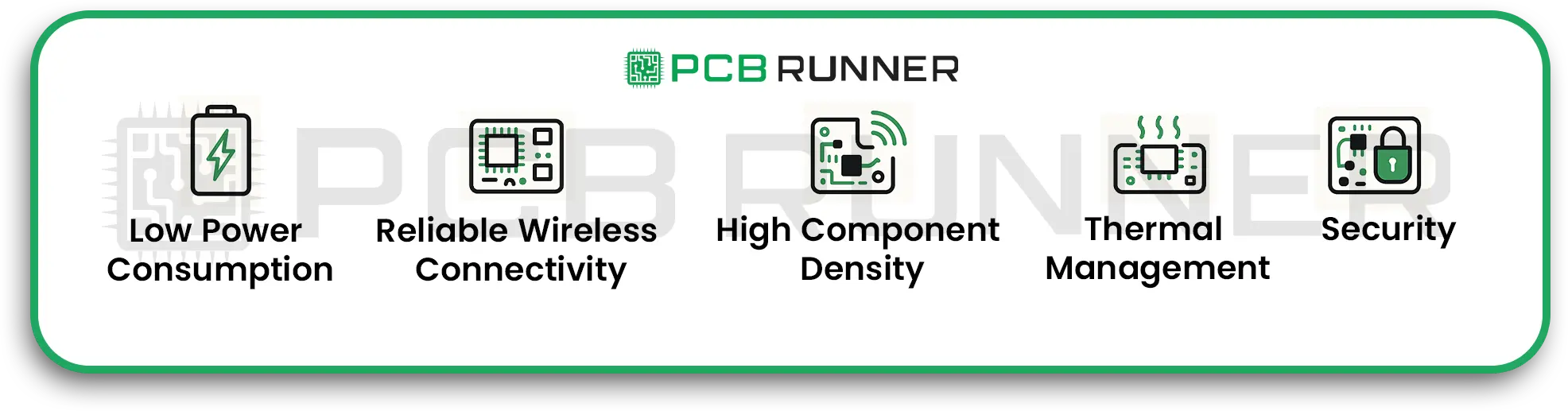
  • Low power consumption: Most IoT devices use batteries. The PCB must help minimise power draw to extend battery life.
  • High component density: Space is limited, so you need to fit more components into a smaller area.
  • Reliable wireless connectivity: The board must support antennas and RF circuits without causing interference.
  • Thermal management: Even small devices generate heat. Good PCB design keeps temperatures under control.
  • Security: Many IoT devices handle sensitive data. Hardware security features can be built into the PCB.

Understanding IoT PCB Requirements

Multilayer PCB: The Foundation for Complex IoT Devices

As IoT devices get smaller and more powerful, a single-layer PCB often isn’t enough. Multilayer PCB technology stacks several layers of circuitry, separated by insulating material, into one compact board. This approach allows you to:

  • Route more signals in less space
  • Separate analogue and digital signals to reduce interference
  • Improve power distribution and grounding
  • Support high-speed data and wireless signals

For example, a smart thermostat might use a Multilayer PCB to keep the Wi-Fi, processor, and sensor circuits separate, reducing noise and improving reliability2. In industrial IoT, Multilayer PCBs are essential for handling complex control and communication tasks.

Flex and Rigid PCB: Adapting to Any Shape or Space

IoT devices don’t always come in neat rectangles. Wearables, medical sensors, and automotive IoT often need PCBs that bend, fold, or fit into unusual spaces. That’s where Flex and Rigid PCB designs come in.

  • Flex PCBs are made from flexible materials, allowing them to bend and twist without breaking. They’re perfect for devices that need to fit into tight or curved spaces.
  • Rigid-Flex PCBs combine rigid sections (for mounting chips and connectors) with flexible sections (for folding or bending). This design reduces the need for connectors and cables, saving space and improving reliability.

Flex and Rigid PCB technology lets you design devices that are lighter, more durable, and more comfortable to wear or use.

PCB Production for IoT: What Matters Most

The best IoT devices depend on high-quality PCB production. Here are the most important factors to consider:

  • Material selection: Choose materials that match your device’s needs. For example, flexible substrates for wearables or high-frequency laminates for wireless modules9.
  • Precision manufacturing: IoT PCBs often use High-Density Interconnect (HDI) techniques, such as microvias and fine trace widths, to fit more into less space.
  • Quality control: Consistent production is key. Even small defects can cause big problems in small devices.
  • Customisation: Every IoT application is different. PCB production should allow for custom shapes, sizes, and features.

Best Practices for PCB Design for the Internet of Things

To get the most from your IoT PCB, follow these proven design strategies:

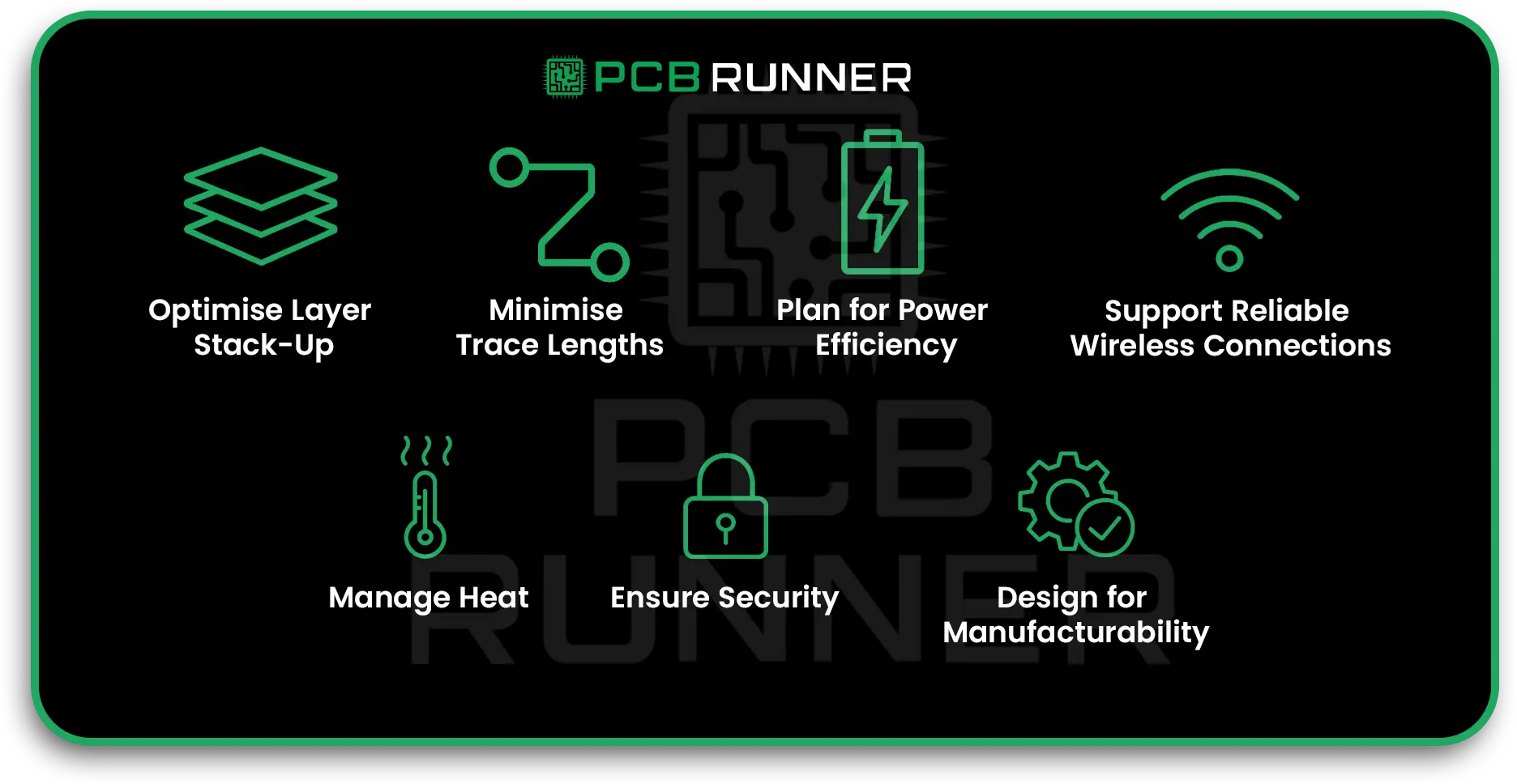
1. Optimise Layer Stack-Up

Use multiple layers to separate power, ground, and signal traces. This reduces noise and improves signal integrity, especially for wireless and high-speed circuits.

2. Minimise Trace Lengths

Shorter traces mean less signal loss and a lower risk of interference. Keep sensitive signals as short as possible, and use controlled impedance routing for high-speed or RF signals.

3. Plan for Power Efficiency

Choose low-power components and use power-saving design techniques. For example, use sleep modes for microcontrollers and sensors, and minimise the number of active circuits at any time.

4. Manage Heat

Even small IoT devices can get hot. Use thermal vias, copper pours, and a good component layout to spread and remove heat.

5. Support Reliable Wireless Connections

Keep antennas and RF circuits away from noisy digital signals. Use proper grounding and shielding to reduce electromagnetic interference (EMI).

6. Ensure Security

If your device handles sensitive data, consider adding hardware security modules or secure elements directly to the PCB.

7. Design for Manufacturability

Follow DFM (Design for Manufacturability) guidelines to make sure your board can be produced at scale, with minimal errors and rework.

Best Practices for PCB Design for the Internet of Things

Real-World Example: Smart Home Sensor

Let’s say you’re designing a smart home sensor. You’d likely use a Multilayer PCB to separate the power, processor, and wireless circuits. If the sensor needs to fit in a small or curved case, a Flex PCB makes sense. You’d keep trace lengths short, use microvias for high density, and make sure the antenna is isolated from digital noise. The result? A sensor that’s small, reliable, and lasts for years on a single battery.

Challenges in IoT PCB Design

Designing PCBs for IoT isn’t without its hurdles:

  • Signal integrity: High-frequency signals are sensitive to noise and interference. Careful routing and grounding are a must.
  • Component placement: With so many parts in a small space, placement is critical for both performance and manufacturability.
  • Testing and validation: Each device must be tested for power use, wireless range, and durability.
  • Cost control: Advanced features like Multilayer PCB and Flex and Rigid PCB add cost. Balance performance with budget for your application.

The Future of IoT PCB Design

As IoT continues to grow, PCB design and production will keep evolving. Expect to see:

  • Even higher density layouts, thanks to new HDI and micro via technology
  • More use of Flex and Rigid PCB designs for wearables and medical devices
  • Better integration of security and wireless features at the hardware level
  • Smarter, more automated PCB production for faster turnaround and lower costs

Key Takeaways

  • IoT devices depend on advanced PCB design and production for performance, size, and reliability.
  • Multilayer PCB and Flex and Rigid PCB technologies are essential for fitting more features into smaller, more complex devices.
  • Good PCB design for the Internet of Things focuses on power efficiency, signal integrity, thermal management, and manufacturability.
  • As IoT grows, so will the need for innovative PCB production methods and materials.

If you’re building for the future, start with the right PCB. It’s the foundation that makes every connection possible.

Conclusion: PCB Runners and the Connected Future

The Internet of Things is transforming every industry, from smart homes to healthcare to industrial automation. At the heart of this transformation are advanced PCBs—especially Multilayer PCB, Flex and Rigid PCB, and rigid HDI substrates—that make it possible to pack more features, better connectivity, and higher reliability into smaller, more efficient devices. 

Careful PCB design for Internet of Things applications is essential for meeting the strict demands of power efficiency, wireless performance, and durability that modern IoT devices require.

PCB Runners stands out as a leader in this space, delivering PCB solutions that support the unique needs of IoT innovation. Their expertise in rigid HDI PCB fabrication, power distribution, and signal integrity ensures that your IoT devices are not only compact and efficient but also robust enough for real-world use. 


PCB Fabrication

Future-Forward: Trends Driving PCB Fabrication Today

The world of electronics is evolving fast, and at the heart of every breakthrough lies a printed circuit board (PCB). The fabrication of PCBs powers modern devices such as smartphones, wearables, and electric vehicles. Designing and manufacturing PCBs is being reshaped by trends like miniaturization, flexibility, and sustainability.

Here are the latest trends shaping PCB manufacturing. If you’re curious what’s next, you’ll find this blog informative. The future of PCB circuit board manufacturing is in the hands of AI-assisted designs and flex PCB fabrication.

Why Keeping Up with PCB Trends Matters

Did you know? The global PCB market is projected to reach over $100 billion by 2030, according to industry forecasts. This growth is driven by demand for compact, innovative, and energy-efficient electronics. As a result, the PCB board fabrication process is becoming more sophisticated, fast, and adaptive to meet these needs.

Whether you’re a startup building prototypes or a major electronics brand, keeping up with the latest fabrication trends helps you:

  • Cut costs without compromising quality.
  • Speed up time-to-market
  • Design more advanced, space-efficient products.
  • Compete globally with sustainable and reliable PCBs

This blog will discuss the key drivers pushing PCB fabrication service providers into the future.

1. The Rise of Flex PCB Fabrication

One of the most significant shifts in recent years is the growing demand for flexible PCB fabrication.

Unlike rigid boards, flex PCBs can bend, twist, and fold to fit into tight spaces. They’re made of flexible materials like polyimide, allowing for dynamic designs that are lightweight and durable. This makes them ideal for wearables, medical implants, foldable phones, and aerospace systems.

Benefits of Flex PCB Fabrication:

  • Saves space in compact electronics
  • Resists vibration and mechanical stress
  • Allows 3D circuit layouts
  • Reduces the need for connectors

Flexible PCB Fabrication Process Involves:

  1. Material selection (polyimide or polyester base)
  2. Circuit pattern creation using photolithography
  3. Etching and plating for accurate traces
  4. Lamination and overlay application
  5. Component mounting with surface mount or through-hole tech

As product designs grow smaller and smarter, flexible PCB fabrication is no longer a luxury, it’s becoming the industry standard.

The Rise of Flex PCB Fabrication

2. Low-Cost PCB Fabrication Without Compromise

As electronics production scales up, cost becomes a deciding factor. Companies are searching for PCB fabrication low cost options that still offer high precision, quality, and turnaround.

How PCB Circuit Board Manufacturers Are Cutting Costs:

  • Panelization: Placing multiple boards on a single panel to reduce waste
  • Automated fabrication lines: Faster production with fewer errors
  • Global sourcing: Leveraging cost-effective materials without sacrificing standards
  • Lean manufacturing practices: Streamlining every stage from design to shipment

What’s important is finding a PCB fabrication service that balances cost-efficiency with excellent customer support, material options, and testing procedures. It’s not about going cheap, it’s about going smart.

Low-Cost PCB Fabrication Without Compromise

3. HDI and Miniaturization

High-Density Interconnect (HDI) boards enable tighter and more complex circuit paths in a small footprint. With micro vias, laser drilling, and fine lines, HDI boards are leading the miniaturization trend in PCB manufacturing.

Used widely in smartphones, tablets, and IoT devices, HDI allows engineers to:

  • Place more components per square inch.
  • Increase electrical performance
  • Reduce layer count in complex boards.

When paired with flex PCB fabrication, HDI designs can be incredibly compact and powerful.

HDI and Miniaturization (2)

4. Green PCB Fabrication: Sustainability in Focus

Environmental responsibility is now a significant concern in electronics. More PCB board fabrication processes are being retooled to lower the carbon footprint and reduce toxic waste.

Key Sustainability Trends:

  • Lead-free soldering for RoHS compliance
  • Water-based cleaning agents instead of solvents
  • Recyclable substrate materials
  • Eco-friendly etching chemicals

Forward-thinking PCB circuit board manufacturers are offering certifications like RoHS, REACH, and ISO 14001 to show their commitment to sustainable production.

B Fabrication_ Sustainability in Focus

5. AI & Automation in PCB Fabrication

Artificial Intelligence (AI) is helping engineers create better PCBs faster. From automating design verification to predicting manufacturing defects, AI is transforming the PCB fabrication service industry.

Applications of AI in PCB Fabrication:

  • Auto-routing optimization in EDA tools
  • Defect detection via image analysis during inspection
  • Yield prediction to reduce waste and rework
  • Smart scheduling for production efficiency

Automation tools are also being used in the flexible PCB fabrication process, where precision is key to avoid deformation or delamination.

AI & Automation in PCB Fabrication

6. 5G and High-Frequency PCB Design

The rise of 5G networks and high-frequency devices demands PCBs that can support faster signal transmission with minimal loss.

5G-ready PCBs require:

  • Special dielectric materials
  • Low signal loss traces
  • Controlled impedance
  • Precise layer alignment

Whether rigid or flexible, these boards need specialized PCB fabrication processes and expertise. Working with manufacturers who understand high-speed design is essential to avoid signal integrity issues.

5G and High-Frequency PCB Design

7. Quick-Turn Prototyping Services

Time-to-market pressures are pushing companies to build prototypes faster than ever. That’s why many PCB fabrication services now offer quick-turn options, delivering boards in as little as 24-48 hours.

Benefits of Quick-Turn PCB Services:

  • Rapid design iterations
  • Fast MVP testing
  • Competitive product launches

Advanced software integrations between design and manufacturing teams help streamline the flow from schematic to board in record time.

Quick-Turn Prototyping Services (1)

8. Integration of PCBs in Wearable Tech

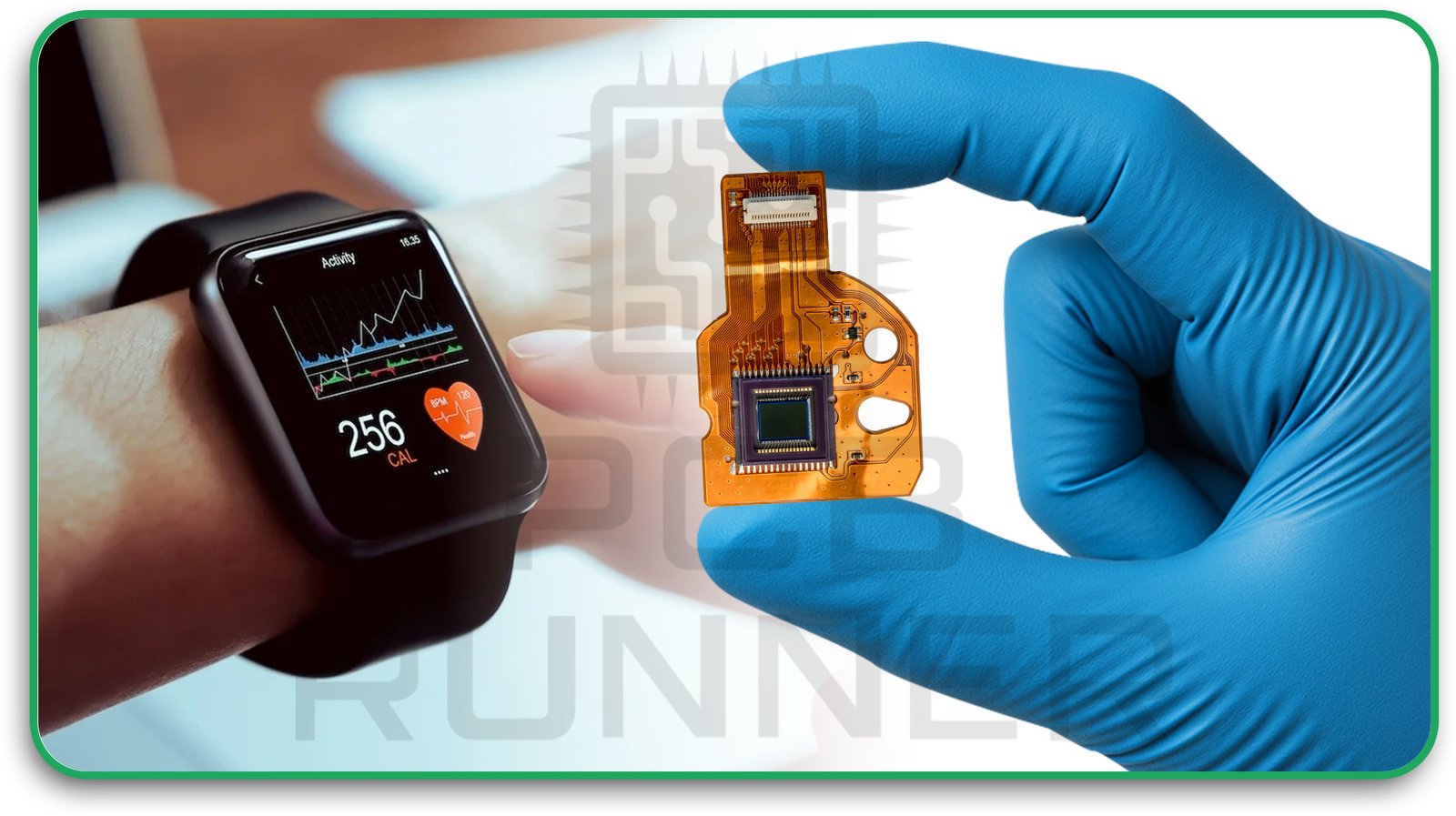
From smartwatches to health monitors, wearable electronics are everywhere, and they rely heavily on flexible PCB fabrication. These PCBs must endure daily flexing, body heat, and sometimes even moisture.

That’s why the flexible PCB fabrication process includes special coatings, encapsulations, and thin materials to ensure durability and performance. As demand for wearables grows, expect even more innovation in this space.

Integration of PCBs in Wearable Tech

9. Hybrid PCB Solutions: Rigid-Flex Is Booming

Rigid-flex PCBs combine the strength of rigid boards with the flexibility of flex circuits. This hybrid solution reduces connectors, lowers assembly time, and enhances durability, especially in foldable devices or aerospace systems.

Benefits of Rigid-Flex PCBs:

  • Greater mechanical stability
  • Simplified assembly process
  • Reduced overall weight and size

While slightly more expensive, their performance and space-saving benefits make them worth considering for next-gen applications.

How to Choose the Right PCB Fabrication Partner

With so many advances in PCB manufacture, choosing the right partner matters more than ever.

Look for PCB Circuit Board Manufacturers That Offer:

  • Expertise in flex PCB fabrication and HDI designs
  • Transparent PCB fabrication service pricing
  • Quick-turn prototyping and low-volume options
  • Eco-friendly processes
  • Custom material support for unique applications

An experienced team can guide you through the PCB board fabrication process, recommend the best materials, and deliver reliable boards that power your innovation.

Conclusion: The Future of PCB Fabrication Is Here

The trends driving PCB fabrication today, from flexible designs to AI automation, are shaping the future of electronics. These advancements are not just technical; they’re making products smaller, smarter, greener, and faster to build.

Whether you’re exploring flexible PCB fabrication for wearable tech or seeking PCB fabrication low cost options for scaling production, staying ahead of these trends ensures you remain competitive in a rapidly changing market.

Ready to build the future? Partner with a forward-thinking PCB fabrication service provider that helps you turn ideas into reality, faster, better, and more affordable.

PCB Gerber Files

How to Prepare and Use PCB Gerber Files Efficiently?

When we talk about electronics manufacturing, high-quality printed circuit boards (PCBS) are the foundation for every successful electronic device. At the heart of turning a PCB design into a physical board lies a crucial digital asset: the Gerber files.

These Gerber files PCB serve as the universal language between designers and manufacturers, ensuring that every trace, pad, and layer of the board is fabricated with precision. At PCB Runner, we understand that preparing and using them efficiently is essential for engineers, designers, and electronics manufacturing services (EMS) alike.

Gerber Files

What Are PCB Gerber Files?

A PCB Gerber file is a standardised vector format used to describe the different layers of a PCB design. These files communicate everything from copper layers, solder masks, and silkscreens to drill data and mechanical outlines. In essence, Gerber files are the blueprint of your PCB, containing exact information required by manufacturers to create the board.

Modern Gerber files use the RS-274X format, which replaced the older and less capable RS-274D. RS-274X includes embedded aperture definitions and other metadata, making the file self-contained and easier for manufacturers to interpret. The files typically come with extensions like .gbr or .gb, and while the naming convention is not fixed, it’s essential to label files clearly for easier identification.

Why Gerber Files Matter?

Gerber files play a central role in ensuring that the design intent is accurately communicated to the manufacturer. While materials like copper-clad laminates and solder are essential for building the board, nothing can begin without the design details present in the Gerber file.

For instance, traces and vias are represented by draw or flash codes, along with specific coordinates. Pads, outlines, and solder mask areas are all detailed within these files. Manufacturers use this data to program laser plotters or direct imaging tools that translate digital designs into physical patterns on copper and other board materials.

If the Gerber files are incomplete, improperly formatted, or inconsistent with manufacturer standards, the result could be costly errors or delays in production.

Steps to Prepare PCB Gerber Files Efficiently

To avoid pitfalls and ensure an efficient transition from design to manufacturing, it’s important to follow these best practices related to the PCB Gerber file format:-

  1. Use a Reliable CAD Tool

Start with a PCB design tool that supports Gerber file export in the RS-274X format. Popular tools like Altium Designer, KiCad, Eagle, and OrCAD allow for straightforward Gerber generation. Make sure your software version is updated to avoid compatibility issues with modern formats.

  1. Check Manufacturer Requirements

Different PCB manufacturers may have varying requirements for file naming, format, units (inches vs. millimetres), and layer stack-up. Always consult your manufacturer’s Gerber file guidelines before exporting.

  1. Include All Necessary Layers

A complete Gerber files package should include:

  • Top and bottom copper layers
  • Solder mask (top and bottom)
  • Silkscreen (top and bottom)
  • Board outline (mechanical layer)
  • NC drill file (for hole and via drilling)
  • Paste mask (if the board will be assembled with SMT components)

Some CAD tools allow you to bundle these into a single ZIP archive, which is often the preferred method for submission.

  1. Generate a Drill File (NC Drill)

Although not technically part of the Gerber files, the NC drill file is indispensable. It guides CNC drill machines during fabrication, ensuring holes and vias are precisely placed. Always double-check that drill file units and zero suppression settings (leading or trailing) match those used in the Gerber files.

  1. Use a Gerber Viewer for Verification

Before sending files to a manufacturer, it’s critical to inspect them with a Gerber viewer such as Gerbv, ViewMate, or the built-in tools in your CAD software. This step helps you catch common issues like missing layers, incorrectly aligned pads, or inverted silkscreens. Consider this your last line of defence against fabrication errors.

Efficient Use of Gerber Files in Manufacturing

With advancements in PCB manufacturing technology, the use of Gerber files has also evolved. Traditionally, photo-plotters converted Gerber files into tooling films using vector light beams—a time-consuming and limited process. Today’s laser photo-plotters have improved speed and resolution, converting Gerber data into raster images for direct imaging.

Even more advanced processes now bypass film entirely, projecting Gerber-defined images directly onto copper-clad boards using UV lasers. This not only speeds up fabrication but also allows for more complex designs with tighter tolerances.

Modern Gerber files are also incorporating “intelligent” data, including netlist information, which helps manufacturers verify electrical connectivity. While older file formats remain in use, the industry trend is clearly moving toward more innovative, faster, and more integrated data exchange.

What are the Common Mistakes to Avoid?

  • Incomplete Layer Set: Missing a solder mask or drill file can halt production.
  • Inconsistent Units: Mixing mm and inches or different zero suppression methods can cause misalignment.
  • Unverified Output: Failing to use a Gerber viewer often leads to undetected design flaws.
  • Incorrect Aperture Settings: Improper trace widths and pad sizes due to incorrect definitions can compromise functionality.

How to Choose the Right Manufacturer for Multilayer PCB Fabrication and Assembly?

A multilayer printed circuit board is essential for modern electronic devices that demand compact size and high performance. Leading PCB circuit board manufacturers use advanced technology to fabricate these complex boards with precision and reliability. Once the board is fabricated, the next critical step is circuit board assembly, where all components are mounted and soldered to ensure full functionality. Choosing the right PCB board manufacturer is crucial, as it impacts the overall quality, durability, and performance of the final electronic product.

Conclusion

Efficient preparation and usage of Gerber files are non-negotiable for quality PCB fabrication and assembly. By understanding the file structure, adhering to manufacturer standards, and using reliable verification tools, designers can streamline the production process and reduce costly errors.

At PCB Runner, technology evolves continuously, staying updated on best practices in Gerber file preparation will remain essential for designers and manufacturers alike. We emphasise the importance of precision and communication, qualities that start with a well-prepared set of them.

Coating in PCB Manufacturing

Understanding Selective Coating in PCB Manufacturing

Have you ever wondered why some printed circuit boards last longer or work better in harsh environments? If you’re involved in PCB manufacture, PCB production in the UK, or even custom PCB design for electric vehicle charging station contractors, you’ve likely heard about selective coating. But what is it, and why does it matter for your PCB printed circuit board assembly or PCB board layout design? Let’s break it down in simple terms so that you can make better choices for your next project.

What Is Selective Coating in PCB Manufacturing?

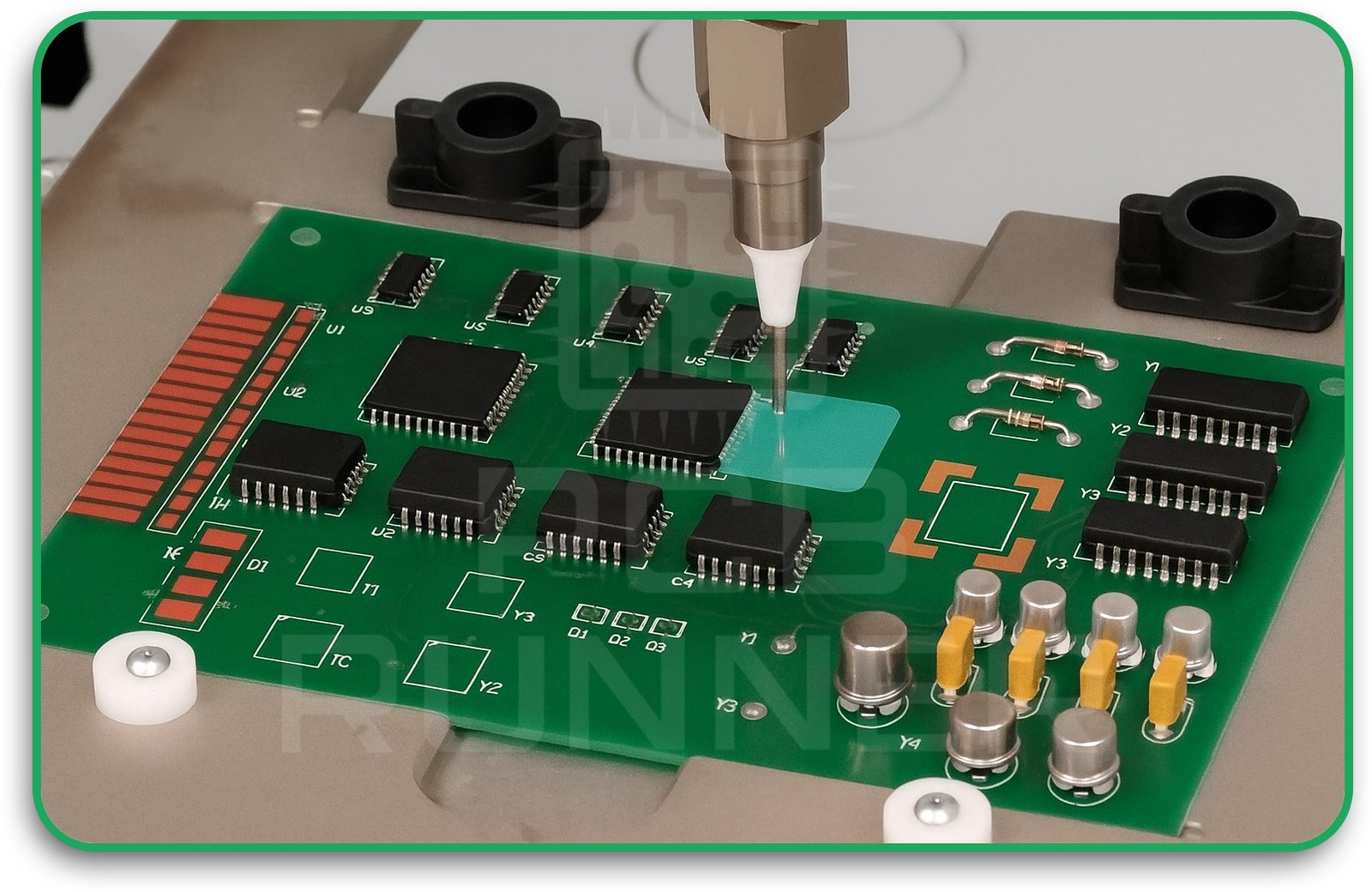
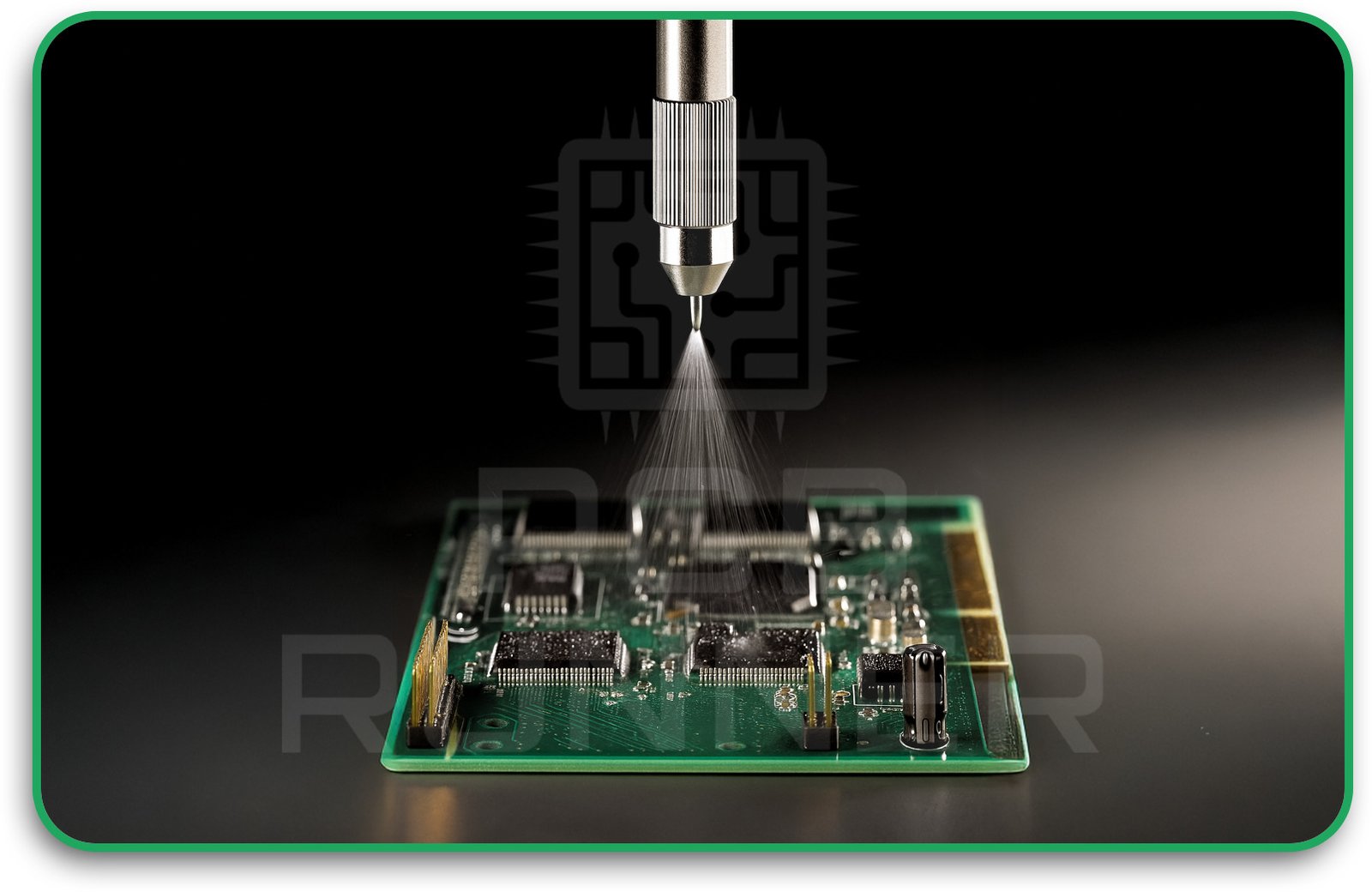
Selective coating is a process where a protective layer is applied only to certain parts of a PCB, not the whole board. This coating shields sensitive areas from moisture, dust, chemicals, and other hazards. Instead of dipping or spraying the entire board, selective coating targets just the spots that need protection.

Why not coat the whole board? Some components, like connectors or test pads, shouldn’t be covered because they need to stay accessible. Selective coating lets you protect what matters without causing problems elsewhere.

Why Is Selective Coating Important?

Think about where your PCBs end up. In electric vehicle charging stations, for example, boards face rain, heat, and even road salt. Without protection, they can fail early. Selective coating helps your PCB printed circuit board assembly last longer and work better, especially in harsh places.

For custom PCB design, selective coating also means you can fine-tune your board’s durability. You decide which parts need extra care and which parts should stay open for connections or repairs.

How Does Selective Coating Work?

Let’s walk through the steps:

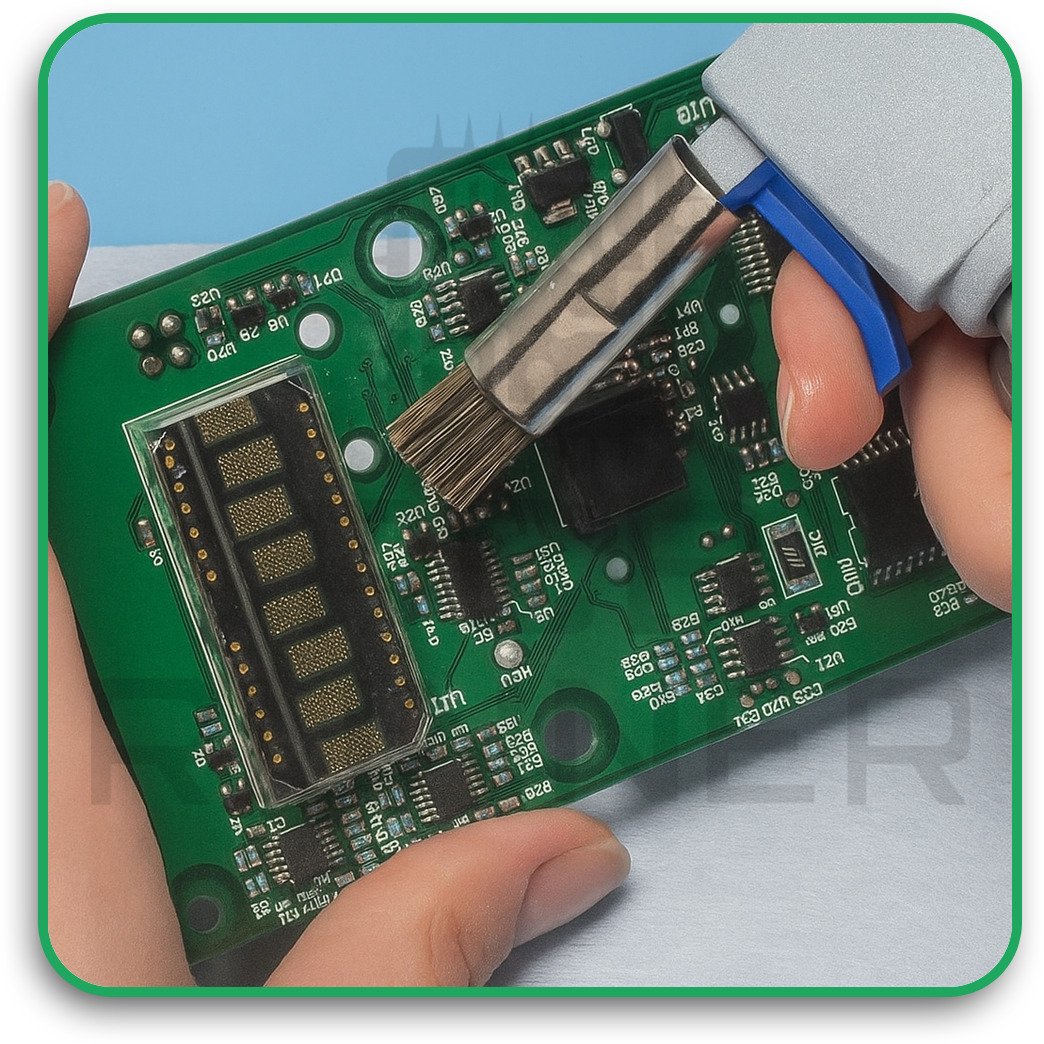
1. Preparation and Cleaning

Before coating, the board must be spotless. Any leftover flux, dust, or fingerprints can ruin the coating’s grip. Cleaning is done with special washes or vapour degreasers.

Preparation and Cleaning

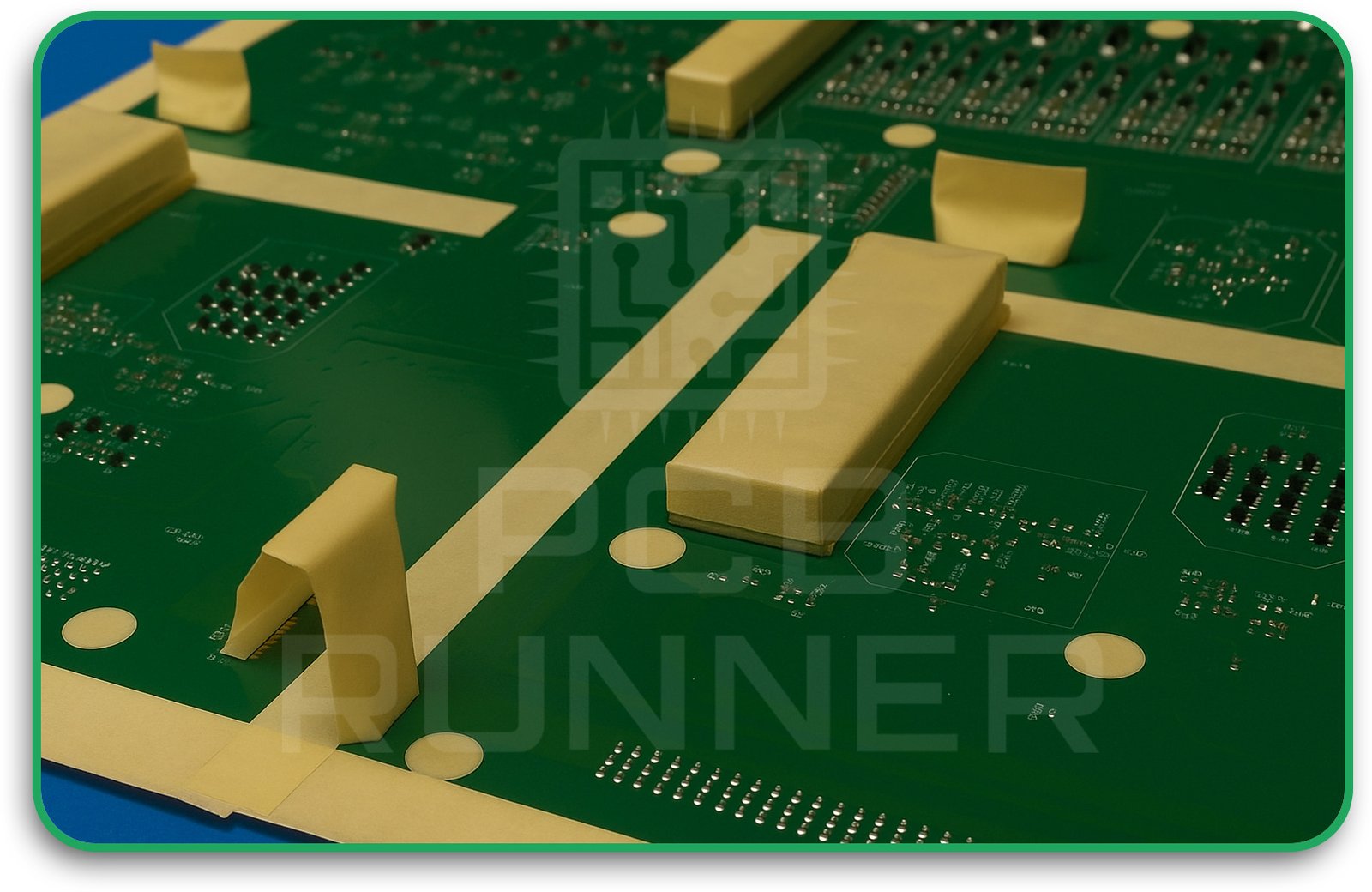
2. Masking

Not every part of the PCB should be coated. Connectors, test pads, and edge contacts are masked off using tape, boots, or peelable masks6. This step is crucial—if you miss it, you might coat something you shouldn’t.

Masking

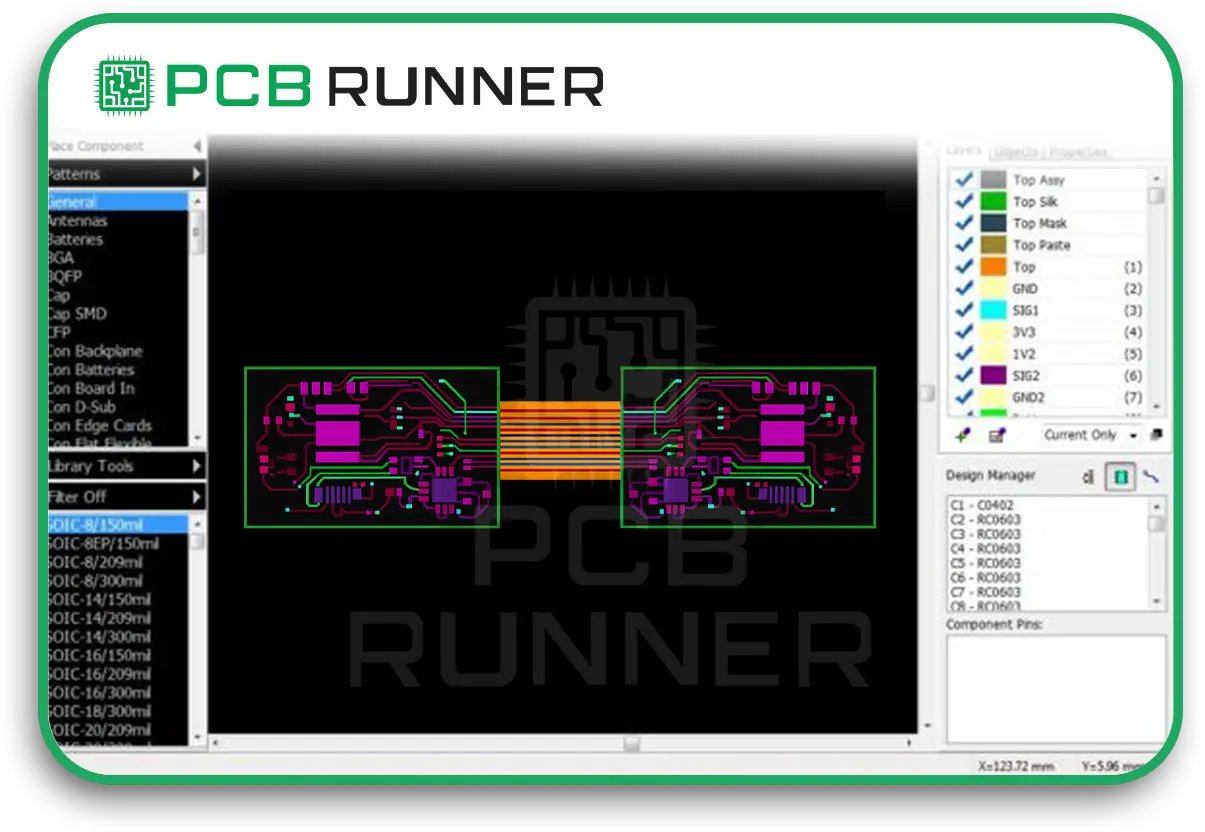
3. Programming the Coating Path

The modern selective coating uses robotic arms. You (or your engineer) create a digital map that tells the robot where to apply the coating, how thick it should be, and how fast to move. This ensures the coating is accurate and repeatable, even for complex PCB board layout designs.

Programming the Coating Path

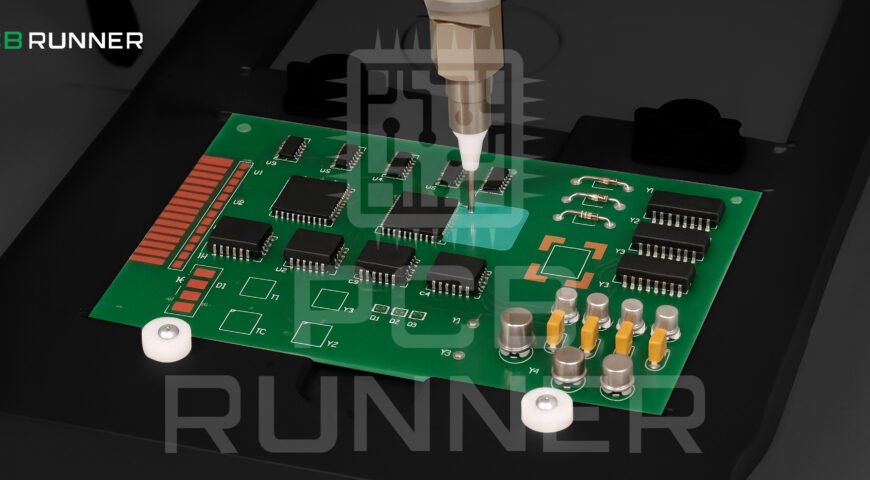
4. Applying the Coating

The robot uses a needle or jet valve to apply the coating material only where needed. This is much more precise than old methods like spraying or dipping. It also saves material and reduces waste.

Applying the Coating

5. Curing

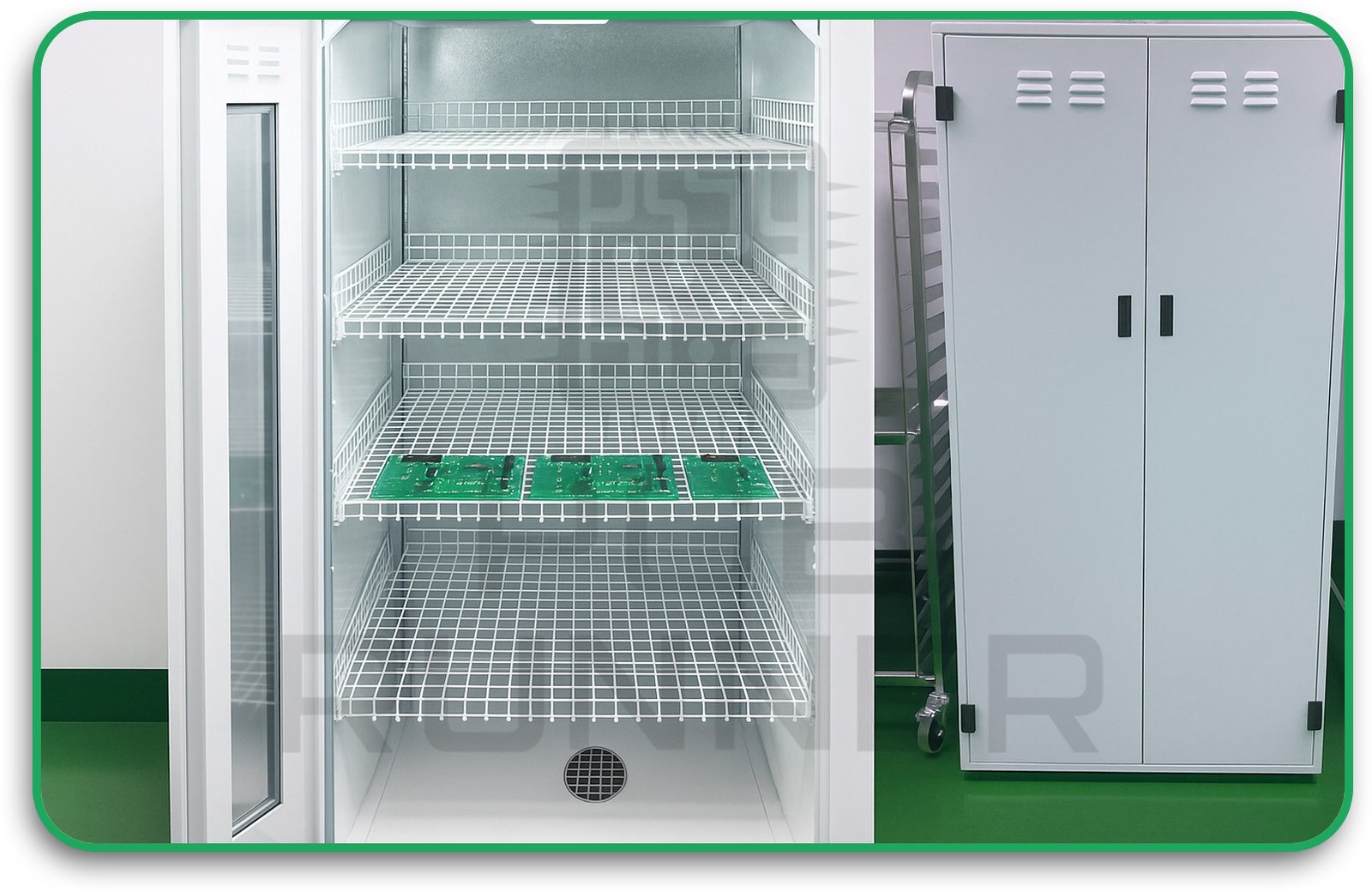
Once the coating is on, it needs to dry or “cure.” This can be done with heat, UV light, or even moisture, depending on the type of coating used. The curing process is carefully controlled to avoid bubbles or thin spots.

Curing

6. Inspection

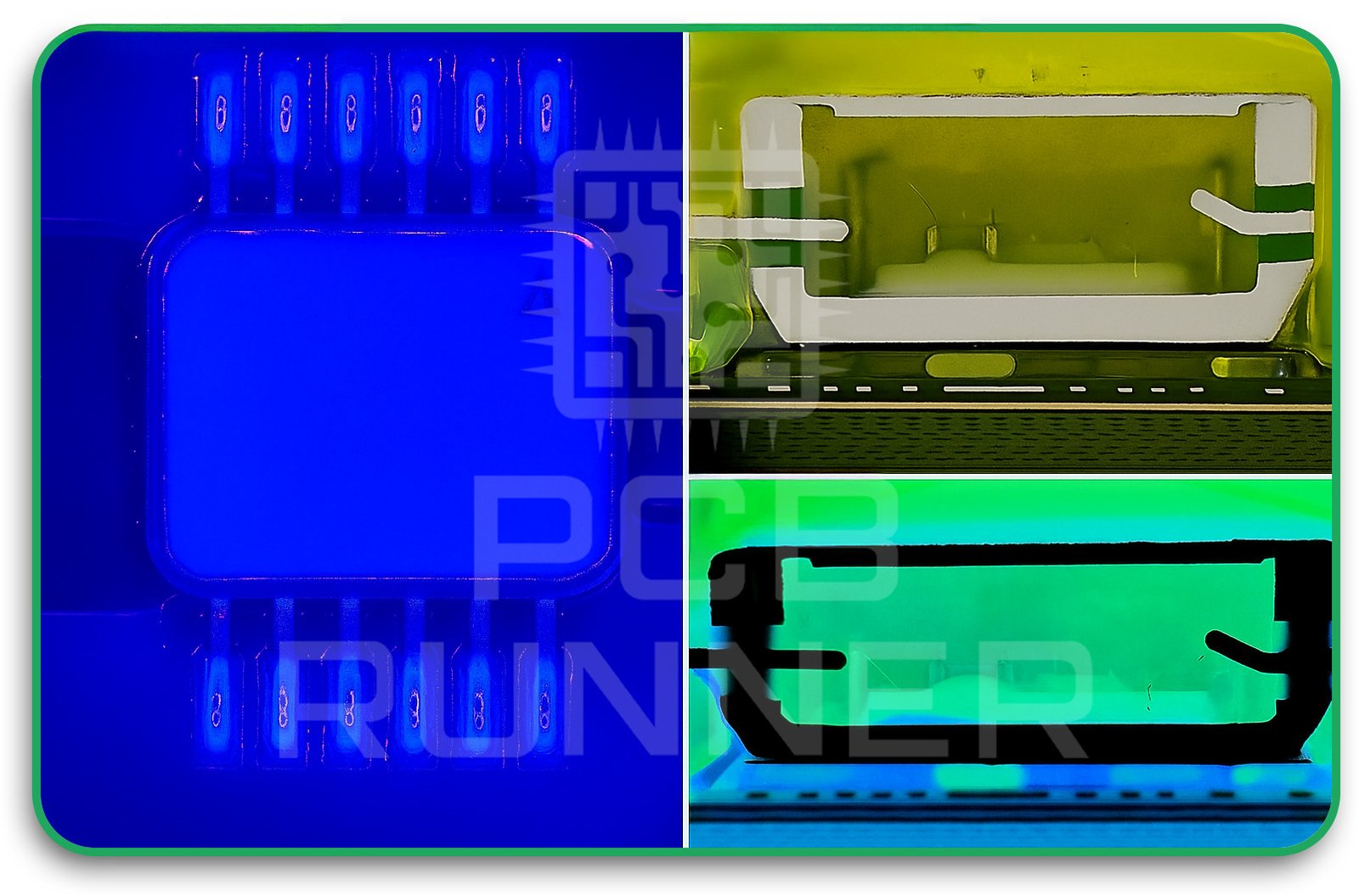
After curing, the board is checked under visible and UV light to make sure the coating is even, with no gaps or defects. Some manufacturers also test how well the coating sticks and protects against electricity.

Inspection

Types of Coating Materials

Different projects need different coatings. Here are the most common types:

  • Acrylic: Easy to apply and remove, suitable for general use.
  • Silicone: Handles high heat, great for automotive or EV charging station boards.
  • Polyurethane: Tough and resistant to chemicals.
  • Epoxy: Extremely hard but harder to remove for repairs.

Your choice depends on where your PCB will be used and what it needs to survive.

Benefits of Selective Coating for Your Project

1. Precision

Selective coating is very accurate. Robots can coat tiny areas without spilling over onto sensitive parts. This is perfect for custom PCB design where you have unique components or layouts.

2. Efficiency

You use less coating material, which saves money and reduces drying time. This is a big plus for PCB production uk, where cost and speed matter.

3. Better Performance

By protecting only what needs it, you avoid problems like blocked connectors or test points. Your pcb printed circuit board assembly stays easy to test and repair.

4. Consistency

Robots don’t get tired or make mistakes. Every board gets the same high-quality coating, which is essential for large-scale PCB manufacture.

Where Is Selective Coating Used?

Selective coating is everywhere, especially in industries where boards face harsh conditions:

  • Electric Vehicle Charging Stations: Boards need to handle weather, temperature swings, and even vandalism.
  • Automotive: Protects boards from oil, vibration, and heat.
  • Telecom: Keeps moisture and dust away from sensitive circuits.
  • Industrial Controls: Shields boards in factories from chemicals and grime.

If you’re an electric vehicle charging station contractor, using selective coating can help your installations last longer and reduce maintenance calls.

Tips for Better PCB Board Layout Design with Selective Coating

If you’re planning a custom PCB design, keep selective coating in mind from the start. Here’s how:

  • Group sensitive parts: Place components that need coating together to make the process easier and faster.
  • Keep connectors and test pads separate: This makes it simpler to mask them off before coating.
  • Talk to your manufacturer early: Not all PCB production UK shops have the same coating options. Ask what they offer and what they recommend for your project.

What Happens If You Skip Selective Coating?

Skipping selective coating can lead to big problems:

  • Short Circuits: Moisture or dust can cause electrical shorts.
  • Corrosion: Chemicals or salt can eat away at copper traces.
  • Early Failure: Your product might stop working sooner, leading to unhappy customers and costly repairs.

For electric vehicle charging station contractors, this could mean more service calls and a damaged reputation.

How to Choose the Right Selective Coating Partner

Not every PCB manufacturing shop offers selective coating, and not all do it well. When picking a partner, ask:

  • Do they use robotic selective coating systems?
  • Can they handle your board size and complexity?
  • What coating materials do they offer?
  • How do they inspect and test coated boards?
  • Can they support your volume, from prototypes to full production?

Choosing the right partner in PCB production UK can save you time, money, and headaches down the road.

Action Steps for Your Next Project

  1. Review your PCB board layout design with coating in mind.
  2. Ask your manufacturer about selective coating options and materials.
  3. Decide which areas need protection and which should stay open.
  4. Request a sample or prototype to see the coating quality before full production.
  5. Inspect the finished boards to make sure the coating is even and covers the right spots.

Final Thoughts

Selective coating is a smart way to protect your PCBs without wasting material or blocking essential parts. It’s precise and efficient and helps your boards last longer in harsh environments. Whether you’re working on custom PCB design, PCB manufacture, or building electric vehicle charging stations, understanding selective coating can help you deliver better products and happier customers.

If you want your next PCB printed circuit board assembly to stand up to the real world, don’t overlook selective coating. Ask your PCB production UK partner about it today, and make sure your boards are ready for anything.