PCB Thickness Standards in the Electronics Industry

PCBs support modern, electronically sophisticated equipment at their core. The thickness of PCBs is a key metric as it contributes to a product’s overall performance, durability, and manufacturability. Maintaining a standard PCB thickness helps guarantee coordination across various applications.

Industries spanning consumer electronics to aerospace and automotive need to be well-versed in multilayer PCB thickness standards. Circuit board manufacturers pay attention to these aspects so that their products serve the market’s prerequisites while improving the production regime. This article aims to discuss an overview of PCB thicknesses, their engineering, and industrial best practices for PCB manufacturing.
PCB Thickness Standards in the Electronics Industry

Importance of PCB Thickness

The thickness of PCBs is not just treated as a ratio – it scopes up an entire PCB’s electrical performance, thermal characteristics, and mechanical performance. Here are some of the factors that are most directly impacted due to the variation in PCB thickness:

  • Electrical Performance: The thickness of the PCB layers can affect the measurement of components such as signal integrity, impedance control, and power distribution.
  • Heat Dissipation: PCBs that use high-power applications during work achieve a proper PCB layer thickness, which facilitates thermal conductivity alongside heat dispersion.
  • Mechanical Strength: Environmental stresses, mechanical vibrations, and even assembly processes tend to damage a PCB, and thus, a suitable thickness needs to be determined.
  • Manufacturing Compatibility: The standard thickness allows the design to be procured for universal software or systems.

Standard PCB Thicknesses

While PCB thickness can vary depending on application requirements, the electronics industry follows specific standard thicknesses. The most common thicknesses include:

Layer Count Standard Thickness (inches) Standard Thickness (mm)
Single-layer 0.031″ – 0.062″ 0.8mm – 1.6mm
Double-layer 0.062″ 1.6mm
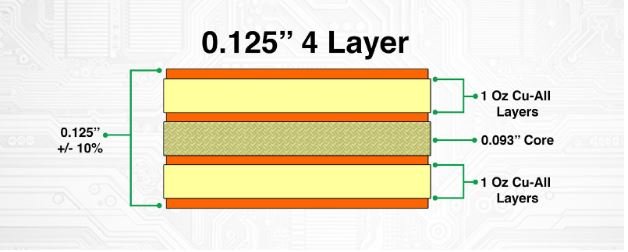
Multilayer PCB (4-6 layers) 0.062″ – 0.093″ 1.6mm – 2.4mm
Multilayer PCB (8-10 layers) 0.093″ – 0.125″ 2.4mm – 3.2mm
Specialty PCBs Custom thickness Application-specific

These standard thicknesses ensure compatibility with industrial PCB manufacture processes, enabling easy assembly and reliability.

Factors Influencing the Selection of PCB Thickness

PCB thickness selection ranges from functional requirements to material selections. Considering these other aspects may help streamline the design process:

1. The Number of Layers

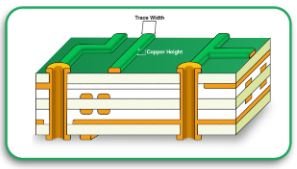
Dielectric and copper layers affect the overall thickness of Multilayer PCBs. Thicker boards are essential for the telecommunication and aerospace industries, where high-performance applications are needed.
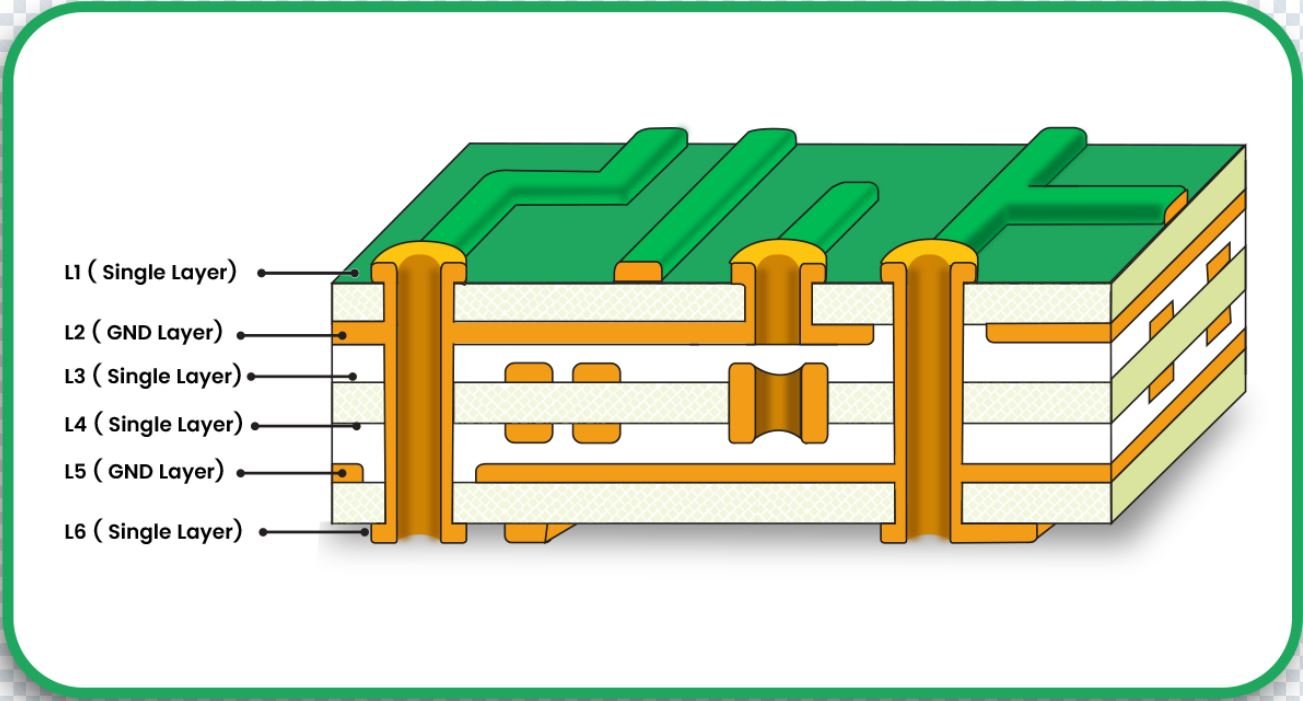
The Number of Layers

2. Copper Thickness

Various copper weights utilized in a PCB will impact its thickness. The standard copper thickness includes the following:

  • 1 oz copper – Common for most consumer and industrial PCBs. (~35µm per layer)
  • 2 oz of copper – Used for power electronics and high-current applications. (~70µm per layer)
  • 3 oz of copper and above – Ideal for high-power industrial applications.
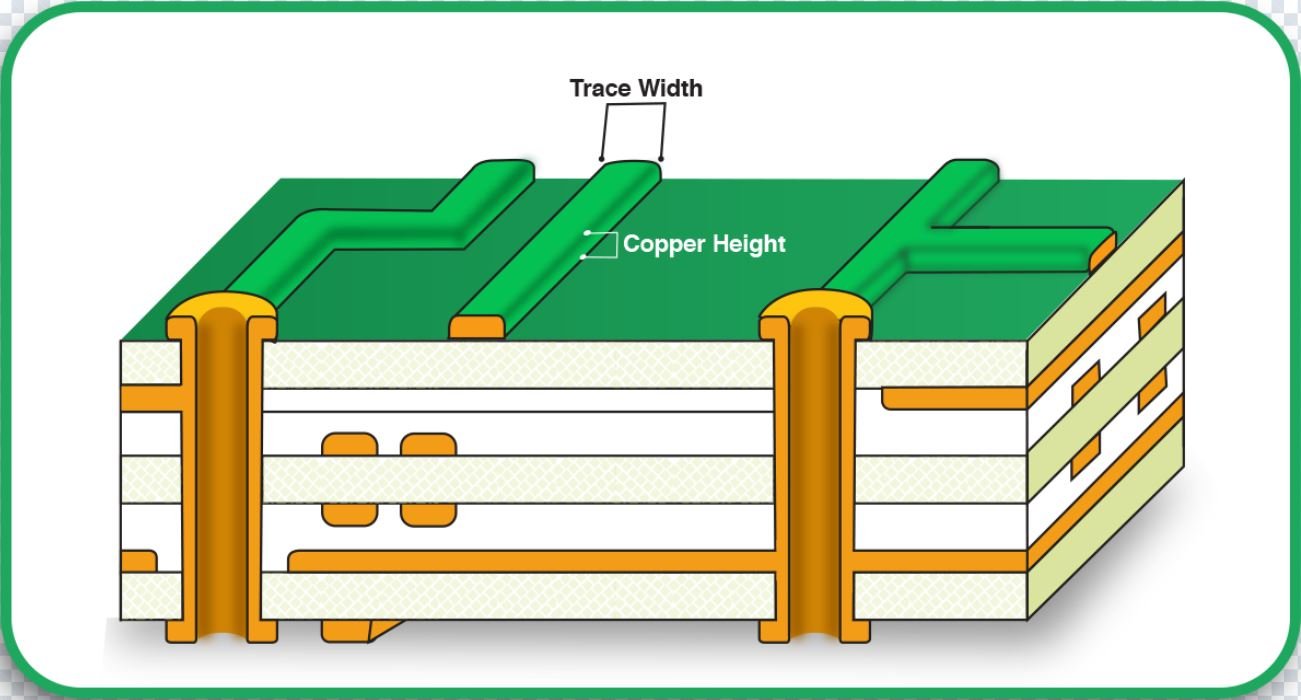
Copper Thickness

3. Substrate Material

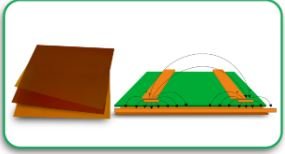
Copper substrate materials like FR4, polyimide, or even ceramic materials impact the general thickness of the PCB. To control the dielectric constant and ensure that signal transmission is optimized, PCB circuit board manufacturers use materials with varying dielectric constants.

Substrate Material

4. Mechanical Consideration

Flexibility versus Rigidity: Industrial applications require that thick PCBs (>1.6mm) provide rigidity while thin PCBs (<0.8mm) for flexible electronics.

Thermal Expansion: No materials should warp for an electronic PCB during drastic temperature changes.

5. Application-Specific Requirements

An example includes the automotive and aerospace industries, which have stringent thickness specifications meant to ensure reliability in a harsh environment. Most PCB design software commonly used in the industry enables engineers to create matching PCBs that satisfy these requirements.

How to Choose the Right PCB Thickness

Choosing the right thickness for a PCB is all about optimizing simultaneous criteria:

  • For Consumer Electronics: A PCB thickness of 1.6mm is a good compromise between manufacturing convenience and sturdiness.
  • For High-Power Applications: Thicker copper layers of 2 oz or more on the PCB dissipate heat more efficiently.
  • For High-Frequency Applications: Thinner PCBs increase high-speed performance and minimize signal loss.
  • For Industrial PCB Manufacture: Heavy-duty PCBs need to be specially designed for shock and vibration resistance.

Industry Standards for PCB Thickness

Standards organizations monitor the thickness of PCBs so that dimensional regularity among manufacturers is kept. Some of these existing industry standards are:

  • IPC-2221 – IPC generic design standard for PCBs, which includes thickness requirements.
  • IPC-6012 – Qualification and performance standard for rigid PCBs.
  • MIL-PRF-31032 – PCB military performance specifications for a hostile environment.
  • ISO 9001 & AS9100 – Quality management certification relevant to industrial PCB manufacture.

Difficulty with Controlling the Thickness of PCBs

1. Tolerances on Manufacturing

Standard practices often involve some variation in thickness, which is further complicated by material and fabrication issues. PCB circuit board manufacturers are expected to accommodate these tolerances.

2. Bending and Warping

Heat, especially during the reflow soldering phase, usually results in the bending of thinner PCBs. Proper reinforcement techniques greatly reduce this.

3. Consideration of Cost

Processing thicker boundaries and IoT PCBs increases the material expense or requires special processing, which further raises production expenses. Engineers always struggle between performance and expense.

New Directions in Achieving Optimization of Thickness for PCBs

The incorporation of such new technologies leads to more complex designs for PCBs and simplifies the problem of thickness optimization as follows:

  • New and Innovative Materials: These materials are structures such as ultra-thin PCBs that are used in medical implants and wearable-type compact devices.
  • AI in PCB Design: Incorporating AI into standard PCB design software allows the user to instantly check compliance with requirements for set thicknesses.

You have asked a highly trained source who possesses comprehensive knowledge of electronics and has provided insightful quotes.

Conclusion

It is essential to understand the thickness of the PCB in order to ensure other components work with it. Working with multilayer PCBs, consumer devices, or even industrial electronics will be easier if you stick to the standard thickness, as it makes it easier for manufacturers to make their PCBs. By using industry-standard PCB design software, engineers are able to achieve an optimum balance with respect to PCB thickness in terms of performance, durability, and manufacturability. As the need for stronger, thinner, and more efficient PCBs increases, so will the changes in the electronics industry.

Work with PCB Runners to get customized Industrial PCBs that solve problems. Send us a message today!

FAQs

What is the most common thickness of a PCB?

The most common one is 1.6mm (or 0.062 inches) as is commonly used in industrial and consumer devices.

Can you customize the thickness of the PCB?

Yes, most of the PCB circuit board manufacturers will cater to custom thicknesses depending on the application requirements.

In what ways does signal integrity get impacted by the thickness of a PCB?

Thinner PCBs have less signal loss in high-frequency applications, while thicker PCBs are more suitable for power handling and durability.

Which materials do affect the PCB thickness?

Substrate materials such as FR4, polyimide, and metal core, along with the copper weight, determine the final thickness of the PCB.

Which software is the most suitable for strict PCB thickness specifications?

Like other engineering disciplines, Altium Designer, KiCad and Eagle are examples of PCB design software that aid engineers in designing PCBs with set thickness requirements.
Electronics Prototyping

Why Are Breadboards Important in Electronics Prototyping?

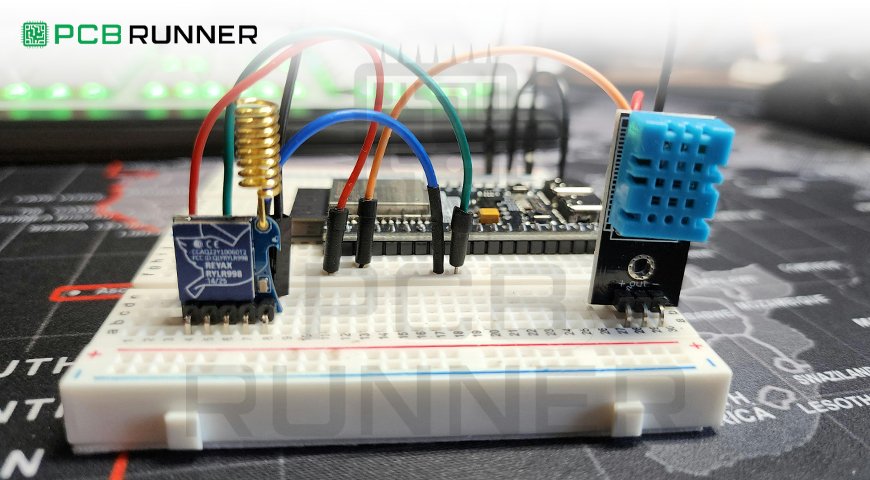
Both professionals and amateurs will find that the breadboard is one of the most vital tools for testing, tinkering, and constructing electronic circuits, all without the hassle of soldering the components together, making it invaluable for projects.

An electronics breadboard is a thin board that is usually rectangular and filled with a multitude of tiny holes. The holes are placed in an orderly manner and created in a grid-like fashion. Each microelectronic part, such as capacitors, resistors, transistors, microcontrollers, etc., can be joined together on these holes without the need for soldering.

As the last and final phase in the manufacturing of an electronics PCB, the breadboard serves as an excellent starting point for prototype testing. In this post, we will discuss why breadboards are so critical, how they compare to PCB fabrication, and what their role is in constructing a reliable PCB prototype before mass production.

Types of Breadboards

Each one of these breadboard boards is aimed to achieve a particular goal or purpose:

Solderless Breadboards: These are the most common ones and are employed for quick prototyping and educational purposes.

Soldered Breadboards: These are more flexible than full PCBs but have more permanent solder points.

Stripboards or Veroboards: The tracks of copper present on the board permit the designing of structured circuits.

Perfboards: They are like stripboards but have no copper tracks leading them, so wiring them is more labor-intensive.

Why Models Are Prototyped Using Breadboards?

Before breadboarding, engineers refine breadboards in order to polish their designs, and once they are happy, they move on to PCB fabrication. Here are some benefits of breadboards:

1. It’s user-friendly

The most well-known positive aspect of using a breadboard is that no soldering is needed. It simplifies the process of constructing, changing, and diagnosing circuits while preparing a PCB prototype. Components can be replaced or installed easily, eradicating the need for permanent adjustments.

2. Cheap to build

A breadboard is economical when trying out new circuit layouts. Unlike custom printed circuit boards, which mainly involve having them built and assembled, breadboards can be utilised endlessly.

3. Saving Time

Planning a PCB necessitates detailed work that can only be done with specific software, and there will be many design revisions as well. Engineers can skip these steps using breadboards and begin checking the functionality immediately. Once a circuit is successfully operating on a breadboard, it can be moved to a PCB prototype.

4. Experimentation or Debugging

Engineers can improve their designs by testing different configurations using breadboards. If a circuit is not working, components can be removed or moved to different positions literally in seconds.

5. Learning Made Easy

For novice electronic students or hobbyists, breadboards provide circuits with a great way to learn without high levels of skill in soldering or PCB design.

Breadboard Vs PCB Prototype: Determining the Switch Between the Two

Even though breadboards are helpful for early-stage prototyping, they are not perfect. Knowing when to shift to a PCB prototype is fundamental for the successful completion of a project.

When Should a Breadboard Be Used

  • When conducting tests on simple circuits onl,y a few components are available.
  • When creating circuits that operate in the low-frequency region (precise layouts are required for high-frequency circuits).
  • When undertaking many projects that need to be altered often.
  • When Should a PCB Prototype be Used
  • When the circuit design has been confirmed and tested.
  • When high-frequency signals and compact packing of circuit design need to be implemented.
  • When a long lifespan and increased durability are needed.

Using PCB fabrication techniques, a printed circuit board can be made out of a successfully tested circuit that has been put on a breadboard. The design is now more compact, reliable, and professional.

Shifting Steps from a Breadboard to PCB

Moving from an electronics breadboard to a PCB prototype requires a few steps:

1. Build the Circuit Using PCB Software

For the circuit’s breadboard setup, engineers use standard PCB design software products that allow for intricate placement of each piece and can be optimised for power management.

2. Translate the Breadboard Layout into a PCB Schematic

An appropriate PCB schematic is drawn to describe the breadboard setup that specifies the connecting components.

3. Fine Tune the PCB Layout

Achieving power distribution effectiveness, controlling interference, and safeguarding signal integrity require planners to be cautious during the layout steps of PCB fabrication.

4. Production of the PCB Prototype

FR4, a fiberglass-reinforced epoxy, is used to fabricate a PCB prototype with conductive copper traces that replace the breadboard’s flexible connections.

5. Testing and Assembly

The final step is testing the manufactured PCB to ensure the components were soldered correctly and functioning as expected against the design from the breadboard.

Uses of Breadboards in Electronics

Breadboards serve a wide range of functions within the electronics field, in industries, and as educational teaching aids.

1. Development of Consumer Electronics

Businesses working on the next generation of consumer electronics utilise breadboards to test their original ideas before proceeding with PCB fabrication.

2. Automation in Industries

Engineers working on automation processes use a breadboard for rapid prototyping validations before developing the industry-standard custom printed circuit board.

3. Smart Devices and their Accessories

Most of the IoT devices started out with breadboard prototypes supported before it is transformed into compact PCBs.

4. Robotics and Embedded Systems Development

Breadboards are very common in robotics and embedded systems development projects for easier prototyping of motor controllers, sensors, and microprocessors.

5. Colleges And Universities

Universities and polytechnic colleges use breadboards in constructing and deconstructing circuits as a basic building block toward more advanced concepts in electronics and circuit design.

Prototyping and PCB fabrication 

Prototyping and PCB fabrication are expected to evolve continuously with refinement and innovation. The following are a few of the newer ones:

  • AI Assisting PCB Design: AI programs are now enabling engineers to automatically optimise circuit layouts for their convenience.
  • Flexible PCBs—This innovation makes embedding circuits into surfaces with curves possible, creating more opportunities for wearables and medical gadgets.
  • 3D Prototyping—The use of 3D printed circuit boards is rising as they reduce the time required to develop the final product.  
  • Software in the Cloud—More engineers are employing cloud-based professional PCB CAD tools for collaborative work on circuit designs.

Expert Insights

This novice study analyzes the methods used by children (ages 15–16) to cope with layout design principles and circuitry concepts that are fundamental to electrical engineering with the use of two available educational circuitry toolkits: paper circuits and solderless breadboards. Paper-based prototyping kits are indicative of a modern movement that seeks to integrate new materials and methods incorporating art within traditional STEM fields. Following up on the prior work on the use of non-conventional toolkits to teach electrical engineering concepts and basic circuitry concepts that include current flow, polarity, and connections, this study explores the affordances in materials as well as the design choices within the kits that account for advanced circuitry layout design principles that include space allocation and placement of electronic components alongside routing. 

Results support that learning of layout design principles of printed circuit boards (PCBs) is more pronounced with paper circuits than with other tools, with large effect sizes reported. This study sheds light on the fact that the materials of educational toolkits have been designed in such a way that they suggest specific body and material-based patterns of activity, which engage learners’ powerful ideas concerning circuitry and design principles in different ways. This investigation emphasizes the fact that some toolkits, especially the non-conventional ones, have material affordances that make them more effective for some lessons.

Conclusion

Breadboards are essential tools for electronics prototyping. They enable engineers to dynamically develop and test circuit designs before constructing a custom printed circuit board.

Electronics breadboards are great for testing a circuit, but switching to a PCB prototype allows for a sturdier, more cost-effective, and more efficient end product that can be manufactured on a larger scale.

If you wish to develop your breadboard design further into professional PCB fabrication, PCB Runners is ready to assist you with your specific needs. Contact us to discover how we can turn your prototype into a functional custom PCB.

Frequently Asked Questions

What is the most notable benefit of using a breadboard?

Unlike traditional methods, breadboards allow users to easily construct and modify circuits without needing to solder, which makes them useful for testing and educational purposes.

Can you perform a test on a high-frequency circuit with a breadboard?

Testing high-frequency circuits is not very efficient on breadboards because of the chances of signal interference and stray capacitance. These issues are better dealt with in a PCB prototype.

How fast can one go from a breadboard to a PCB prototype?

It also could take anywhere from a few weeks to a few months, depending on the intricacy of the design, to go from straightforward design to the fabrication and assembly of your PCB.

PCB Surface Finish Guide

PCB Surface Finish Guide: Types, Durability, and What Works Best for Your Manufacturing Needs

Choosing the right PCB finish is fundamental in PCB production processes, as it impacts the durability, solderability, and overall quality of the PCB. Whether it’s flex, rigid, or multilayer PCBs, the right PCB manufacturing outline finish can be selected to provide an optimal connection between the components and board, which enhances the board’s durability.

For circuit board manufacturers, the choice of PCB surface finish determines the production cost and environmental and multi-assembly process viability. In this article, different types of surface finishes will be analyzed in detail for their benefits, comparing their differences, and helping choose the most effective one for your preferred manufacturing process.

What Is a PCB Surface Finish?

It is a coating layer for circuit boards that are put on exposed copper in order to minimize oxidation and enhance soldering. The exposure of copper makes the PCB lose its reliability and efficiency. Along with PCB surface finishes, it guarantees that the metal is conductive enough to handle the heat during assembly and strong enough to create quality solder joints.

For manufacturers that make PCB boards, picking a PCB finish that guarantees durability requires multiple factors to be taken into account, including:

  • Nature of the electronic assembly, that is, whether it’s manual or automatic.
  • Climate conditions like humidity and temperatures
  • Life expectancy of the product
  • Budgetary limits

Each type of finish provides unique features, making them suitable for a particular function.

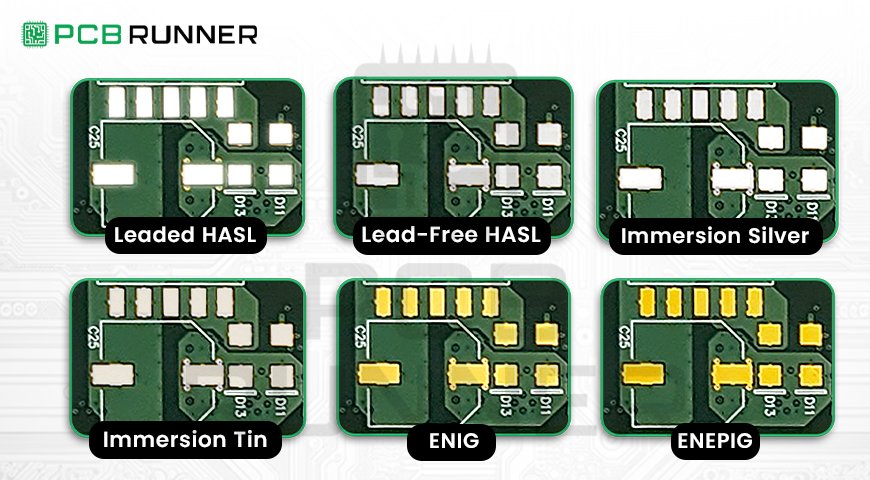
Types of PCB Surface Finishes

1. Hot Air Solder Leveling (HASL) – The Standard Option

Summary:

HASL is one of the most common PCB surface finish types due to its low cost and dependable solder bonding. The process used involves dipping the PCB in a “heat pot,” or liquid solder, then blasting it with hot air knives to take off the surplus solder.

Advantages:

  • Widely used and inexpensive
  • Dependable solder joints
  • Perfect shelf life

Disadvantages:

  • The surface is rough, which can lead to issues with fine-pitch parts.
  • It is not appropriate for flex PCBs because of thermal damage.

Hot Air Solder Leveling (HASL)_

2. Lead-Free HASL – The RoHS Compliant alternative

Like most lead-free HASL processes, this one uses lead-free solder to comply with environmental regulations.

Advantages:  

  • Meets environmental regulations  
  • Profitable and widely accepted  
  • Order soldering is efficient.  

Disadvantages:  

  • Flex and rigid PCBs may be affected by higher processing temperatures.  
  • Uneven surfaces could cause assembly problems. 

Lead-Free HASL

3. Immersion Silver (ImAg) – Best For Signals That Require Fast Processing  

Immersion silver is considered to be the best silver plating for printed circuit boards. ImAg plating process excels at providing a reliable interface for high speed signals by needs of performance application consideration.   

Advantages:  

  • Flat surface finish of delicate pitch components.  
  • Excellent conductive for RF and high-frequency circuits.  
  • Less expensive than gold plating.  

Disadvantages:  

  • Doesn’t tarnish quickly when stored.  
  • Difficult to handle without contamination.

Immersion Silver (ImAg)

4. Immersion Tin (ImSn) – Has a Good Appearance and an Attractive Price  

Immersion tin is a good option for soldering that involves the application of copper because it provides a smooth surface that would make soldering a lot easier.   

Advantages:  

  • Provides a smooth surface to accommodate precision placement of components.  
  • Lead and RoHS compliant.  
  • Affordable.  

Disadvantages:  

  • Over time, electrical shorts due to tin whiskers could potentially occur.  
  • It may not have a long shelf life due to oxidation issues. 

Immersion Tin (ImSn)

5. Electroless Nickel Immersion Gold (ENIG) – Ideal and Durable  

ENIG bestows a surface with a Thin nickel layer with immersion gold on top, which ensures the highest corrosion resistance and reliability for years.

Benefits:

  • Very tough and oxidation-proof
  • Even surface for soldering
  • Long durability

Drawbacks:

  • Relatively expensive when compared to HASL and immersion finishes
  • Possible “black pad syndrome” if not executed correctly

Electroless Nickel Immersion Gold (ENIG)

6. ENEPIG: The gold standard of finishes.

ENEPIG adds a palladium layer between nickel and gold, enhancing its durability.

Benefits:

  • Excellent resistance to corrosion and oxidation
  • Great for various reflow cycles
  • Less risk of black pad syndrome

Drawbacks:

  • More expensive than standard ENIG
  • Difficult to manufacture

Electroless Nickel Immersion Gold (ENIG) (1)

7. Hard Gold – Primarily Used Where There Is Abuse

Hard gold is applied by plating and is mainly used in connectors, switches, and edge contacts that are subjected to repetitive usage.

Benefits:

  • Very durable and wear-resistant.
  • Great for multilayer PCB connectors and various industrial uses.

Drawbacks:

  • Very costly because of its substantial gold content.
  • The hardness makes it unfavorable for soldering.
  • Selecting a Finish for Your PCB Needs
  • Mutual Exclusions

Assembly Process: For fine-pitch fighters, ENIG and immersion silver work best.

Environmental Conditions: Adverse conditions favor ENEPIG and hard gold.

Cost vs. Performance: While HASL is relatively cheap, gold finishes offer the most effectiveness.

Shelf Life: The economic advantage of gold-silicon finishes like ENIG lies in their extended shelf life.

When selecting a finish for PCB manufacturing, a circuit board maker must consider all of these aspects in order to satisfy the needs of their product.

Comparing PCB Surface Finishes

Surface Finish Cost Durability Solderability Applications
HASL Low Medium High General-purpose PCBs
Lead-Free HASL Low Medium High RoHS-compliant PCBs
Immersion Silver Medium Low High High-frequency applications
Immersion Tin Medium Low High Fine-pitch components
ENIG High High High Aerospace, medical, automotive
ENEPIG Very High Very High High Military, industrial
Hard Gold Very High Very High Low Edge connectors, industrial

Expert Insights

Printed circuit boards (PCBs) are essential in electronic devices, providing both structural support and electrical connections for components. To protect the copper (Cu) pads on a PCB before soldering, different surface finishes are applied. These finishes not only prevent oxidation but also improve solderability, ensuring strong and reliable connections.

During soldering, an intermetallic compound (IMC) layer forms between the PCB pad and solder. While this layer is necessary for a secure bond, excessive IMC growth can weaken solder joints, impacting reliability. The electronics industry closely monitors IMC layer formation, as controlling its growth is critical for long-term performance.

One effective way to manage IMC growth is by modifying PCB surface finishes. Different types of finishes influence how the IMC layer develops, making material selection an important factor in ensuring strong and durable solder joints. By choosing the right surface finish, manufacturers can enhance PCB performance and extend the lifespan of electronic devices.

Future Trends in PCB Surface Finishes

1. Environmentally Friendly And Free of Lead Solder

PCB manufacturers are gradually adopting lead-free and RoHS-compliant surfaces due to growing environmental regulations. Lead-free HASL, immersion tin, and ENIG are becoming more popular as many sectors try to be more responsible.

2. Sophisticated Protective Coatings

New nanotechnology-based standard PCB design packages are allowing engineers to create novel surface coatings that provide better protection from corrosion, oxidation, and mechanical abrasion. This is particularly advantageous for flex and rigid PCBs used in automotive and aerospace components.

3. Application Of Nanotechnology

New approaches to nanomaterial-based finishes for increasing the conductivity and thermal conductivity of PCBs are being investigated. Everything listed here will surely change the way durability and performance for PCB circuit board manufacturers are viewed.

4. Merging Three Dimensional PCB and Flexible PCB Technologies

As multilayer PCB technology and flexible PCB technology progress, so will the usage of finishes, which are for adaptive PCB manufacturing. With ENEPIG and other hybrid finishes, the dependability of complex, high-density PCBs can be attained.

Conclusion

The selection of PCB surface finish is a crucial step for printed circuit board manufacturers who aim to get the best durability, reliability, and performance out of their boards. Whether opting for cost-efficient HASL, precision-based ENIG, or the ultra-durable hard gold finish, possessing knowledge of each finish’s strengths and weaknesses guarantees a seamless manufacturing process.

In the United States, where high-quality PCB manufacturing finishes are needed, PCB Runners provides expert assistance and offers solutions for high-quality fabrication. We aim to assist PC board manufacturers by providing the highest quality surface finishes specific to the industry.

Need Expert PCB Solutions?

Reach out to PCB Runners today for seamless PCB fabrication and surface finish solutions that guarantee performance and durability.

Frequently Asked Questions (FAQs)

What is the most durable PCB surface finish?

Hard gold and ENEPIG are the strongest finishes, as they are resistant to wear, corrosion, and oxidation.

Which PCB finish is best for fine-pitch components?

ENIG and immersion silver feature non-textured surfaces that are suitable for fine-pitch components and high-frequency devices.

How do I choose the right PCB surface finish?

Define your requirements based on cost, assembly process, environmental factors, and product life to choose the best finish value.

Are PCB finishes without lead as dependable as the conventional ones?

Yes, lead-free options, such as ENIG and immersion tin, are compliant with RoHS standards and offer good solderability and durability at the same time.

What impact do PCB surface finishes have on the sustainability of the ecosystem?

Eco-friendly finishes like lead-free HASL and ENEPIG help the reduction of dangerous wastes and aid in adherence to international environmental standards.

PCB Safety

PCB Safety: Best Suggestions for Creating a Safer Manufacturing Space

The printed circuit board (PCB) industry is indispensable in today’s electronics. It supplies components for everything, from consumer devices to aerospace technology. However, PCB processes can be highly harmful to the people involved in them as well as the environment. Manufacturers need to integrate and comply with PCB safety regulations in every process in order to protect workers and comply with industry waste regulations.

This blog will discuss PCB safety strategies, including chemical handling, employee care, and pollution management, that all aim to resolve the issue of safety in PCB manufacturing.

Why are PCBs Life Safety Important Codes?

PCBs, especially multilayer PCBs, require the use of high-risk materials, high temperatures, and composites. Being an industry worker, you should know that without the proper safety protocols in PCB processes, people can be exposed to and suffer from a multitude of hazardous materials and other risks.

Some striking hazards of PCB Circuit Board Manufacturers include safety lapses such as:

  • Exposure to hazardous materials like lead, solvents, and various acids.
  • Soldering fume contamination
  • Electric shocks during PCB assembly safety requirements
  • Destruction and vandalism of PCB waste that is harmful to nature.

In order to mitigate these risks, PCB manufacturers need to follow the best practices in the industry, maintain compliance, enforce strict PCB measures, and train their personnel.

Hazard Risks When Producing a PCB Board

1. Risks from Chemical Exposure

Some of the commonplace processes of PCB fabrication are photolithography, etching, cleaning, and plating. Some types of commercially used PCB hazardous materials include:

  • Acids (sulfuric, hydrochloric, nitric)
  • Solvents (acetone, isopropanol, trichloroethylene)
  • Heavy metals (Lead, Nickel, Copper, Tin)

Risks from Chemical Exposure

2. Air Contamination and Exposure

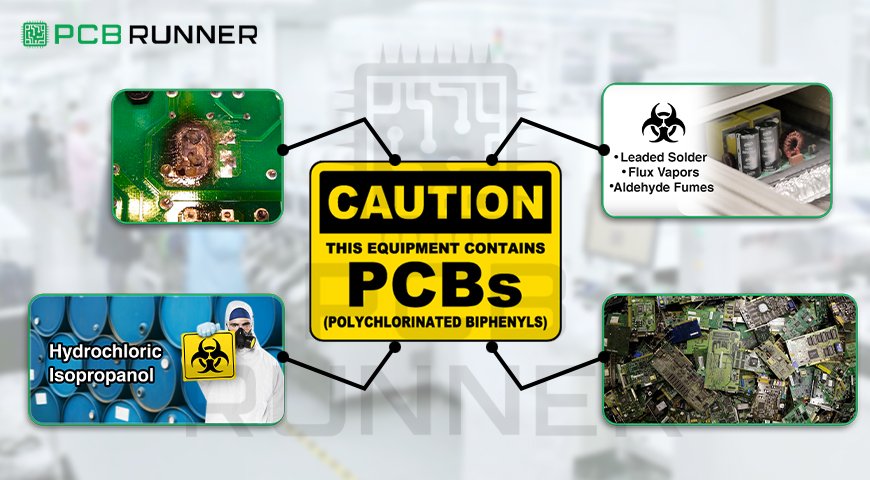
Smoke and vapor created during the soldering process, as well as electronic component assembly, contain toxic elements like Lead, light solder, flux vapors, and aldehyde fumes. If inhaled without ventilation, the above-mentioned substances can create severe respiratory problems and even be life-threatening in the long run.

Air Contamination and Exposure

3. Risk of Electric Shock and Burns

During the PCB assembly stage, personnel work on high-voltage devices, so they have to be well-trained in safety measures for PCB assembly in order to eliminate any risk of being shocked, burned, or malfunctioning the equipment.

Risk of Electric Shock and Burns

4. Waste Generated in PCB Manufacturing

Solid scrap materials, organic solvents, and heavy metal sludge are only some kinds of hazardous waste derived from PCB manufacturing. Water resources and soil are in danger of being polluted due to lack of appropriate disposal techniques of these Filthy materials.

Waste Generated in PCB Manufacturing

Ways to Ensure Safety Levels For a PCB Board

1. Chemical Safety While Assembling a PCB

Whenever a person attempts to use any hazardous chemicals, there are paramount measures that have to be controlled. For example:

  • Keeping chemicals away from sunlight and heat and store them in appropriate ventilated areas.
  • Label Box containers accordingly and, at the same time, Store them on shelves when not in use.

Setting PCB chemical safety standards to cut down the amount of exposure of individuals eliminates the need to wear PPE like gloves, goggles, and respirators.

2. Ventilations and Air Quality Management

Via airborne contaminants, PCB circuit board manufacturers can do the following to lower them:

  • Fume extraction equipment should be utilized in soldering booths.
  • Remove harmful vapor through proper air filtration systems.
  • Equip the workers exposed to chemical fume, with breathing aids.

3. Electric Safety Procedures

Electrical safety procedures encompassing the following should be taught to workers doing PCB assembly.

  • Use of anti-static wristbands when discharging electrostatic energy (E.S.D).
  • Equipment has to be properly bonded to the earth to eliminate shocks.
  • Maintenance and minor inspections of the machines should be done for any exposed wires.

4. Personal Protective Clothing (PPC)

Depending on the stage of PCB production processes, the employees should don suitable types of PPC such as:

  • Gloves and lab coats where chemicals are being worked on.
  • In other places where there are suspected airborne particles, face shields and respirators are used.
  • Insulated gloves and anti-static clothing for electrical work.

5. Waste Eliminating And Environmental Protection

PCB manufacturing needs to have environmental safety measures to reduce the destruction of the ecosystem to the lowest possible level. Some of these include:

  • Shredding of scrap PCB and other board materials for reuse.
  • Abiding with government policies in the safe disposal of chemical waste, such as dumping sites.
  • Cleansing products and processes that are harmful to the body should be replaced with less dangerous ones.

6. Preventing Fire And Explosions

Since PCB manufacturers work with fire-risk chemicals, the foremost priority in the workplace must be:

  • Keeping chemicals that catch fire in fireproof containers.
  • Keeping fire extinguishers within reach in all work zones.
  • Train workers on emergency fire procedures.

7. Worker Training and Awareness

This is specifically for maintaining PCB manufacturing safety tips for employee training:

  • Always conduct your safety drills.
  • Educate us on hazardous materials and how to handle them.
  • Communicate safety measures in simple languages if required.

8. Regulatory Compliance and Certificates

Compliance with industry requirements assists in PCB circuit board manufacturing. As examples, some key standards include:

  • OSHA (Occupational Safety and Health Administration) regulations
  • RoHS (Restriction of Hazardous Substances) compliance for toxic materials disposal
  • ISO 14001 for ecological management of PCB fabrication.

The Future of PCB Safety

As the technology of PCB fabrication develops over the years, it’s important to note that safety also develops along with it. Following are some innovations and areas for improvement to work on in PCB safety protocols.

Lead-free soldering to eliminate possible health issues.

Automated handling systems for exposure of humans to PCBS-consuming materials.

Eco-friendly chemicals for the etching and plating processes.

Due to growing governmental restrictions on the environment, some of the dominant ones that do PCB must keep improving their practices while making sure that the safety standards are met.

Conclusion

Enhancement of worker welfare with regards to PCB manufacturing must always be on top of the list for concerns to eliminate suffering at the peak levels, mitigate environmental concerns while increasing the manufacture follow to electronic PCB devices, and, in the end, decide on the overall impact to the modern world. In order to make such a decision, PCB manufacturers will have to come up with relevant policies and control them, which is why it’s essential to assemble safety guidelines to eliminate any risks; implementation of ensuring chemical safety regulations step through the firm borders of a workstation.

Having standard processes in place increases productivity, keeps any risks at a minimum, and helps in adhering to rules and regulations. Sustainability in assembling PCBs is vital for longer business viability in the current trend of industries adopting green practices.

Need a Safe and Reliable PCB Manufacturer?

With PCB Runners, you can get multilayer PCBs without compromising on safety and reliability. We make sure we put sustainability and productivity at the core of our PCB manufacturing procedures. Reach out to us to get a free quote for your PCB projects today!

Frequently Asked Questions (FAQs)

Why is PCB safety important?

Effective prevention of PCB harm protects the employee’s safety, mitigates the risks of ecological disasters, and fulfills industry norms and legislation standards.

What are the main hazards in PCB manufacturing processes?

Some key hazards include chemicals, dust or harmful gases, energizing parts, and insufficient methods to treat waste materials.

How can manufacturers of PCBs increase safety in the workplace?

Safety can be improved by implementing chemical ventilation systems, pollutant masks, and goggles and undertaking other measures to ensure the environment is clean.

What environmental safety methods can PCB manufacturers comply with?

The use of non-polluting substances for PCB etching, proper disposing of PCB waste materials, and employing reasonable standards in protecting environments are significant environmental safety methods.

How can I select a PCB manufacturer that is credible and affordable?

Choose a manufacturer who places emphasis on environmental sustainability and has industry certifications as they demonstrate effective safety protocols.

Optimising PCB Design: Counterbore vs. Countersink

While developing multilayer PCBs, an engineer has to consider each part of the board, including hole types. The two types of holes that PCB circuit board manufacturers most commonly use are counterbore holes and holes with countersink features. These holes affect the positioning of fasteners and other components and, therefore, the board’s reliability and structural strength.

Understanding the differences between counterbore holes and holes with countersink features is necessary to make a design choice. In this blog post, I will outline the features of these holes, how they are applied, and the details of crafting PCBs for multilayer PCBs.

Optimising PCB Design

Explaining Counterbore Holes in PCBs

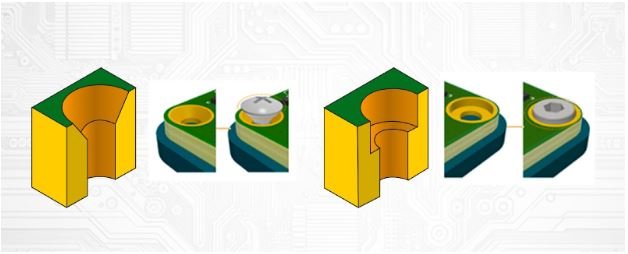
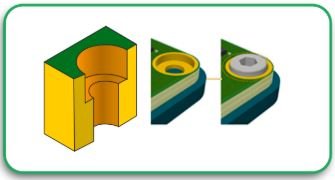
A counterbore hole is a type of hole that has been modified such that the inner face is straight, and the base is flat and cylindrical. Counterbores are common in the industry of PCB manufacture with mechanical fastening as a requirement, whereby the bolt or screw head rests above, continues to be adjusted and allows a general size of tightening within the PCB.
Counterbore Holes

Benefits of Counterbore Holes

  • Stable Fastening: Counterboars guarantee that screws and bolts are busy fastened appropriately without disruption.
  • Ideal for Thick PCBs: Frequently used in multilayer PCBs, the components of which need to be secured mechanically excessively.
  • Counterbore holes can be used for the following: reinforcement designs in the structure that needs the use of machine screws or bolts. For securing heavy components in PCB fabrication. For the use of screws that need to be flush mounted onto the surface of the PCB.

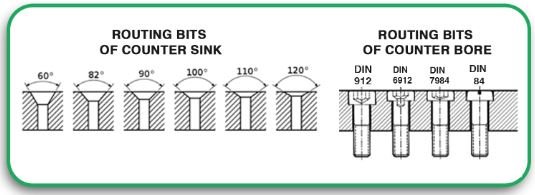
Like with a conical hole, a screw countersink is a cut that permits the screw to be flush with the surface of the PCB. The angle of a countersink is cut to be the same as the head shape of the screw, providing a smooth shift from the screw to the board.

Having countersunk screw holes brings a lot of advantages, such as Aesthetic and design function: It provides smooth covers that do not leave exposed protrusions that can get snagged accidentally. Perfect for thin printed circuit boards: Functions perfectly on thinner boards, barring the use of a counterbore which results in excessive material removal. Improved mechanical strength: Increases stiffness by lowering stress concentration through more evenly distributing force across the PCB.

For printed circuit boards that have limited space, the use of a hole countersink is ideal. Additionally, with the Read-along, face-mounted components eliminate a lot of external protrusion and butt joint screws that are to be sunk into the surface of the board.

How to Decide Between Counterbore and Countersink When Designing a PCB

1. Take PCB Thickness into Consideration

Counterbore holes are more appropriate for working with multilayer PCBs due to the added support they offer. Custom-printed circuit boards benefit more from hole countersink features, as they require less material removal.

2. Review The Needs of Components and Fasteners

If your design has bolts or machine screws, then use a counterbore hole option. If your design utilises flat-head screws that need to rest flush to the surface, you should use the hole countersink option.

3. Consider The Level of Structural Integrity Required

Counterbore holes should be used for added durability in high-stress environments. Hole countersinks work best for applications that require smooth surfaces.

Countersink

Key Differences Between Counterbore and Countersink Holes in PCBs

Feature Counterbore Hole Hole Countersink
Shape Cylindrical with a flat bottom Conical with a tapered angle
Best for Thick, multilayer PCBs Thin PCB fabrication
Fastener Type Machine screws, bolts Flat-head screws
Load Distribution Evenly spreads mechanical stress Helps align and secure components
Common Applications Industrial PCBs, heavy components Consumer electronics, aesthetic designs

Counterbore vs. Countersink

Most Important Tips For The Integration of Counterbore and Countersink Holes in PCB Designs

Integrate Counterbore or Countersink Holes using Standard PCB CAD Software.

Aim for precision and accuracy when integrating counterbore or countersink holes in your design. Using standard PCB CAD software is important when aligning components to holes or specifying the depth of the holes.

Confirm Hole Depth

Whether you are designing multilayer PCBs, thin boards, or custom boards, correct tolerance and hole depth should be sufficient. Always consult with the State’s PCB circuit board manufacturers to confirm that they meet the criteria.

Enhance Manufacturing Efficiency

The decision on whether to select counterbore or countersink features must also consider PCB fabrication cost and time. Drilling a perfectly operational hole might involve an additional complication that would increase the charges and lead time for construction.

Test Prototypes For Optimal Results

Producing a printed circuit board prototype enables the designer to analyse the effect of counterbore or countersink holes on assembly practices prior to any large production run.

Expert Insights

This paper describes a mechanical model that attempts to forecast the behaviour of various screw lap shear joints with the aid of a spring-mass model. The spring-mass approach incorporates the axial, bending, bearing, and Shear components of stiffness as well as the masses at the joint. The springs of the model characterise the stiffness resulting from each deformation that occurred. We show how the other components spring-mass model can be simplified. We demonstrate that the joint stiffness we identified can allow for the mechanical behaviour of counterbore and countersink screw lap joints to be observed. We did experimental validation in nine observably different joint positions. The different configurations of the joints are also modelled with the aid of linear finite element methods. In addition, the effect of the individual stiffness components on the total joint behaviour can be investigated by changing the plate’s height and width.

Conclusion

The counterbore and countersink features are both important in PCB fabrication and assembly. The choice of using one rather than the other will rely on the thickness of the board, the type of fasteners used, and the structural strength that must be achieved. Counterbore holes are typically advantageous in multilayer PCBs that have heavy components, while hole countersink features are often needed in custom thin-printed circuit boards for a flush fit.

These differences are crucial for optimised designs that function properly and meet the mechanical requirements of reliable PCB circuit board manufacturers. The appropriate hole type should be chosen in the early stages of development, whether it is a prototype or mass production, to achieve the best performance with little difficulty in fabrication.

Need Expert PCB Solutions?

Are you in need of high-quality PCB fabrication with optimised hole designs? Contact us through PCB Runners today to discuss your industrial PCB manufacturing needs!

High-Performance PCB Solutions for Military and Aerospace Electronics

Like all other industries, military and aerospace also need reliable PCB solutions. Not all PCBs can survive high temperatures, mechanical shocks, or radiation, making it extremely difficult to fabricate PC boards for consumer electronics. Therefore, unlike consumer electronics, these industries require overly durable fabrication techniques that ensure a long period of functionality without degradation in PC board performance.

Industry leaders utilize cutting-edge technology materials, controlled impedance, and specialized coatings to meet the stringent standards set by the military and aerospace industries. In this article, we will discuss the essential aspects of military-grade PCBs and analyze the latest developments in PC board fabrication while also outlining some of the essential components when choosing PCB manufacturers for mission-critical objectives in tandem with other objectives.

High-Performance PCB Solutions for Military and Aerospace Electronics

Why Military and Aerospace PCBs Require Specifically Tailored Solutions

Tools and electronics needed for defense and aerospace must function within countless external variables and challenges that continue to increase their chances of failure. Some of the key challenges include:

  • Extreme Temperature Resistance – PCBs, while being used, should not lose effectiveness during extremely hot or subzero temperatures.
  • Vibration and Shock Tolerance – Fighter jets, missiles, and satellites do contain their own set of functionality. The PC board needs to be able to survive extreme conditions and shocks while still retaining its capabilities.
  • Electromagnetic Interference (EMI) Shielding – This is necessary towards preserving the integrity of the signals, especially in PCBs needed for high power applications.
  • Radiation Resistance – For material used for space, it is crucial to ensure that the PCBs won’t lose effectiveness, even while being exposed to extreme radiation.
  • Moisture and Corrosion Protection – In humid or saltwater PCBs need to function effectively as well without any corruption or corrosion.

To satisfy these needs, PCB suppliers use custom laminates, heavy copper plating, and complex via designs.

Important Aspects for Aerospace and Military PCBs

1. High-Temperature PTFE Polyimide Ceramic Hydrocarbon Laminate Thermoset.

Aircraft avionics and radar include PTFE, Polyimide, and Ceramic-filled Hydrocarbon laminates combined for unrivaled heat and stress resistance.
High-Temperature PTFE Polyimide Ceramic Hydrocarbon Laminate Thermoset

2. Heavy Copper PCB

These items are employed in power distribution systems for defense applications. Military-grade PCBs often feature 2-20 oz copper layers for improved current load efficiency.
Heavy Copper PCB

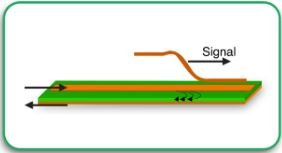
3. Controlled Impedance Substrates for High Frequency and Microwave Modules

The most advanced RF and microwave PCBs used for radar and communication systems and electronic warfare usually need precise impedance control to reduce power loss.
Controlled Impedance

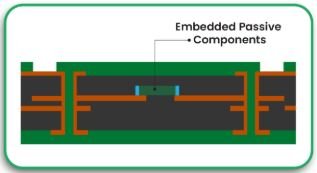
4. Embedded Passive Components

To reduce weight and improve performance, modern military PCBs integrate embedded capacitors and resistors.
Embedded Passive Components

Advanced PCB Technology for Military and Aerospace Applications

1. Multilayer and HDI PCB

Space and aircraft applications need to be compact and lightweight, and high-density interconnect (HDI) PCBs with microvias and blind and buried vias achieve this.

2. Rigid-Flex PCBs

Flexible PCBs are used in drones, avionics, and satellite systems to improve weight and durability under mechanical stress.

3. Conformal Coating and Protective Finishing

PCB manufacturers deploy conformal coatings, ENIG (Electroless Nickel Immersion Gold), and hard gold finishes to safeguard them from wear and tear from chemicals, surface mounting machines, humidity, and corrosion.

4. Via Redundant Structures

Reliability critical PCBs have redundant vias alongside every PCB layer to guarantee electrical connection in extreme environmental conditions.

Steps In Testing And Certifying Military PCBs

Also, military and aerospace electronics have to adhere to some stringent quality and reliability requirements, such as:

  • MIL-PRF-31032 & MIL-PRF-55110 – Performance specifications for rigid and flex PCBs.
  • IPC-6012 & IPC-6013 – Reliability and performance requirements for multilayer PCBs.
  • AS9100 Certification – Aerospace supplier’s quality management system.
  • ITAR Compliance – Ensures PCBs for defense purposes are secured as per US laws.

Reliable rest assured, pc board fabrication requires a set of processes such as:

  • Thermal Shock Testing – Thermally induced strains to determine the endurance of PCB.
  • Vibration and Mechanical Stress Testing: Testing of strength of different materials and components of the structure s under conditions assumed to be accurate.
  • X-ray Inspection and AOI (Automated Optical Inspection): These methods inspect hidden faults that cannot be found in ordinary multilayer PCBs.

How To Choose A Proper PCB Manufacturer for Military And Aerospace Use

Choosing the Right PCB Manufacturer for Military and Aerospace Applications: It is essential to select a PCB manufacturer as a trusted partner for long-term operational and regulatory requirements. You should pay attention to the following:
Experience in Military Grade PCB Manufacturing

Search for PCB suppliers who have an established reputation in high-reliability PCB designs for the aerospace and defense sectors.

Expanded Manufacturing Features

  • Check that the supplier provides the following:
  • Microvia and HDI PCB processes
  • RF and microwave PCB development
  • Rigid-flex and flex PCB assembly
  • Adherence to Other Sector Requirements
  • Collaborate with PCB suppliers who possess MIL, IPC, and ITAR certifications.
  • Robust Supply Chain and ITAR Guidelines
  • Military PCBs need a controlled ITAR supply chain to ensure zero infiltrations.

Trends Shaping Military and Aerospace PCB Manufacturing

AI-Powered Autonomous Systems

The requirement for military drones, surveillance systems, and AI-driven defense electronics will increase the availability of ruggedized PCBs with high computing power.

Overall Size and Weight Optimization

Compact pc board fabrication is an advantage for aircraft, satellites, and even wearable military devices.

5G and Advanced Secure Communication Technologies

Enhanced PCBs with controlled impedance guarantee excellent connectivity for high-altitude use by the military.

Space Ready PCBs

Ultra-high reliability and radiation-proof PCBs are essential for satellites and deep space scouts.

Expert Insights

The European Space Agency (ESA), in partnership with its industrial partners, has been continuously updating the standards for Printed Circuit Boards (PCBs) design, qualification, and procurement. The standards also include design margin which reduces the possibility of hidden short-circuit and open-circuit failures. 

There are also additional inspection and tests such as temperature humidity bias test, conductive anodic filament test, interconnect stress test, and dark-field microscopy, that have been introduced for qualification and for lot conformance. 

These methods are important to evaluate and qualify technology from ESA qualified PCB manufacturers and the high-density interconnect (HDI) technology which includes microvia. 

In investigating the reliability of such advanced manufacturing techniques, various traditional and accelerated thermal stress tests are conducted on two and three layers of staggered and stacked microvia configurations, as well as the thermo mechanical modelling of stress factors. This paper explains the reasons behind the introduction of the updated standards, the initial reliability data on advanced HDI technology and benchmarking of the novel test methods.

Conclusion

For those searching for trustworthy military-grade PCBs, PCB Runners is the right partner. They are the leading provider of advanced PC board fabrication solutions.

Get your hands on High-Relibility PCBs now!

Contact PCB Runners and receive expert insight and military-grade PCB manufacturing solutions that are just right for you.

FAQs

What are military-grade individual PCBs?

Military-grade PCBs are super reliable circuit boards intended for the defense and aerospace industries. They are made for extreme conditions and use specialized materials.

What are the materials used in aerospace PCBs?

Several materials used are polyimide, PTFE, ceramic-filled lamination, and heavy copper layers for high-performance applications.

How do PCB manufacturers ensure reliability for military applications?

By using thermal shock testing, vibration testing, and X-ray inspection, coupled with compliance with a number of standards such as MIL-PRF and IPC.

Why are HDI and rigid-flex PCBs emerging as the best choice in aerospace electronics?

All of these technologies allow for higher miniaturization, lower weight, and greater durability, making them perfect for electronics space applications and avionics.

How do I select the right PCB manufacturer for defense applications?

Choose ITAR-compliant, AS9100-certified manufacturers who are easily reachable and have a background in high-reliability PC board fabrication.

EMS PCBs

EMS PCBs and Their Importance for Effective Electronics Manufacturing

The global electronics manufacturing services (EMS) sector is growing much faster than expected. Bulk electronics production is more efficient now than ever with the help of EMS PCB manufacturer. Industry specialists, or EMSs, have revolutionized the sector by providing complete service packages, including design, pc board assembly, prototype printed circuit, and more. As new technology emerges, EMSs are assisting PCB makers in optimizing production processes, reducing costs, and enhancing overall quality.

This blog focuses on the global EMS market, how it has affected PC board fabrication, the services provided by EMS companies, and the emerging trends in the industry that are expected to impact pc board fabrication.

Global EMS Market Analysis

The EMS industry’s economies of scale can be attributed to the need for affordable, high-quality manufacturing services. Established EMS firms focus on electronics assembly, testing, and logistics for various electronic products. As Original Equipment Manufacturers (OEMs) are increasingly outsourcing their operations, the global EMS industry revenue is also expected to increase drastically.

Types of the EMS Market

The EMS market can be divided into a number of important sectors. They include:

  • Consumer Electronics (smartphones, laptops, wearables)
  • Automotive Electronics (ADAS, EV systems, infotainment)
  • Industrial Equipment (automation systems, IoT devices)
  • Medical Devices (diagnostic tools, implantable devices)
  • Aerospace and Defense (navigation systems, military-grade electronics)
  • Each sector has its own needs and expectations regarding PC board fabrication; thus, high accuracy and quality assurance are a must.

The Effect of EMS on PCB Preparation

PCB manufacturers had to adapt considerably due to the impact of the EMS industry. They achieved better processes in PC board fabrication. There is also an ever-growing reliance on efficiency in time to market. They have built a reputation through improved quality of prototype printed circuit. A greater reliance on EMS vendors has translated into better-automated manufacturing processes.

History of EMS

In the late 20th century, EMS was born when companies began outsourcing PC board assembly and production to other manufacturers. Over time, EMS providers grew into design, logistics, and after-sales services. Today, EMS providers have become the partners of PCB manufacturers to facilitate the integration between PC board assembly and fabrication.

The Role of EMS Providers in PCB Manufacturing

EMS providers manage different parts of PCB production and ensure that the entire process is done efficiently and within the cost target. Their role includes:

  1. Design & Prototyping: EMS Providers evaluate the design—with the aid of Software—of the client’s PCBs and their required functionalities. The client details the conditions and their specific requirements, and then the EMS Provider sets about developing the PCB layouts using sophisticated software. The component placement is then optimized, and the entire design is simulated for performance testing. The design is first tested by mass-producing a prototype printed circuit.
  2. Material Sourcing and Component Procurement: In PC board fabrication, possessing high-grade materials is essential. EMS providers have direct links with PCB manufacturers and component suppliers, which allows them to obtain the materials at affordable rates. This leads to production continuity while minimizing the delays that supply chain issues would cause.
  3. Manufacturing & Assembly The primary focus of EMS is its manufacturing prowess. An EMS provider will have modern equipment for PCB assembly, including automated soldering machines, pick-and-place systems, and reflow ovens. Depending on the design intricacy, SMT and THT methods are utilized. These methods ensure timeliness, accuracy, and defect rates within the ideal threshold.
  4. Testing & Quality Control Product reliability is one of the main aspects of producing EMS PCBs. Providers have their own set of stringent tests, such as Automated Optical Inspection (AOI), In-Circuit Testing (ICT), and X-ray inspection, which are conducted to find faults prior to final assembly. This practice improves performance reliability and prolongs the life of the product.
  5. Supply Chain Productivity and Logistics:  During the delivery of the completed PC board fabrication order, EMS providers provide service at any level in the system. Their well-developed networks make supply distribution more effective and reduce the time needed for placing orders and controlling stock. This is especially useful for companies expanding production without having to lower standards.

Benefits of Working With an EMS Provider

Working with an EMS provider comes with a host of undeniable advantages, such as:

  • Cost Efficiency: Labor and manufacturing expenses are cheaper.
  • Faster Time-to-Market – Accelerates prototyping and production processes.
  • High-Quality Standards: Attention to detail is maintained during pc board fabrication.
  • Scalability: Adjust for production constraints, whether small or large.
  • Technological Advancements – Possibilities with new techniques and methods

Choosing an EMS Partner

A successful partnership in manufacturing requires a competent EMS provider, and thus, it is of the utmost importance to consider the following considerations.

Technical Capabilities and Expertise

Having selected a potential EMS provider, it is now very important to determine their level of proficiency in electronic PCB design, materials sourcing, and assembly.

Quality Certifications

Determine if they have certifications like ISO 9001, IPC standards, and other vertical-specific ones to ensure that they meet quality criteria and regulations.

Supply Chain Management

The existence of a developed supply chain guarantees lower risks of production and delivery component shortages and delays in production processes.

After-Sales Support

Satisfactory after-production support guarantees serviceability, customer satisfaction and product integrity over time.

Local Presence

Analyze if the EMS provider has facilities in target locations to reduce shipping costs and time.

Trends and Opportunities in the Electronics Manufacturing Industry

1. Increase in Demand for Smart Devices

The Internet of Things and AI-enabled devices have created a demand for sophisticated PC board fabrication and the use of miniaturized PCBs.

2. Growth of Wearable Technology

Wearable smartwatches, fitness bands and medical devices need PCBs which are low-profile and highly compact.

3. The Emergence of 5G Technology

The emergence of 5G networks calls for high-frequency PCBs, making lower-level fabrication accuracy a necessity.

4. Expansion of E-Commerce

The expansion of e-commerce has directly prompted the demand for electronics and channelled the aim towards EMS providers to meet the needs.

5. Expansion of Renewable Energy Resources

Solar panels, wind turbines, and energy storage systems need specialized printed circuit boards to promote efficient energy conversion.

6. Heightened Focus on Sustainability

The environmental concerns on Electronic waste are making the EMS providers embrace greener methods of pc board fabrication.

7. Emergence of Industry 4.0 Forces

Automation, Artificial intelligence, and machine learning are now tools of the PCB industry to improve manufacturing efficiency and accuracy.

Expert Opinion

Electronics Manufacturing Services (EMS) are critical for the production of Printed Circuit Boards (PCBs) because they provide the desirable combination of efficiency, economy, and quality. To satisfy the demand for complex and miniaturized electronic devices, EMS providers use sophisticated technologies like SMT, multilayer PCBs, and automated assembly. By contracting with EMS providers for PCB manufacturing, Original Equipment Manufacturers (OEMs) can sharpen their focus on business development while enjoying a more integrated supply chain, lower production spending, and shorter lead times. EMS providers are essential partners for modern electronics manufacturing, as they are capable of high-volume production with minimal defects.

Conclusion

EMS PCB assembly solutions remain indispensable for the production of cost-effective, high-quality modern technologies. PCB fabricators who work with EMS providers stand to gain from novel solutions in design, supply chain management, and PC board fabrication, which will ensure that these companies stay relevant in the marketplace. The expansion of modern electronics will further increase the importance of EMS providers and will contribute to the evolution of PCB manufacturing.

Searching for Trusted EMS Providers?

Get in touch with PCB Runners today and get high-quality custom-printed circuit board services. Let us help you make the most out of your electronics manufacturing business.

Frequently Asked Questions (FAQs)

What is an EMS PCB?

An EMS PCB assembly is a printed circuit board (PCB) made by an Electronics Manufacturing Service company which offers services such as design, PC board assembly, and testing.

Why are EMS providers important in electronics manufacturing?

EMS specialists have incorporated technology and easily scalable processes into their business models, thus making it easier and faster for EMS PCB manufacturers to produce goods.

How do EMS companies support PCB manufacturers?

They assist in fabrication, assembly, quality assurance, and management of the supply chain for printed circuit boards.

What industries rely on EMS providers?

Every industry that needs consumer electronics devices, including automotive, medical, aerospace, and industrial automation, relies on EMS providers.

How should I go about selecting my EMS PCB Manufacturer?

When selecting an EMS provider, it is useful to evaluate its level of technical expertise, certifications and accreditations, supply chain capabilities, and after-sales service.

DFMA for PCBs

DFMA for PCBs: Key Elements in Design and Assembly Efficiency

As in most industries, electronic markets require the PC board assembly to be as optimized as possible for cost, reliability, and overall production workflow. This is where the Design for Manufacturing and Assembly (DFMA) principles kick in. DFMA is a systematic method that contains design instructions that guide the assembly of circuit boards and components in ways that minimize time and costs.

Integrating DFMA for PCBs enables designers and manufacturers to improve product quality while reducing assembly time and material costs. The idea is to achieve a balance between manufacturability, assemblability, functionality, and reliability. In this blog post, I will discuss the DFMA principles for PCBs, their influence on production, and the reasons why they are needed in optimized electronic products.

Defining DFMA in PCB Design

What does DFMA mean?

There are two key components of DFMA. 

  1. Design for Manufacturing (DFM): Deals with the design approach toward multilayer PCBs and other board types to maximize ease of fabrication and minimize production costs.
  2. Design for Assembly (DFA): Deals with assembly-related issues where there is a large number of different parts by reducing the number of parts to be assembled, incorporating standardized components, and simplifying the layout of the wiring board.

With these two strategies combined, DFMA for PCBs will assist in eliminating manufacturing mistakes, shortening production times, and increasing product strength. 

Important DFMA Considerations For PCBs

1. Optimization of the PCB Structure

Complex circuit board assemblies significantly increase cost and the possibility of defects. When optimizing PCB fabrication, designers should: 

  • Stand operate board shapes to eliminate additional material cutting and wasting.
  • Eliminate unnecessary layers in multilayer PCBs.
  • Organize and physically separate trace routing to aid in testing and debugging procedures.
  • Eliminating features doesn’t add much to the overall cost of manufacturing and production time.

Optimization of the PCB Structure

2. Utilize Appropriate Components and Materials

Using commercially available components can increase the efficiency of the PCBs remarkably. Using off-the-shelf items does have some limitations. Considerations include: 

  • Non-custom components that greatly reduce procurement expenses.
  • Component footprints that do fit with standard DFMA when designing the PCB. 

By using readily optimized materials and components, production time greatly increases since the risks are greatly mitigated.

Utilize Appropriate Components and Materials_

3. Making PCB Layouts More Assembly Friendly

There is no doubt a good PCB layout will enhance the effectiveness of the pc board assembly. Here are some tips the designers can follow to achieve this:

  • Position high-frequency components near the connectors in order to reduce interference.
  • In multilayer PCBs, vias should be kept to a minimum to increase reliability.
  • Allow sufficient spacing between components for automated assembly machines.
  • Other activities like testing and troubleshooting become easy when the layout is optimized.

4. Cuts on Connected Flexible Parts

Flexible circuits do have their place within the industry, but an overabundance can hinder the ease of assembly when it comes to the printed circuit board. In order to promote reliability:

  • Use rigid connectors in place of weak ribbon cables.
  • Reduce interconnects and connectors to lower failure rates.
  • Design the PCB to allow for surface-mount devices, which eases automated assembly.
  • Incorporating single-sided PCBs for flexible areas while doing away with any fragile segments increases the durability of the end product.

Cuts on Connected Flexible Parts

PC Board DFMA Assembly, Making It More Efficient

1. PC Board Assembly Automation

A significant portion of assembly on a pc board is done automatically. DFMA for PCBs promotes the utilization of the following:

  • “Pick-and-place” machines make the placement of board components both faster and more accurate.
  • Reflow and wave soldering allows for automated soldering.
  • Assembly defects are detected at an early stage with automated optical inspection (AOI).

The incorporation of automation during the PCB design process leads to increased consistency while lowering labor costs.

2. Proper Application of a Solder Mask

A solder mask on a PCB prevents the soldering-related bridges while at the same time protecting the copper traces from oxidation. When using the DFMA technique, it is best to remember the following:

  • Select a solder mask material that can endure high temperatures, as well as chemical contact.
  • Apply solder mask layers sufficiently to achieve proper coverage.
  • Maintain spacing clearance between pads and apertures to enable zero short-circuit occurrences.

Performance and deterioration of the PCB can be enhanced by having a properly applied solder mask material.

3. Consolidating Assembly Operations

According to the DFMA rules, in order to increase efficiency of assembly operations:

  • Eliminate components that are different in type to make stock control simpler, as well as to reduce manipulation.
  • Employ similar standards in attaching equivalent components.
  • Where feasible, incorporate parts to reduce the number of different assemblies.

Adhering to these steps leads to reduced production time, as well as lower economic costs.

Benefits of DFMA for PCB Manufacturers

  1. Cost Savings

  • Reducing unnecessary complexity in PCB design lowers production costs.
  • Standardizing components allows for bulk purchasing and reduces expenses.
  1. Improved Product Reliability

  • Fewer interconnections and simpler layouts minimize potential failure points.
  • Optimized solder mask material application enhances protection against environmental factors.
  1. Faster Time-to-Market

  • Streamlining manufacturing and assembly reduces production delays.
  • Minimized revisions ensure that PCBs are ready for use more quickly.
  1. Higher Manufacturing Efficiency

  • Automated assembly compatibility speeds up the production process.
  • Clear design guidelines reduce errors and improve consistency.

Best Practices of DFMA and Emerging Business Developments

The Growing Power of The Small Device

More powerful, smaller devices mean increased demand for higher performance and more compact multilayer PCBs.

The balance achieved between assembly ease and deep miniaturization exemplifies distinctions in DFMA principles.

An Increasing Need for Dependable Electronics

Automotive, aerospace, and medical sectors have more stringent designs for manufacture and assembly requirements for PCBs.

Quality control has become the number one priority for PCB circuit board manufacturers.

Expansion Tech of AI and Automation in Industry

In PCB design, AI-powered DFMA software adjusts the layout for speed and other factors.

Monitoring and testing become automated, removing the need for manual quality assurance.

Expert Insight

By integrating digital fabrication (Dfab) and design for additive manufacturing (DfAM), DfMA streamlines the construction process, making it more precise and sustainable.

A review of 171 research articles highlights key aspects of DfMA, including its fundamental principles, its role in Dfab and DfAM, and its application in additive manufacturing (AM) assembly. Additionally, the potential of machine learning in optimizing DfMA processes has been explored, revealing significant opportunities for automation and efficiency.

Despite these advancements, there remain notable research gaps in DfMA for Dfab and DfAM. Addressing these gaps could enhance operational performance, reduce material waste, and support more sustainable construction practices. As the industry continues to evolve, further research and innovation in DfMA will be essential for shaping the future of construction.

Conclusion

To enhance reliability, lower costs, and optimize pc board assembly and construction administration, applying DFMA techniques for PCBs is critical. The simplification of design, selection of solder mask, and reduction of steps in assembly all serve to increase production effectiveness.

With the multifunctional capabilities of PCBs, they are faster to design alongside assembly integration and the process as a whole. Thus, time-to-market is lessened, and product quality is improved.

At PCB Runners, we offer professional assembly services and circuit board manufacturing. Call us today so we can assist you in improving your PCB production processes and for greater savings without compromising quality standards!

FAQs

What is DFMA in PCB manufacturing?

Within the scope of PCB manufacturing, DFMA (Design for Manufacturing and Assembly) is the approach that optimizes the design process by making it easier to manufacture and assemble the product.

Why is DFMA important in circuit board assembly?

It simplifies the construction and assembling processes of the circuit board in a way that standard components can be suitably integrated within.

How does DFMA impact multilayer PCBs?

Cost reduction is the most obvious advantage of adopting multilayer technology. Most stack-up designs are optimized for performance, reliability, electrical integrity, and ease of manufacturability.

What role does solder mask material play in DFMA?

The best solder masks prevent the exposure of the copper circuitry to oxygen in the environment. These aids in avoiding PCB oxidation, prevents short circuits, and make the circuit board more robust.

How can PCB Runners help with DFMA-compliant PCB design?

With PCB Runners, you are assured that your boards will be assembled with care and accuracy. We employ strategies that are cost-effective while ensuring the highest quality in PCB assembly.

Circuit Board Manufacturing History

Circuit Board Manufacturing History: The Rise and Impact of PCBs

Every innovation has its roots. From essential wiring solutions to the multilayer printed circuit boards today, the history of circuit boards is nothing short of a riveting tale that showcases innovation at its finest. It has even led to modern technology; these days, PCB circuit board manufacturers have sophisticated boards for various industries, including aerospace, healthcare, and consumer electronics. Still, it’s important to note that the modern day PCBs are not what they used to be.

The development of a circuit board’s design has taken more than a century, starting with simple electrical connections and now moving on to advanced software designed for printed circuit boards. Such software enables speed and even the most complex designs. In this blog, we will go through the history of printed circuit boards and discuss the evolution, milestones, and innovation in custom printed circuit board manufacturing.

Where It All Began: Origins of Circuit Boards

Early Electrical Connections (Before the 1900s)

Before PCBs came into the picture, electronic circuits were handheld devices. They were not only bulky but also incredibly unreliable. With the invention of PCBs came the manual wiring of circuits. Early inventors employed the point-to-point wiring method, where components had direct connections via wires. Although effective for basic applications, this method was tedious and prone to short circuits, wear and tear, and mechanical failure.

The First Breakthrough: 1903-1920s

In 1903, a German engineer by the name of Albert Hanson patented a layered electrical conductor mounted on an insulating base. This is where the story of the first significant advancement in circuit board manufacturing came to be.
Although it would take years for the technology to become commercially viable, his concept served as the basis of multilayer printed circuit boards.
Methods to create electrical connections using metal foils and die-cut stencils started in the 1920s, but they were still very clunky and inefficient.

The First Breakthrough_ 1903-1920s

The Birth of the Modern PCB (1930s – 1940s)

The First True PCB and Paul Eisler (1936)

The first true custom printed circuit board for a radio set made by an Austrian engineer, Paul Eisler, in 1936 is regarded as the first actual printed circuit board. It is considered to be the most his most significant innovation to date. Eisler’s innovation included printing tracks onto insulated boards, thereby doing away with excessive wiring.

Military and WWII Adoption

The military value of PCBs for weapons systems and radio communications was recognized in World War II. Eisler’s PCB concept was adopted by the US Army during the war in an attempt to increase mass production efficiency and reduce the size and weight of devices.
Government and Industry started shifting and investing in the innovation of printed circuit board manufacturing specifically for military use, marking a significant change in the history of PCBs.

The First True PCB and Paul Eisler

Mass Production and Commercial Expansion (1950s – 1970s)

The Shift to Consumer Electronics

PCBs became available for commercial use in the 1950s thanks to the improvements done in the processes involved in printed circuit board manufacturing.
The discontinuation of vacuum tubes in favor of transistors made electronic devices smaller, more efficient, and cost-friendly. This period marked the advent of:

  • Television sets
  • Radios
  • Early computing devices

The Advancement of Multilayer Printed Circuit Boards

Multilayer PCBs optimized the manufacturing of electronics in the 1960s. By adding more layers of circuitry, engineers were able to design compact and powerful devices.

The Introduction of Automated PCB Fabrication (1970s)

At this time, software for designing Printed Circuit Boards started to surface, enabling algorithms to design PCBs more effectively. The automation of PCB fabrication further improved:

  • Accuracy and trustworthiness
  • Economy of scale
  • Decrease in price

This period laid the groundwork for the industrial era of PCB manufacturing.

The Digital Revolution and Surface Mount Technology (1980s-1990s)

Introduction of Surface Mount Technology (SMT)

The 80s saw the replacement of traditional through-hole soldering with Surface Mount Technology (SMT). In addition to inserting leads into drilled holes, components were directly soldered to the outside of the board. SMT contributed to:

  • Greater density of components
  • Decreased size of PCBs, increasing efficiency
  • Expansion of speed in production

All of these changes greatly impacted PCB manufacturers, as they made production faster and easier to scale.

The Rise of Consumer Electronics

PCBs became an essential component supporting new technologies, such as:

  • Personal computers
  • Mobile phones
  • Gaming consoles

The Growth of Consumer Electronics

The skyrocketing demand for custom PCBs resulted in progress in both PCB design software and manufacturing systems.

Now, we focus on the modern milestones of the 21st century along with the advancements in the technology used for PCB fabrication. Focusing on the period from the 2000s to the present, we see significant developments in manufacturing technology specific to:

  • HDI PCBs Integration– Incorporated in smartphones and smart wearables.
  • Flexible and Rigid-Flex PCBs– Pivotal in medicine and aerospace industries.
  • Eco-Friendly PCB Manufacturing– Adherence to RoHS standards and green production techniques.

AI and Automation’s Role

Currently, printed circuit board manufacturers use AI in combination with PCB design software for tasks such as:

  • Streamlining circuit configurations
  • Automating the identification of flaws
  • Minimizing material use

This has substantially improved the history and innovation of PCBs, as it renders the fabrication process smarter and more efficient.
Expert Insight

Why PCBs are Important to Modern Technology

Transforming Communication

PCBs are vital components in smartphones, satellites, and communication infrastructures. They are critical for the transmission of data at high speeds and over long distances.

Encouraging Innovations in Healthcare

The invention of medical devices like heart monitors or diagnostic tools becomes possible due to custom PCBs that enable precise functioning.

Progress Automotive and Aerospace

Used in Electric vehicles (EVs) and aircraft are multilayered printed circuit boards, which further increase efficiency and safety.

Fueling the Internet of Things (IoT)

The development of smart home technologies and industrial automation, which enables the use of smart sensors, IoT devices, and their functionalities, can be seamlessly executed using miniaturized PCBs.

The Future of PCB Manufacturing

1. 3D PCBs

The fabrication of 3D-printed PCBs will provide a new standard for the industry as it will allow fast and low-cost prototyping.

2. Sustainable PCB Production

The use of biodegradable PCBs and PCBs produced using energy-efficient methods will become the industry standard. Eco-friendly manufacturing will be prioritized.

3. AI-Driven Design Optimization

AI will only enhance the age of innovation in components and board design software. Designing printed circuit boards will be less error-prone and layout optimizations will improve for decades to come.

Conclusion

The innovation history surrounding printed circuit boards is one of the most intriguing topics in modern history as things are still changing. Industry sectors all across the globe have gotten the use of technology in areas like manufacturing, building automation, and robotics, with the earliest primary level point-to-point wiring growing into the multilayered, complex PCB we are accustomed to today.

Manufacturers of PCB circuit boards play an enormous role in modern times, guiding the evolution of circuit board technology with automation, AI battles, and combat for sustainable practices. In the future industry, custom-printed circuit boards will be a core aspect of growth.

Looking for Reliable PCB Manufacturing?

Discover cutting-edge solutions specialized for your business with custom-printed circuit board services from PCB Runners. Reach out to us today and let’s partner together for effective results.

Frequently Asked Questions (FAQs)

Who invented the first printed circuit board?

An Austrian engineer, Paul Eisler, invented the first custom-printed circuit board in 1936 for a radio set.

Why are multilayer printed circuit boards important?

Ideal for modern electronics, multilayer PCBs offer greater circuit density, better performance, and more compact designs.

How has printed circuit board design software changed PCB manufacturing?

With software designed for PCB layout, manufacturers can more accurately place circuits, eliminate redundancies, and optimize the assembly process of printed circuit boards.

What industries rely on PCBs the most?

Automotive, healthcare, aerospace, and telecommunications industries rely heavily on processed PCBs from PCB circuit board manufacturers.

What is the future of circuit board manufacturing?

Advanced Efficiency in sustaining environmentally friendly PCB production alongside 3D printed PCBs and AI-designed PCBs is the foreseeable future.

Wearable Circuits

Wearable Circuits: Monitoring Life & Wellness

With the development of wearable circuits, monitoring one’s health, wellness, and daily activities has become far easier. These advancements range from fitness trackers to health monitoring devices that use flex PCB boards, printed circuit boards, and other flexible circuit board assembly technologies

The rapid developments of PCB technology have resulted in lightweight and flexible electronic components that are perfect for wearable devices.

These devices can collect critical health data, track fitness activity, and provide remote healthcare aid. This marks a considerable change towards more proactive healthcare monitoring and extends across industries such as healthcare and consumer electronics.

The Role of Flexible Printed Circuit Boards (FPCBs) in Wearables

FPCBs are critical for wearables due to their lightweight and stiff yet pliable attributes. Fitness bands, smartwatches, and health monitors are examples of wearables that integrate these durable circuits. FPCPs can withstand constant motion and harsh environmental conditions.

Here is a summary of some popular wearable applications.

Smart Skin for Health Monitoring

Smart skin technology utilizes adhesives placed on the skin to track metrics such as heart rate, body temperature, and EKG readings. The flex PCB boards embedded into these patches allow for wireless real-time data transfer directly to the healthcare professional’s systems.

Here’s how you can transform your writing:

  • Step and calorie counting and sleep pattern tracking fitness trackers
  • Augmented reality smart glasses
  • Batteries are no longer a necessity with solar-powered wearables.

Advanced Applications in Consumer Wearables

Now, consumers can utilize multiple sensors, GPS tracking, and cellular communication in one device—wearable devices that allow for an effortless and enhanced user experience.

Expert Insights on Wearable Technology

‘In the age of smartphones, smartwatches, fitness trackers, and wearable internet-enabled clothing:’ This is how his findings published on ResearchGate portray the technology of today. According to a detailed investigation, “Wearable technology and sensors are set to become one of the most effective tools for monitoring health conditions on a real-time basis. Smart wearables fitted with sensors can capture and analyze multiple parameters, activities, and health conditions of the user.”

Consumers are already using fitness trackers with accelerometers and optical heart rate monitors built into them to measure step count and heart rate during exercise. However, wearable clinical sensors are being developed that can measure blood pressure, respiration rate, oxygen saturation, skin temperature, and hydration level.

Wearable devices are capable of monitoring health parameters 24/7 and interacting with the users by providing feedback due to wireless stitching and machine learning algorithms. According to the research, wearable sensors are capable of enabling medical staff to provide timely medical interventions for patients whose health indicators shift unpredictably by enhancing self-consciousness toward their food intake, sleep, activity levels, and stressors.

Flexible PCBs and Power Sources

Power management is crucial for any wearable device. The current investigation focuses on the development of stretchable power supplies based on the integration of PCB prototype carbon nanotube microfilm and flexible lithium-ion batteries.

Potential Benefits:

  • Increased battery life
  • Reduced power constraint
  • Simplified device ergonomics and usability
  • These advancements ensure that circuits in the wearable device are suitable for fitness and other sports professionals at all levels of physical activity.

Future of Healthcare with Wearable Circuits

The future of healthcare will greatly benefit from the increasing use of novel flexible printed circuit boards. New iterations like these are expected:

Enhanced surgical instruments: Improved accuracy and effectiveness in operational procedures.

Neuro-prosthetics: Helping control prosthetics to assist patients affected by neuromuscular disorders.

Biosensors: Effortlessly transmit health-related information to other places without the need for physical human interaction.

Such innovations would greatly facilitate healthcare service delivery, saving time and allowing better healthcare outcomes for the patients.

Moreover, due to wearable circuits, remote monitoring of patients is emerging, which minimizes the frequency of patient checkups in hospitals and allows for prompt treatment responses.

Conclusion

The versatility of custom-made printed circuit boards, flex PCB boards, and sophisticated flexible printed circuit board assembly is going to change the face of healthcare and consumer electronics. This is because they are crucial in the building blocks of purpose-designed wearable gadgets.

PCB Runner is recognized on the market as a provider of top-quality PCBs and specializes in their design and manufacture, including for wearable devices. Let us know what your requirements are, and we will provide a custom PCB prototype or flexible printed circuit board assembly at an affordable price.

Do you want to make your next wearable gadget a reality? PCB Runner is the best company for the construction and design of quality PCBs. Schedule a meeting with us today.

FAQ’s

What are wearable circuits?

Wearable circuits are electronic parts embedded in clothing that enable actions such as health tracking, fitness monitoring, and data uploading.

Why are flexible printed circuit boards important for wearables?

The FPC’s lightweight, flexible, and sturdy nature makes it ideal for shrinking, exceptionally tiny, wearable PCBs.

What industries benefit from wearable circuits?  

Wearable circuits find use in healthcare, fitness, consumer electronics, and military applications.  

How do contact lenses with wearable circuits help diabetic patients?  

These contact lenses communicate data continuously, relaying glucose levels in real-time without the need for finger pricks.  

How can PCB Runner help with wearable circuit development?  

PCB Runner specializes in custom PCB layout and production, offering flex PCB board design services for wearable technology.